
Cycas flabellata
Taxonomy

Cycas flabellata
Cycas
Cycadaceae
Cycadales

How to care for Cycas flabellata
How often to water your Cycas flabellata

every 9
Cycas flabellata needs 0.5 cups of water every 9 when it doesn’t get direct sunlight and is potted in a 5" pot.
Use our water calculator to personalize watering recommendations to your environment or download Greg for more advanced recommendations for all of your plants.
Water 0.5 cups every
9
Finding light for Cycas flabellata in your home

a window
Cycas flabellata love being close to bright, sunny windows 😎.
Place it less than 1ft from a south-facing window to maximize the potential for growth.
Cycas flabellata does not tolerate low-light 🚫.
Select your region to see how the current weather in your area affects the placement of Cycas flabellata in your home 🏡.
How to fertilize Cycas flabellata

Most potting soils come with ample nutrients which plants use to produce new growth.
By the time your plant has depleted the nutrients in its soil it’s likely grown enough to need a larger pot anyway.
To replenish this plant's nutrients, repot your Cycas flabellata after it doubles in size or once a year—whichever comes first.
-
Why are there long sprouts #SagoPalm
-
It’s turning yellow #SagoPalm
-
What is the white powder like dust that gets on the leaves sometimes #SagoPalm
-
Are y’all spikes common? #SagoPalm
-
When I bought it I had yellow leafs ,I’m starting to see more greenish recently. Can yal tell me the cause of the yellowing leafs on sago palm n how to treat it to full green #FloweringPlants
-
Can a Sago Palms be planted outside #SagoPalm
-
Sago Palm brown and curling My Sago Palm has brown and curling ends on its leaves. At first it was only one stem, but now it’s starting to impact my other stem too. I’m not sure what I’m doing wrong. Can anyone help me?
-
Hy is my sage Palm turning yellow? Please advise! #SagoPalm
-
I’m needing to repot my sago palm, what kind of soil should I use? #SagoPalm
-
Just got my palm I live in Illinois, curious if I can put mine outside for the summer? #SagoPalm

Care Summary for Cycas flabellata
Cycas flabellata
 Greg recommends:
 Water
Water
0.5 cups every 9 days
 Placement
< 1ft from a window
 Nutrients
Repot after 2x growth
Based on the 4” pot your plant is in, and that it doesn’t get direct sunlight.
 Trending in your area







 Similar to Cycas flabellata
✨ Discover rare plants

Lavandula Pedunculata

Variegated Arrowhead …

Aglaonema Spitfire

Bonsai Crassula

Royal Flush Split Rock
Chinese Evergreen 'Ga…
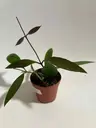
Hoya 'Memoria'
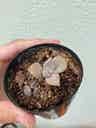
Graptopetalum 'Marqui…
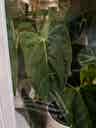
Anthurium papillilami…

Stomatium acutifolium
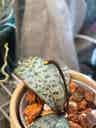
Phalaenopsis schiller…

Hoya sipitangensis

Electric Blue Gecko

Graptoveria 'Douglas …

Pine Cone Plant

Aglaonema 'Green Bowl'
