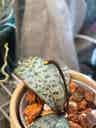
Clusia rotundata
Taxonomy

Clusia rotundata
Clusia
Clusiaceae
Malpighiales

How to care for Clusia rotundata
How often to water your Clusia rotundata

every 9
Clusia rotundata needs 0.5 cups of water every 9 when it doesn’t get direct sunlight and is potted in a 5" pot.
Use our water calculator to personalize watering recommendations to your environment or download Greg for more advanced recommendations for all of your plants.
Water 0.5 cups every
9
Finding light for Clusia rotundata in your home

a window
Clusia rotundata may have difficulty thriving, and will drop leaves 🍃, without ample sunlight.
Place it less than 3 feet from a south-facing window to maximize the potential for growth.
Select your region to see how the current weather in your area affects the placement of Clusia rotundata in your home 🏡.
How to fertilize Clusia rotundata

Most potting soils come with ample nutrients which plants use to produce new growth.
By the time your plant has depleted the nutrients in its soil it’s likely grown enough to need a larger pot anyway.
To replenish this plant's nutrients, repot your Clusia rotundata after it doubles in size or once a year—whichever comes first.
-
Loosing leaves My Kobe is loosing leaves. Falling leaves are green and feel healthy to touch. these are leaves from lower part. Has been on watered regularly and under a grow light but not directly. Also gets some light from east facing big window. There is a humidifier for plants nearby. Soil feels soft and normal to touch. Dark nursery pot with drainage. It has been loosing a leaf once in couple months I would say. What could be a reason? @DreamMachine @stephongreg TIA
-
So Ive taken care of my plant for the last three months, she looks fine I think but isnt actively growing. Is she alright? P.S. this is my first plant #Clusia
-
Does anyone know what’s wrong with my Clusia and why she’s turning yellow and dropping leaves? Also what is this casing around the base? #Clusia
-
I bought the plant two weeks ago and watered it with 1.5 liters of water along with amino acids on the first day. Twelve days later, I watered it again with half a liter, and the leaves turned very yellow and began to fall off. #Clusia
-
Droopy Autograph Tree Hello, Beginner here! 👋🏽🙋🏻♀️ I got my Clusia one month ago and now it’s starting to get droopy, it is still developing new leaves, however it looks very sad, I looked at its roots and some were light and others were browner, however it did not smell bad. When I put it back together, it dropped a leaf 🥺 I live in Northern Europe and this season is very dark, therefore it could be the light. I have also had to move it from room to room in order to give it enough light, is that bad? Thank you so much for your help!❤️ #beginnerplantparent #HappyPlants #droopyleaf #AutographTree #clusiarosea
-
Can someone advise on what's wrong with my plant please #Clusia
-
Hey! #clusia question Any ideas what causes the rusty little spots on the leaves of my #clusia ?
-
How to water this correctly? Do i water from the top of the soil or do i let it soak in water from the bottom? #Clusia
-
Can anyone identify this plant. Greg's labeled it an autograph tree but the leaves appear chunkier.
-
I believe my plant was misidentified on Greg. The leaves seem too thick for an autograph tree. Could someone help identify this plant? I'm preparing to repot. #happyplants #plantsmakepeoplehappy #plantaddic #clusia #Ccl7sialusia


Care Summary for Clusia rotundata
Clusia rotundata
 Greg recommends:
 Water
Water
0.5 cups every 9 days
 Placement
< 3ft from a window
 Nutrients
Repot after 2x growth
Based on the 4” pot your plant is in, and that it doesn’t get direct sunlight.
 Trending in your area






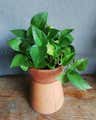

 Similar to Clusia rotundata


✨ Discover rare plants

Sedeveria 'Blue Elf'

Hoya sipitangensis

Cleistocactus icosago…

Graptoveria 'Douglas …

Black Monkey Thorn Tr…
Anthurium papillilami…

Kilimanjaro Plant
Philodendron 'Silver …

Royal Flush Split Rock

Begonia hydrocotylifo…

Cereus peruvianus 'Pa…
White Apple Moth Orch…

Parrot Pitcher Plant
Skeleton Key Pothos

Lavandula Pedunculata