


String of Hearts, varigated

4.0 out of 5 (1 experiences)
Taxonomy

Ceropegia woodii variegata
Ceropegia
Apocynaceae
Gentianales

How to care for String of Hearts, varigated
How often to water your String of Hearts, varigated

every 12
String of Hearts, varigated needs 0.5 cups of water every 12 when it doesn’t get direct sunlight and is potted in a 5" pot.
Use our water calculator to personalize watering recommendations to your environment or download Greg for more advanced recommendations for all of your plants.

Water 0.5 cups every
12
Finding light for String of Hearts, varigated in your home

a window
String of Hearts, varigated may have difficulty thriving, and will drop leaves 🍃, without ample sunlight.
Place it less than 3 feet from a south-facing window to maximize the potential for growth.
Select your region to see how the current weather in your area affects the placement of String of Hearts, varigated in your home 🏡.
How to fertilize String of Hearts, varigated

Most potting soils come with ample nutrients which plants use to produce new growth.
By the time your plant has depleted the nutrients in its soil it’s likely grown enough to need a larger pot anyway.
To replenish this plant's nutrients, repot your String of Hearts, varigated after it doubles in size or once a year—whichever comes first.
-
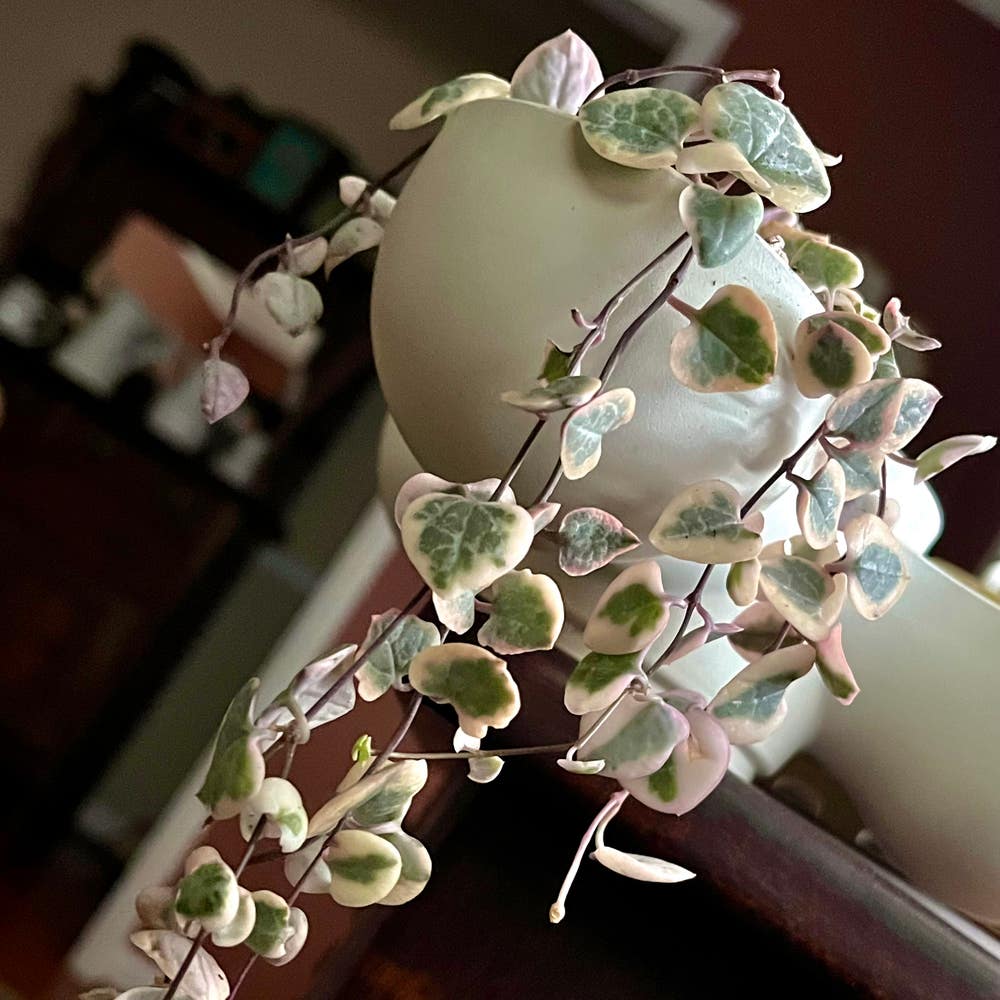
My princess getting the princess treatment this morning In her spa 🤗🛁🫧 I cannot believe how long, bushy & healthy she is! My boyfriend got this for me about two or three years ago on my first birthday we shared together. It’s a very special plant to me! She was so small when I first got her compared to now. I have struggled with strings & have had lots of ups & downs with them when it comes to caring for them & keeping them alive, but this baby has always been forgiving with me & has given me grace. 🫶🏻 & for that I thank her & treat her extra special & extra care to be fragile with her & her delicate long tendrils.. 🥹 I only bottom water her, and I keep her outside until winter in my screened in porch. I have her in a shallow teracotta pot for good drainage. I love her one all white tendril she has, it’s so cool to me. I always wonder what causes that in Varigated plants. 🌱 #HappyPlants #PlantsMakePeopleHappy #PlantAddict #NewGrowth #vsoh #StringOfHearts #VariegatedStringOfHearts #variegatedplants #StringLoversTogether #stringsofthings #ButtChug #BottomWatering #OutdoorGrowing #OutsidePlants #SucculentSquad #SucculentLove #Succulents #Succulent #succulentsunday #Teracotta #GrowingSuccs
-
#succulentsaturday 🌿 I cut some of my flowers off my Echeveria Blue Sky, & used this vase my grandma gave me to put them in. *tip*- don’t use water if you want to cut them to display them, it will rot them & won’t last. They have lasted about a month or a little less, since I’ve cut them and had them inside. That’s a long time for cut flowers if you ask me. Also wanted to brag on my VSOH, it’s so long & is doing so good! My boyfriend got me this for my first birthday we had together, so it’s a special plant! It even had a little string of all white hearts (photo 4) which is super cool. Hope everyone is having a good weekend so far! 💕 #HappyPlants #PlantsMakePeopleHappy #PlantAddict #NewGrowth #SucculentLove #PlantShelfie #SucculentSquad #Succulents #Succulent #GrowingSuccs #vsoh #StringOfHearts #stringsofthings #HangingPlants #variegatedplants #VariegatedStringOfHearts #Variegated #NewGrowth #cuteafsuccs #CutFlowers #BloomingSuccs #PlantLove #OutdoorGrowing
-
My #VSOH bloomed for the first time since I have had it. It’s almost been a year, I got Venus as birthday gift last november from my boyfriend. I love the funky blooms! So delicate 💕 #variegatedplants #StringOfHearts #PlantAddict #HappyPlants #PlantsMakePeopleHappy #NewGrowth #SucculentLove #SucculentSquad #Succulents #Succulent #StringLoversTogether #VariegatedStringOfHearts #BloomingSuccs #Blooming #PlantShelfie #PlantTherapy #OutdoorGrowing #OutsidePlants
-
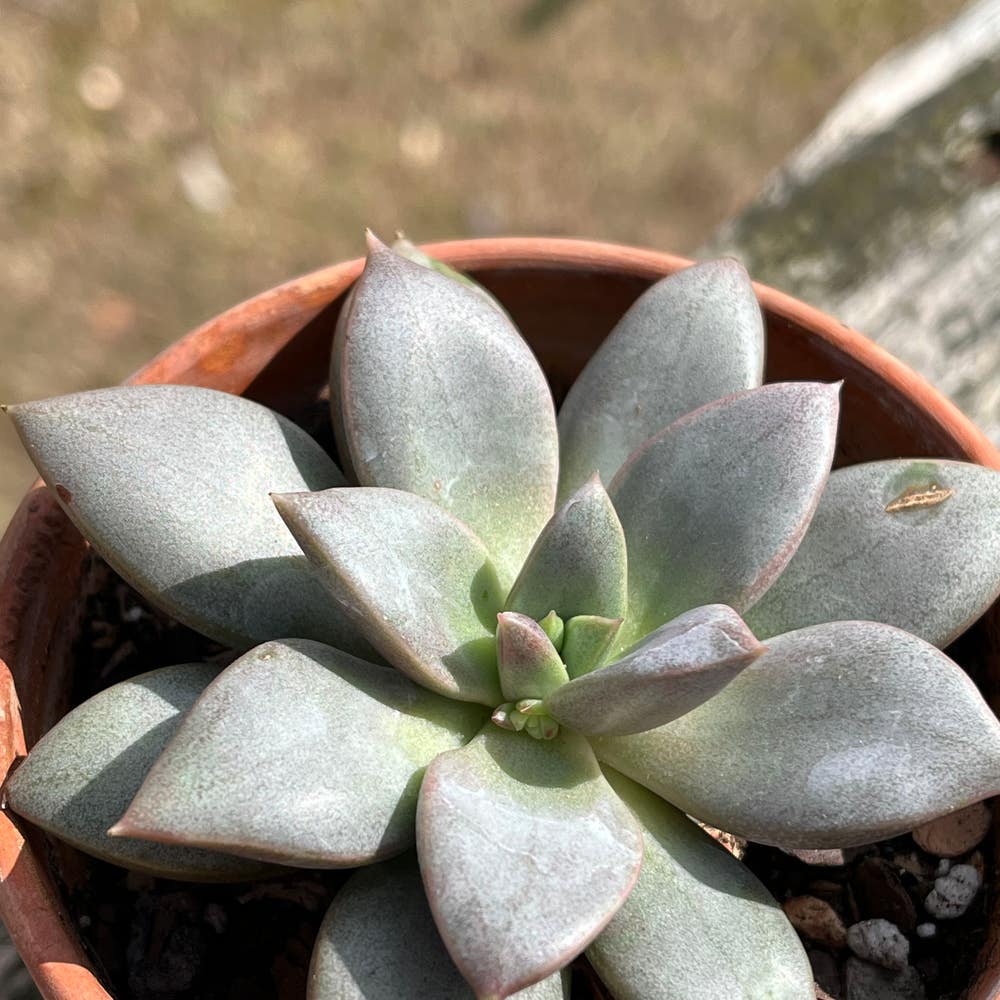
Propagation Method? Despite my #rookieplantmom mishaps…Pepita is growing and flourishing y’all! She is my plant baby that has done the best thus far. I’m so proud. 🥹 💚 I’m going to take a stab at #Propagating her and reintroducing the offsets into the pot. I’ve seen a couple of methods (water…soil…butterfly…) and am curious 🧐 about what has worked for others. What say ye? (Note: That’s not a grow light and I do not use one. I just had to highlight her splendor & glory with my desk lamp 😆.) #PlantsMakePeopleHappy #SucculentSquad
-
Y’all…Y’ALL!!!! Things have been busy & crazy (good crazy lol), but I’m proud to share that Pepita is over here living her best life despite my #rookieplantmom mishaps 😂. She is by far my plant baby that has thrived the most. 🥹❤️ I’m going to take a stab at #Propagating her and reintroducing the offsets into the pot. I’ve seen a couple of methods (water…soil…butterfly…) and am curious 🧐 about what has worked for others. What say ye? (Note: I do not use a grow light. I had to highlight her splendor & glory with my desk lamp for the photo.) #SucculentSquad #propagatingsucculents
-
#WhatTheSuccWednesday update: Be still my (string of) heart(s)! After having some root rot struggles with my first three succulent babies, I’m so encouraged to see Pepita showing a little bit of growth. This was just the encouragement this #NewPlantMom needed!
-
repotted my Variegated String Of Hearts last night! 💕🌿 I’m so happy I finally repotted it was a little root bound, and I wanted to add a spiller to my new tiered pot I got last week. I’m not quite done but I’m getting there! I made some special soil mix just for the hearts, because they can be a little fussy. I used cactus soil, sand, orchid bark, perlite, & bonsai jack gritty mix. It’ll be acidic which most succs like, and it will be well draining as well. I can’t wait to see how it responds to the repot. I will update you guys as it grows. 🌱💕 #vsoh #StringOfHearts #StringLoversTogether #HappyPlants #NewGrowth #GrowingSuccs #SucculentLove #SucculentSquad #Succulents #Succulent #SuccerForSucculents #PlantAddict #PlantsMakePeopleHappy #FreshLeafFriday #FreshFeaturedFriday
-
Happy Monday! #SucculentSquad Echeveria ‘Aphrodite’- looks so healthy right now, also has a baby growing if you look closely. 🪴 Mexican Firecracker- I got this in the mail Saturday from @Lifeis2short (: thank you! I hope I can give it a happier life! I love the yellow pot too 💛 Stringy Stonecrop- this one is outside, and since spring is pretty much here, it’s regrown and looking nice and tidy.. for now 😂🌿 VSOH- I got this in November thinking about replanting soon… nervous about that.. iykyk. 😳 but is has new growth! Gopher Plant- LOOK AT THOSE BLOOMS! This one is hardy in my zone so it’s also outside. The blooms are so alien like, and each one is different. I took tons of photos, but I can only post five. 😫 #SucculentLove #GrowingSuccs #BloomingSuccs #Echeveria #Sedum #HappyPlants #NewGrowth #StringOfHearts #PlantAddict #PlantAddict #PlantsMakePeopleHappy #Succulents #Succulent
-
some pics of my VSOH cause she’s just super pretty 🥹 I love her colors, hopefully I can redeem myself after my original SOH, she’s still alive but she isn’t too happy to say the least. But I’ll be better equipped this time, since I know what NOT to do. 😆🔬 learning from mistakes is what I do best.. #StringOfHearts #SucculentSquad #SucculentLove #HappyPlants #PlantAddict #VariegatedStringOfHearts
-
Plant is a baby and only has 3 strings. How can I propagate to create more strings to create a fuller plant? Also they started off pink but now are growing green. What do I need to do to get it to grow more pink hearts? #StringOfHearts



Care Summary for String of Hearts, varigated

String of Hearts, varigated
 Greg recommends:
 Water
Water
0.5 cups every 12 days
 Placement
< 3ft from a window
 Nutrients
Repot after 2x growth
Based on the 4” pot your plant is in, and that it doesn’t get direct sunlight.
What other plant parents say


 04/23/2021
*This plant hangs in my shower (no water gets on the leaves) in front of my east-facing window.*
I don't LOVE this plant, but I like it. It's healthy and growing. In a few years, it'll look amazing and full (if I manage to keep it alive). What you see in the picture is about $70 worth of cuttings (Shhhh. Don't tell my husband!) that I have propagated just to put it in a tiny 3" plastic, hanging pot.
It grows so much slower than the regular SOH that hangs 5' from it on the opposite side of the shower; the VSOH gets the same amount of bright, filtered light and the same amount of attention.
Like I said, I like it; it's cute. Is it worth all that time and trouble and money? No.

 Trending in your area














 Similar to String of Hearts, varigated

✨ Discover rare plants

Vatricania guentheri

Pine Cone Plant

Haworthia emelyae com…

Scindapsus pictus 'Si…

Chinese Evergreen 'Ga…

Echeveria Arrow

Dinteranthus microspe…

Ace of Spades

Anastasia Weeping Fig

Royal Flush Split Rock

Sarcochilus fitzgeral…

Lavandula Pedunculata

Caladium

Cleistocactus icosago…

Aloe 'Lavender Star'

Chandelier Plant

Philodendron 'Silver …
