
Lomaria discolor
Also known as
Lomaria discolor, crown fern, piupiu and Lomaria discolor
Taxonomy

Blechnum discolor
Blechnum
Blechnaceae
Polypodiales

How to care for Lomaria discolor
How often to water your Lomaria discolor

every 7
Lomaria discolor needs 0.5 cups of water every 7 when it doesn’t get direct sunlight and is potted in a 5" pot.
Use our water calculator to personalize watering recommendations to your environment or download Greg for more advanced recommendations for all of your plants.
Water 0.5 cups every
7
Finding light for Lomaria discolor in your home

a window
Lomaria discolor may have difficulty thriving, and will drop leaves 🍃, without ample sunlight.
Place it less than 3 feet from a south-facing window to maximize the potential for growth.
Select your region to see how the current weather in your area affects the placement of Lomaria discolor in your home 🏡.
How to fertilize Lomaria discolor

Most potting soils come with ample nutrients which plants use to produce new growth.
By the time your plant has depleted the nutrients in its soil it’s likely grown enough to need a larger pot anyway.
To replenish this plant's nutrients, repot your Lomaria discolor after it doubles in size or once a year—whichever comes first.
-
Unnerving thing happened, this plant just randomly had a good 65% of its foliage fully dry up. The stalk passed the green scratch test do it's not dead. After checking the soil i had discovered it was weirdly clumpy so I fixed that, eliminated the dry potions and stuck it in this humidity. Blurred light setup facing a west window.
-
Asked and answered #HelpMeNameMyPlant #Seymour Sometimes I find it hard to come up with a name for a plant (and hence why I ask for suggestions on #HelpMeNameMyPlant ) and sometimes the plant suggests the name itself. So today I bought a rescue Silver Lady Fern, it was getting crispy and in a bad way but I think I can bring it back to life with a little TLC (humidity etc) So when I thought Silver Lady, I thought of the logo on the front of any Rolls Royce (no, I don’t own one … yet LOL 😂) which is known as “The Spirit of Ecstasy” ( over 100 years ago so before “Ecstasy” was used as a name for something else 🤫) I came across this interesting article so please welcome “Spirit of Ecstasy Silver Lady Fern” https:// And for the diehards, there’s even a little booklet of its history https:// #HappyPlants #PlantsMakePeopleHappy #PlantAddict #FernFriends #NewGrowth #GregGang #theamigos #Seymour
-
🌟❤️Plant Boost Tuesday ❤️🌟 😄A Boost for July 23, 2024😄 Thanks for all the support and for those who have already joined us to boost each other this Tuesday🙏 Why not join us too #plantboosttuesday #plantinginspiration The idea is that we support each other, with our shared love of plants, by adding inspiration and lifting each other's spirits.🤝🫂😄 Life comes with challenges ❤️🩹 and suffering 😢 and yet we can all offer a boost to others 💉, to help the moment ⏱️, the day⌛ and the week 📅. If you find you need a boost, just click and see what others😸😸 can offer with inspirational quotes 🤔, inspiring plant ideas 🌹💐🌸🌱🪻🪴and anything that just adds to your day.👍 Welcome to Plant Boost Tuesday As with every Plant Boost Tuesday, I look for some “inspiration” and this week it was some useful diagrams related to plants or our own health and welfare that I would like to share as these helps diagrams mean we can have better plants and enjoy them more as well as an easy way to convey information. Enjoy 😊 Why not share any diagrams you have below! 👇 More Plant Boost Tuesday from me at anothe time. #plantboosttuesday #plantinginspiration #seymour #happyplants #plantsmakepeoplehappy #plantaddict #greggang #greggerssupportinggreggers #mentalhealthmatters #newgrowth #propagationstation #succulentlove #planttherapy #theamigos #PLANTMAFIA
-
#whoknew Who knew gardening helped released serotonin! Dirt has a microbiome, and it may double as an antidepressant Time to get dirt under my fingernails! #Seymour #theamigos Hey Everyone, I hope you are all having a lovely weekend so far. It's Sunday morning and I saw some lovely plants when I went for a walk earlier. And I just started watching my Sunday morning highlight, And he said a remarkable thing - that getting dirt under your fingernails is a great anti-depressant! Who knew? So I have set up a new group consisting of one member (again LOL 😆 🙃 😅) #whoknew And it's apparently true too: Getting down and dirty is the best ‘upper’ – Serotonin Getting your hands dirty in the garden can increase your serotonin levels – contact with soil and a specific soil bacteria, Mycobacterium vaccae, triggers the release of serotonin in our brain according to research. Serotonin is a happy chemical, a natural anti-depressant and strengthens the immune system. Lack of serotonin in the brain causes depression. .https://. https:// https:// https:// https:// #happyplants #plantsmakepeoplehappy #plantaddict #plantmafia #newgrowth #mentalhealthmatters #supportgroup #supportgroupsunday #greggang #greggerssupportinggreggers #outdoorgrowing #planttherapy #depressionsucks #adhdplantlovers #theamigos #seymour #plantboosttuesday
-
#whoknew Who knew gardening helped released serotonin! Dirt has a microbiome, and it may double as an antidepressant Time to get dirt under my fingernails! #Seymour #theamigos Hey Everyone, I hope you are all having a lovely weekend so far. It's Sunday morning and I saw some lovely plants when I went for a walk earlier. And I just started watching my Sunday morning highlight, And he said a remarkable thing - that getting dirt under your fingernails is a great anti-depressant! Who knew? So I have set up a new group consisting of one member (again LOL 😆 🙃 😅) #whoknew And it's apparently true too: Getting down and dirty is the best ‘upper’ – Serotonin Getting your hands dirty in the garden can increase your serotonin levels – contact with soil and a specific soil bacteria, Mycobacterium vaccae, triggers the release of serotonin in our brain according to research. Serotonin is a happy chemical, a natural anti-depressant and strengthens the immune system. Lack of serotonin in the brain causes depression. .https://. https:// https:// https:// https://
-
Spotted these puppies from Trader Joe’s… a cute fern for my low light planter AND a cute ceramic pot for $8?! Dangerous 😂 My local shops charge like $20 for little pots like this alone lol. Plants from TJ’s can be iffy but this one doesn’t seem to bad at all 🤔 Give me your best #SilverLadyFern tips, #FernFriends!! What’s your favorite plant you’ve bought from a grocery store on a whim?! #PlantsMakePeopleHappy #PlantAddict #GregGang #theamigos
-
She's not feeling well... what can I do ? #SilverLadyFern


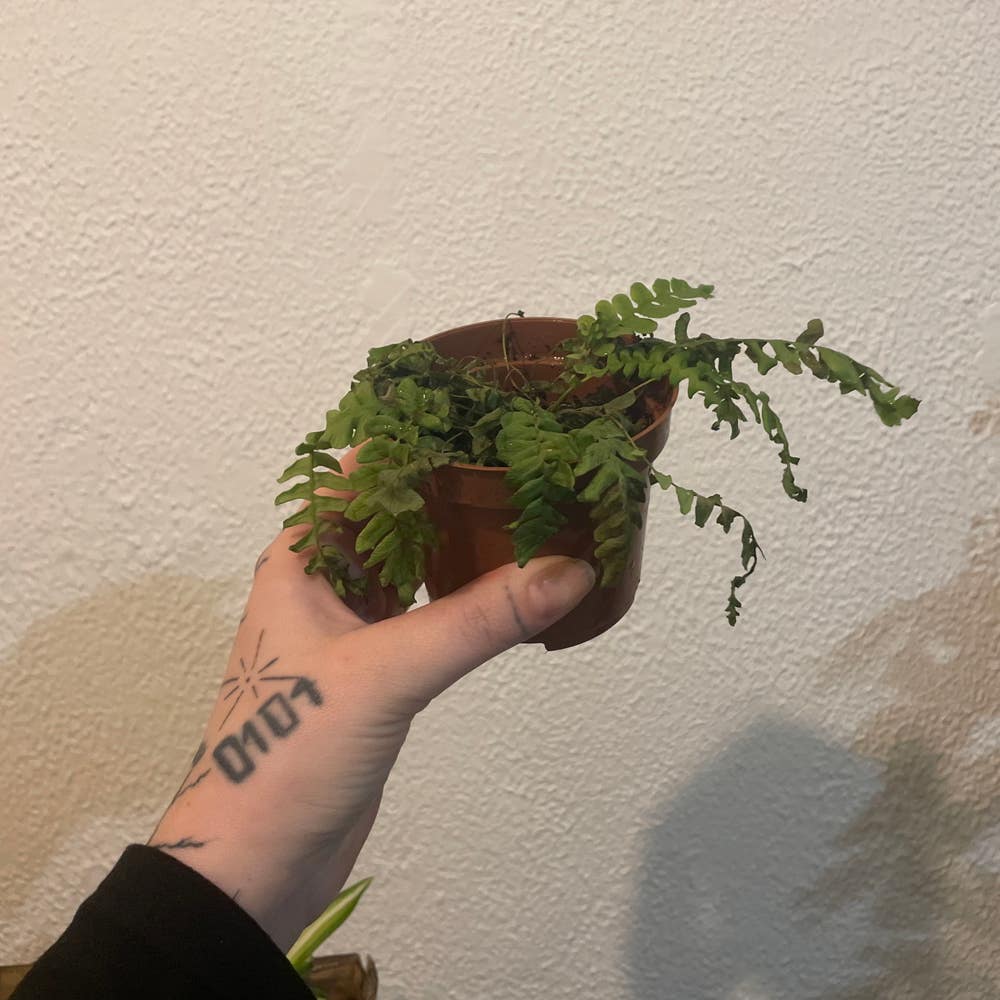
Care Summary for Lomaria discolor

Lomaria discolor
 Greg recommends:
 Water
Water
0.5 cups every 7 days
 Placement
< 3ft from a window
 Nutrients
Repot after 2x growth
Based on the 4” pot your plant is in, and that it doesn’t get direct sunlight.
 Trending in your area
Spider Plant

Tradescantia Nanouk

Burro's Tail
Philodendron Birkin
Jelly Bean Plant

Zebra Plant

Small-Leaf Spiderwort

Pearl Echeveria
Fiddle Leaf Fig

Rattlesnake Plant

Purple Heart
Marble Queen Pothos
Split Leaf Philodendr…
Money Tree

Chinese Money Plant
Dwarf Umbrella Tree

Cylindrical Snake Pla…

Golden Barrel Cactus
 Similar to Lomaria discolor

✨ Discover rare plants

Hoya sipitangensis

Aglaonema Spitfire

Aeonium 'Blushing Bea…

Philodendron eximium

Fagraea ceilanica

Caladium
Graptopetalum 'Marqui…

Bonsai Crassula

Large Leaf Elephant B…

Fernleaf Lavendar

Radiator Plant

Maroon Pitcher Plant

Hoya 'Millie'

Lithops

Echeveria Arrow

Milky Widow's Thrill
