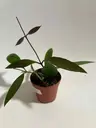
Grass-Leaved Alstroemeria
Taxonomy

Alstroemeria graminea
Alstroemeria
Alstroemeriaceae
Liliales

How to care for Grass-Leaved Alstroemeria
How often to water your Grass-Leaved Alstroemeria

every 9
Grass-Leaved Alstroemeria needs 0.5 cups of water every 9 when it doesn’t get direct sunlight and is potted in a 5" pot.
Use our water calculator to personalize watering recommendations to your environment or download Greg for more advanced recommendations for all of your plants.
Water 0.5 cups every
9
Finding light for Grass-Leaved Alstroemeria in your home

a window
Grass-Leaved Alstroemeria love being close to bright, sunny windows 😎.
Place it less than 1ft from a south-facing window to maximize the potential for growth.
Grass-Leaved Alstroemeria does not tolerate low-light 🚫.
Select your region to see how the current weather in your area affects the placement of Grass-Leaved Alstroemeria in your home 🏡.
How to fertilize Grass-Leaved Alstroemeria

Most potting soils come with ample nutrients which plants use to produce new growth.
By the time your plant has depleted the nutrients in its soil it’s likely grown enough to need a larger pot anyway.
To replenish this plant's nutrients, repot your Grass-Leaved Alstroemeria after it doubles in size or once a year—whichever comes first.
-
How do I propagate Ol' Fernie here?
-
Help Please! Planted 10 days ago and the leaves are turning pale. The soil still feels damp. Also half the flowers are falling off. Maybe that’s normal? I have never planted this before and I am no green thumb.
-
rip lilies 🥺 #dead #deadplantsmakepeoplehappytoo #lilyoftheincas you will be missed 💕

Care Summary for Grass-Leaved Alstroemeria
Grass-Leaved Alstroemeria
 Greg recommends:
 Water
Water
0.5 cups every 9 days
 Placement
< 1ft from a window
 Nutrients
Repot after 2x growth
Based on the 4” pot your plant is in, and that it doesn’t get direct sunlight.
 Trending in your area







 Similar to Grass-Leaved Alstroemeria
✨ Discover rare plants
Hoya crassipetiolata

Philodendron eximium

White Apple Moth Orch…

Radiator Plant
Astroloba congesta

Hoya kalimantan

Rainbow Echeveria

Euphorbia baioensis

Echeveria Esther
Skeleton Key Pothos

Dinteranthus microspe…

Graptoveria 'Douglas …
Philodendron 'Silver …

Orange Lipstick Plant
Phalaenopsis schiller…

Cleistocactus icosago…

Cereus peruvianus 'Pa…