


Philodendron grazielae
About Philodendron grazielae
Philodendrons grow aerial roots that grip the bark of trees, allowing them to grow over 20 feet tall! Their leaves change shape as they climb and can grow larger than a dinner plate. Fossils show Philodendrons growing as far back as 30 million years ago when South America was still connected to Antarctica! ❄️
Taxonomy

Philodendron grazielae
Philodendron
Araceae
Alismatales

How to care for Philodendron grazielae
How often to water your Philodendron grazielae

every 9
Philodendron grazielae needs 0.5 cups of water every 9 when it doesn’t get direct sunlight and is potted in a 5" pot.
Use our water calculator to personalize watering recommendations to your environment or download Greg for more advanced recommendations for all of your plants.

Water 0.5 cups every
9
Finding light for Philodendron grazielae in your home

a window
Philodendron grazielae can tolerate being far from a window and light source.
Place it less than 6 feet from a south-facing window to ensure it receives enough light to survive 💪.
Select your region to see how the current weather in your area affects the placement of Philodendron grazielae in your home 🏡.
How to fertilize Philodendron grazielae

Most potting soils come with ample nutrients which plants use to produce new growth.
By the time your plant has depleted the nutrients in its soil it’s likely grown enough to need a larger pot anyway.
To replenish this plant's nutrients, repot your Philodendron grazielae after it doubles in size or once a year—whichever comes first.
-
My philodendron Grazielae went from this #1 to this #2 in 2 months. 😢 WTH have I done to her? #HappyPlants #Philodendron #PlantsMakePeopleHappy #PlantAddict #PlantTherapy #GregGang
-
Growing great. But what might be the cause of brown spots on leafs? #Philodendron
-
4 all pink leaves on PPP. Would you chop or hope for new growth at previous chop point? I chopped it about a month ago due to the leaves not unfurling. The leaves unfurl now, they're just all pink😂😅 #HappyPlants #PlantsMakePeopleHappy #PlantAddict #Philodendron #PinkPrincessPhilodendron #PinkPlantsofGreg #NewGrowth
-
#thegreenshouse #HappyPlants #PlantsMakePeopleHappy #PlantAddict #NewGrowth #PropagationStation #SnakePlant #SnakePlantSquad #Sansevieria #SucculentLove #SucculentLove #PlantTherapy #floweringsnake #Sanserveriaflowering #PothosPack #Monstera #CalatheaCrew #Calathea #Hoya #HoyaHangout #HoyaHeads #PrayerPlant #Philodendron #VariegatedPinkLemon #ZamioculcasZamiifolia #ZzPlant #RavenZzPlant #Aglaonema #AlocasiaAddicts #Bonsai #Ficus #FiddleLeafFig #Anthurium #WhaleFinSnakePlant #ZeylanicaSnakePlant #WhitneySanserveria #SayuriSnakePlant #Cacti #AfricanMilkBush #dragonboneeuphorbia #VariegatedOpuntia , #PricklyPearCactusvariegated https:// I am a person who normally doesn’t try new sellers, but this one popped up in my Etsy (because you viewed section) and I did some research and looked at comments so I said why not…….I received such a beautiful shipment from #thegreenshouse yesterday……Richard (I assume he’s the owner) helped me pick out 3 basic plants. They arrived in perfect condition. My heart just 💕 swelled with joy. I posted his Etsy shop above. The blooming (smells like heaven) #sansevieriablackcoral has sooo many new babies and the pot is about to bust open from the new growth. #happywifehappylife
-
Phil is sprouting a new leaf!! #Philodendron
-
Why does my philodendron have sticky spots? My red emerald philodendron has some sticky dots on the underside of some of the leaves. It’s only a few of the leaves at the top of the plant. Any ideas what this could be? #Philodendron #PhiloFlock
-
Help! Red Congo care Shes got a brown spot that keeps getting bigger. After 2wks from the garden center i repotted her as she was root bound. And her soil is moist, in proper drainage soil. I dunno what i should do? Should i cut stem at base? Also can i bottom water this plant like i do my other plants? #redcongophilodendron #philodendron #help
-
I am floored. I put my trust into Green Escape and they sent me a grower’s choice Thai con with not one, not two, but THREE half moons. The cardinal is gorgeous and the Billitae is ADORABLE. This is my second variegated rope and it has 3X the roots my previous one had (and it was way bigger) so hopefully this one makes it!! But that Thai Con 🥵🥵🥵🥵🥵 #MonsteraMob #monsterathaiconstellation #Philodendron #PhiloFlock #PhilodendronBillietiae #PlantShopReview #PlantMail
-
I’m worried about this little guy. Any suggestions on what’s wrong with him? Thanks ❤️ #Philodendron
-
Hey! My plants leaves keep drooping. Has anyone got tips as to why this may be? I got it a week ago and some of the leaves have started drooping #Philodendron


Care Summary for Philodendron grazielae

Philodendron grazielae
 Greg recommends:
 Water
Water
0.5 cups every 9 days
 Placement
< 6ft from a window
 Nutrients
Repot after 2x growth
Based on the 4” pot your plant is in, and that it doesn’t get direct sunlight.
 Trending in your area

Arabian Coffee Plant
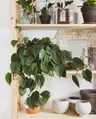
Heartleaf Philodendron
Cornstalk Dracaena
Jade Pothos
Baby Rubber Plant

Lucky Bamboo

Split Leaf Philodendr…

Small-Leaf Spiderwort

Majesty Palm

Swiss Cheese Vine

String of Bananas

Polka Dot Begonia

Golden Barrel Cactus

Chinese Evergreen

Ghost Plant
Pinstripe Calathea

Tradescantia Zebrina
Dieffenbachia
 Similar to Philodendron grazielae




✨ Discover rare plants
Philodendron 'Rio'

Pink Ruby Sedevaria

Dinteranthus microspe…

Cereus peruvianus 'Pa…

Large Leaf Elephant B…
White Apple Moth Orch…

Anastasia Weeping Fig

Electric Blue Gecko

Kilimanjaro Plant

Milky Widow's Thrill

Thelocactus macdowell…

Euphorbia

Fernleaf Lavendar

Aglaonema 'Green Bowl'

Philodendron 'Glorius'

Raphionacme flanaganii

Haworthia emelyae com…
