


Joshua Tree
About Joshua Tree
Joshua Tree is a popular houseplant 🌿 that is easy to grow and needs very little water to thrive. They do best in long-lasting, direct light ☀️ and should be less than 1 foot from a window.
Joshua Tree likes soil that is extremely well-draining. Your plant shouldn't need added fertilizers if you repot each time it doubles in size.
Joshua Tree belongs to the Yucca genus, and is native to Arizona, California, Mexico, Nevada, and Utah.
⚠️ Joshua Tree is not safe to consume. If you, a family member, or a pet has ingested any amount of plant material contact Poison Control, US (800) 222-1222, or your veterinarian. If you have children, cats, or dogs in the home, we suggest keeping this plant out of reach.
Taxonomy

Yucca brevifolia
Yucca
Asparagaceae
Asparagales
Also known as
Yucca palm, Tree yucca and Palm tree yucca

How to care for Joshua Tree
How often to water your Joshua Tree

every 12
Joshua Tree needs 0.5 cups of water every 12 when it doesn’t get direct sunlight and is potted in a 5" pot.
Use our water calculator to personalize watering recommendations to your environment or download Greg for more advanced recommendations for all of your plants.

Water 0.5 cups every
12
Finding light for Joshua Tree in your home

a window
Joshua Tree love being close to bright, sunny windows 😎.
Place it less than 1ft from a south-facing window to maximize the potential for growth.
Joshua Tree does not tolerate low-light 🚫.
Select your region to see how the current weather in your area affects the placement of Joshua Tree in your home 🏡.
How to fertilize Joshua Tree

Most potting soils come with ample nutrients which plants use to produce new growth.
By the time your plant has depleted the nutrients in its soil it’s likely grown enough to need a larger pot anyway.
To replenish this plant's nutrients, repot your Joshua Tree after it doubles in size or once a year—whichever comes first.
-
Yucca whhhaattt??? So we’ve had this plant for about four years now, and a couple of times we thought we lost it. Long story short, we thought it was going through another moment when we decided to check the roots because half the soil was drying with watering while the other half was not drying at all. THE SOIL HAD THE WHITE/GRAY BUGS ALL IN IT ALONG WITH HALF THE PALM OF THE TREE THAT WAS IN THE DIRT NOW ROTTED (assuming because of them). Donwe keep it or do we have to get rid of it ? Is it salvageable?
-
Why are the leaves turning white and limp? I moved her outside for summer. #BlueStemYucca
-
Does my Yucca need watering? Any suggestions appreciated. #BlueStemYucca
-
My yucca got a massive scale infestation last year. I neemed him, covered him in DE, and put him in the basement away from the rest of the plants. I decided to make him a "mother tree" I cut out the dead. Put prop balls on each limb and took a bunch of chonks, covered them in cinnamon, and stuck in the ground. It's been a couple weeks and I'm seeing new growth on a chonk and the main tree 😍🥳 #yucca #propagation #propball
-
Heyyy !!! One more added … Any tips for yucca 😊
-
Repotted using succulent soil and have been under watering in hopes to dry out the soil since I heard underwatering is better than overwatering but the stems still look weak and lower leaves are wilting #BlueStemYucca
-
It’s dying
-
An this grow outside in shade #BlueStemYucca
-
My yucca is bent over badly can the truck be rooted #BlueStemYucca
-
#BlueStemYucca #ThrivingOnNeglect For the second time my Yucca has been brought back from the brink. I have a hard time just sticking it outside and letting nature do its work. But it really loves my little north facing porch. This time though I’m hoping putting it near grow lights will help it continue to thrive over winter.


Care Summary for Joshua Tree

Joshua Tree
 Greg recommends:
 Water
Water
0.5 cups every 12 days
 Placement
< 1ft from a window
 Nutrients
Repot after 2x growth
Based on the 4” pot your plant is in, and that it doesn’t get direct sunlight.
 Trending in your area




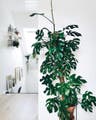



 Similar to Joshua Tree

✨ Discover rare plants

Hoya pottsii 'Khao Ya…
Phalaenopsis schiller…

Electric Fern

Milky Widow's Thrill

Black Monkey Thorn Tr…

Royal Flush Split Rock

Electric Blue Gecko

Picasso's Paintbrush
Astroloba congesta

Burro's Tail

Caladium

Tillandsia caerulea A…

Kilimanjaro Plant

Echeveria Esther

Euphorbia
Rosularia platyphylla
Graptopetalum 'Marqui…
