What Is The Best Way To Water a Bangalow Palm?
Archontophoenix cunninghamiana
By the Greg Editorial Team
Jun 18, 2024•4 min read
This article was created with the help of AI so we can cover more plants for you. May contain errors. See one? Report it here.
Nurture your Bangalow Palm to perfection 🌴 with the ultimate seasonal watering guide.
- Check top inch of soil to see if your palm thirsts for water.
- Seasons change, so does watering - adjust for temperature and weather.
- 🌱 Deep watering beats sprinkles for strong roots; avoid overwatering dangers.
When to Water Your Bangalow Palm
💧 Spotting Thirsty Soil
Check the top inch of soil; if it's dry, it's watering time. Don't be fooled by moist surface soil—dig a bit deeper to be sure.
🌦 Seasonal Watering Rhythms
Adjust your watering to the season's beat. Less in winter, more in summer—your Bangalow Palm's thirst changes with the temperature.
🌧 Weather Watch: Adapting to Rain and Drought
In a rain dance or drought, adapt. Rainy days mean a break for your watering can, while dry spells call for a more generous pour.
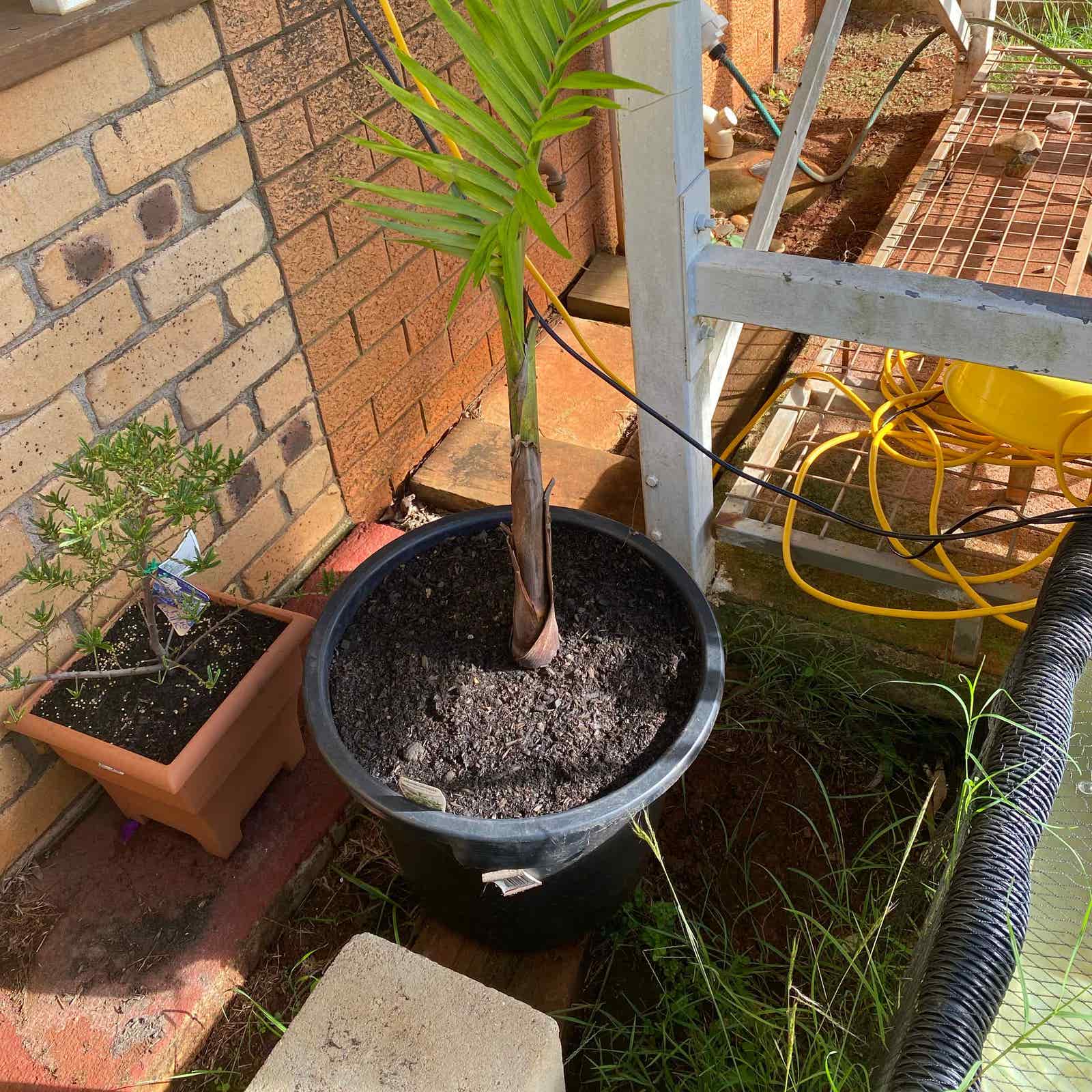
How to Water Your Bangalow Palm Right
💧 Deep Watering vs. Light Sprinkles
Deep watering nurtures your Bangalow Palm's roots, promoting a robust and drought-resistant foundation. This method involves saturating the soil to the root zone, encouraging roots to dive deep for their drink. It's not a daily affair; think of it as a hearty meal for your palm, served every couple of weeks or less, depending on your soil's mood and the weather's whims.
Light sprinkles are like snacks—insufficient and forgettable. They may leave your palm's roots shallow and wanting, making them vulnerable to stress. So, when the top inch of soil feels like a dry debate, it's time to water. And remember, if your soil shuns water like a cat avoids baths, it's gone hydrophobic. Rehydrate it slowly, coaxing it back to life.
🚱 The Perils of Overwatering
Overwatering is the helicopter parent of plant care—too much hovering can smother. It's not just about frequency; it's the volume too. Your Bangalow Palm isn't throwing a pool party; its roots need to breathe, not swim. Root rot is the uninvited guest here, and it loves a soggy soiree.
Keep an eye out for the telltale signs: leaves turning the color of envy and falling faster than social media trends. If your palm's pot feels heavier than your last breakup, you might be overdoing the H2O. So, let's not drown our leafy friends in affection, shall we?

The Tell-Tale Signs of Watering Woes
💧 Symptoms of Overwatering
Yellowing leaves may whisper the tale of overwatering your Bangalow Palm. But don't let their gentle hue fool you; it's a silent scream for less water. Black spots on stems and leaves? That's the drama of fungal or bacterial infections, thanks to the moist stage you've set with overzealous watering. And if the soil smells worse than forgotten gym socks, you're likely dealing with root rot—a sneaky villain that thrives in waterlogged conditions.
💦 Underwatering SOS
Conversely, your Bangalow Palm's plea for hydration is a display of dry, crispy leaves. They're not trying to be dramatic; they're just parched. If the leaves are curling up tighter than a rolled yoga mat, it's time to quench that thirst. Remember, a light pot is a thirsty pot. So, if lifting your palm feels like picking up a feather, it's high time for a watering session.

Fine-Tuning Your Watering Game
💧 Soil and Drainage: The Dynamic Duo
Ensuring your Bangalow Palm has the right foundation is crucial for optimal water uptake. A well-draining soil mix is like a backstage pass for water to reach the roots without causing a flood. Avoid clay-heavy soils that hold water like a grudge; instead, go for a mix that's loose and rich in organic matter. If you're dealing with heavy soil, consider amending it with perlite or coarse sand to improve drainage. Remember, your palm's roots need to breathe, not swim.
🌱 Mulching: Your Palm's Thirst-Quenching Blanket
Mulch is the unsung hero in the palm care playbook. A layer of organic mulch, such as wood chips or bark, acts like a mini reservoir, maintaining moisture levels and keeping the soil temp in check. But here's the kicker: don't pile it up against the trunk. Too much mulch can create a soggy mess and invite rot. Think of it as a doughnut around the base of your palm—coverage without smothering. Plus, as it breaks down, mulch gives back to the soil, adding nutrients and improving texture. It's a win-win for your thirsty palm.
⚠️ Safety First
This content is for general information and may contain errors, omissions, or outdated details. It is not medical, veterinary advice, or an endorsement of therapeutic claims.
Always consult a qualified healthcare professional before using any plant as food, medicine, or supplement.
Never eat any plant (or feed one to pets) without confirming its identity with at least two trusted sources.
If you suspect poisoning, call Poison Control (800) 222-1222, the Pet Poison Helpline (800) 213-6680, or your local emergency service immediately.
Spotted an error? Please report it here.
Keep your Bangalow Palm thriving 🌴 with Greg's personalized watering reminders, tailored to your home's unique conditions and the palm's needs.


