Best Potting Soil Mix for Bangalow Palm
Archontophoenix cunninghamiana
By the Greg Editorial Team
Jun 18, 2024•6 min read
This article was created with the help of AI so we can cover more plants for you. May contain errors. See one? Report it here.
Transform your Bangalow palm's life with this soil mix recipe for lush growth and vibrant health! 🌴✨
- Mold and wet soil signal distress; address with airflow and less watering.
- Craft your own mix: all-purpose soil, perlite, peat moss, and worm castings.
- Regular maintenance: Check soil monthly, refresh annually, and adjust watering seasonally.
Spotting and Fixing Unhealthy Soil
🚩 Signs Your Bangalow Palm is Unhappy with Its Soil
Mold on your Bangalow palm's soil is like a red flag—it's time to act. If the soil smells swampy or you notice a white, fuzzy growth, your palm is in distress. Overly wet soil can suffocate roots, leading to a sad, droopy palm.
Turning the Soil Situation Around
Quick fixes can save your palm from waterlogged misery. Cut back on watering and improve airflow around the plant. If mold has thrown a party, consider a fungicide to crash it. When roots turn mushy, it's surgery time—trim the rot and repot in fresh, well-draining soil. If your palm's foundation feels like a wet sponge, it's a sign to repot. Remember, a consistent watering schedule is your palm's best friend.
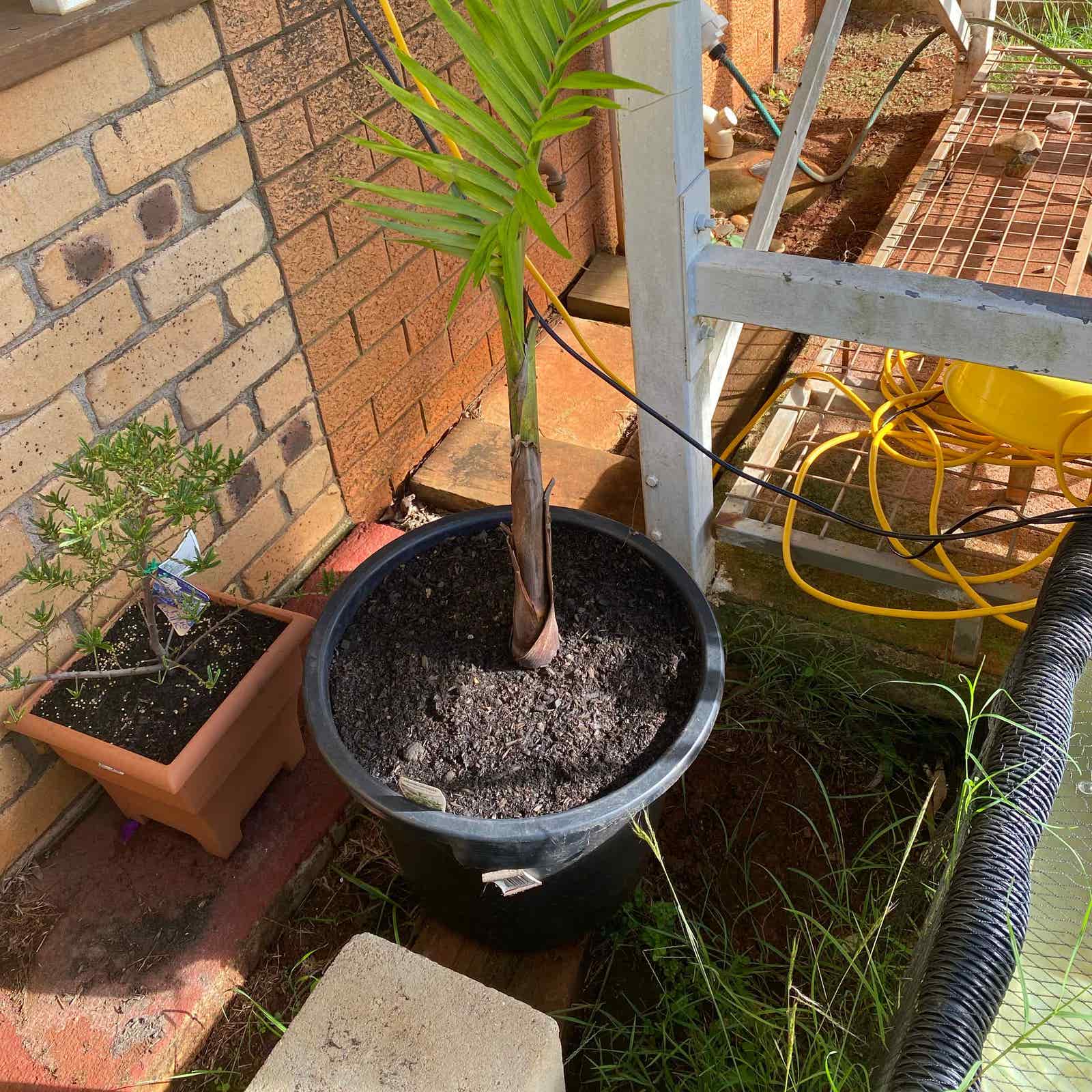
Crafting the Perfect Potting Mix
💡 The Essentials for Bangalow Bliss
Creating the ideal potting mix for your Bangalow palm is like building a foundation for a house—it needs to be just right. Start with a base of all-purpose potting soil; this is the structural support your palm needs.
Incorporate one part perlite to introduce that essential airiness, preventing the roots from drowning in excess water. Add in one part sphagnum peat moss to act as the moisture maestro, while also keeping the pH levels in check.
For a nutritional boost, mix in half a cup of worm castings or compost. These are like the vitamins for your plant, enriching the soil with all the good stuff. If your mix feels too dense, throw in a handful of coarse sand to improve drainage and prevent root rot.
💡 Balancing Act: pH and Nutrients
Your Bangalow palm doesn't just want any soil; it craves a mix that's rich in nutrients but not to the point of excess. The pH level is critical—it should be neutral to slightly acidic for your palm to absorb nutrients effectively.
If you need to adjust the pH, adding limestone can make the soil more alkaline, while sulfur will nudge it towards being more acidic. Keep an eye on the pH level and tweak as necessary to maintain that sweet spot between 6.0 and 7.0.
Remember, it's not just about throwing ingredients together; it's about creating a harmonious blend that caters to the unique needs of your Bangalow palm. With the right mix, your palm will thrive, rewarding you with lush growth and that tropical vibe we all love.

DIY Soil Mix: Your Bangalow Palm Will Thank You
🌱 Mixing It Up at Home
Creating your own Bangalow palm soil mix is like being a chef in a high-end restaurant, except your customer is a plant with very specific tastes. Here's how to whip up a gourmet soil mix that'll have your palm doing the happy dance.
- Start with a base of 3 parts potting soil. This is your canvas, the foundation upon which everything else will rest.
- Add 2 parts coarse sand or perlite for that crucial aeration. Think of it as the crunchy croutons in a salad.
- Mix in 1 part peat moss or coconut coir to retain just the right amount of moisture without waterlogging the roots.
- For the nutrient kick, throw in 1 part compost or worm castings. It's like the secret sauce that makes everything better.
- Stir thoroughly. You want every inch of your mix to be as even as your grandma's best cake batter.
🧼 Sterilize and Serve
Before you let your Bangalow palm sink its roots into your homemade mix, ensure it's as clean as a whistle.
- Bake your soil at 200°F (about 93°C) for 30 minutes to kill off any unwanted pests or pathogens. It's like pasteurizing milk – nobody wants the bad stuff.
- If you're using a new container, wash it with a solution of 1 part bleach to 9 parts water, then rinse well. It's the equivalent of giving your dishes a good scrub before serving food.
- Fill your pot, leaving room at the top for watering. Imagine pouring a beer with just the right amount of head – that's your soil level.
- Water the mix and let it drain. This is the dress rehearsal before the big show – make sure it's ready for your palm's roots to take the stage.
Remember, the key to a perfect soil mix is balance. Too much water retention and you'll drown the roots; too little and they'll be gasping for moisture. Get it just right, and your Bangalow palm will be the envy of the neighborhood.

When to Refresh: Keeping the Soil Prime
🌱 Recognizing the Need for a Soil Refresh
Timing is everything. Your Bangalow palm will subtly hint when it's time for a soil refresh. If your palm's leaves start to look less than perky or the soil feels more like a brick than a fluffy cloud, take note. The soil should be loose and crumbly, not compacted.
🔄 Regular Soil Maintenance
Check the soil's condition monthly. When it starts resembling that leftover lasagna you forgot in the fridge, it's action time. Annually, or when the soil seems as tired as you feel before your morning coffee, give your palm a fresh start with a new mix.
🎩 Top-Dressing: A Quick Fix
Not ready to commit to a full repot? Consider top-dressing. Remove the top few inches of old soil and replace it with fresh mix. It's like giving your palm a new haircut—it looks better and feels great.
🍂 Seasonal Adjustments
Stay sharp and adjust your care with the seasons. If you notice the soil staying wetter than a rainforest floor, it's a sign to reassess your mix or watering habits.
🌬️ Soil Aeration
If the soil is tighter than your jeans after Thanksgiving dinner, it's time to aerate. Gently loosen the soil without disturbing the roots too much. This helps oxygen reach the roots, which is like a breath of fresh air for your palm.
👆 The Finger Test
Trust your fingers; they're the best tools you have. Poke around the soil before deciding to water. If it's damp, hold off. If it's dry, it's time to quench your palm's thirst.
🧂 Leaching Salts
If you're dealing with a case of the browns—browning leaf tips, that is—try leaching the soil. Run water through the soil several times to flush out excess salts. It's like detoxing after a weekend of bad decisions.
🌱 The Repotting Decision
When your palm's roots start to look like they're trying to escape Alcatraz, it's time to repot. Spring is the prime time for this, as plants are in their growth groove. But if the roots are fine and it's just the soil that's the issue, a refresh will suffice.
Remember, your Bangalow palm isn't just living in that soil; it's relying on it. Treat it like a five-star resort, and your palm will reward you with lush, tropical vibes.
⚠️ Safety First
This content is for general information and may contain errors, omissions, or outdated details. It is not medical, veterinary advice, or an endorsement of therapeutic claims.
Always consult a qualified healthcare professional before using any plant as food, medicine, or supplement.
Never eat any plant (or feed one to pets) without confirming its identity with at least two trusted sources.
If you suspect poisoning, call Poison Control (800) 222-1222, the Pet Poison Helpline (800) 213-6680, or your local emergency service immediately.
Spotted an error? Please report it here.
Turn your potting mix into a luxurious haven 🌴 for your Bangalow palm with Greg's personalized care reminders, ensuring perfect moisture and soil health.


