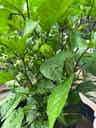
Hardy Orange
About Hardy Orange
Hardy Orange is a popular houseplant 🌿 that is a fun challenge to grow and needs regular watering to thrive. They do best in long-lasting, direct light ☀️ and should be less than 1 foot from a window.
Hardy Orange likes soil that is well draining. Your plant shouldn't need added fertilizers if you repot each time it doubles in size.
Hardy Orange belongs to the Citrus genus, and is native to Central and Northern China.
Taxonomy

Citrus trifoliata
Citrus
Rutaceae
Sapindales
Also known as
Trifoliate orange, Poncirus trifoliata, Japanese bitter-orange and Chinese bitter orange

How to care for Hardy Orange
How often to water your Hardy Orange

every 9
Hardy Orange needs 0.5 cups of water every 9 when it doesn’t get direct sunlight and is potted in a 5" pot.
Use our water calculator to personalize watering recommendations to your environment or download Greg for more advanced recommendations for all of your plants.

Water 0.5 cups every
9
Finding light for Hardy Orange in your home

a window
Hardy Orange love being close to bright, sunny windows 😎.
Place it less than 1ft from a south-facing window to maximize the potential for growth.
Hardy Orange does not tolerate low-light 🚫.
Select your region to see how the current weather in your area affects the placement of Hardy Orange in your home 🏡.
How to fertilize Hardy Orange

Most potting soils come with ample nutrients which plants use to produce new growth.
By the time your plant has depleted the nutrients in its soil it’s likely grown enough to need a larger pot anyway.
To replenish this plant's nutrients, repot your Hardy Orange after it doubles in size or once a year—whichever comes first.
-
When a seed falls out of the slice of lemon in your twisted tea you grow twisted lemons 🍋🏝️ future #Bonsai #fromseed 🧬 for next generation gift
-
Growth is just goin crazy right now. I know it must be close to root bound. Not the best pics either really but that much variegation had me staggering lol no fruit or blooms currently it’s in growth phase. Pulled fruit last month variegated pink lemon on left Persian lime on right. had to show the fruits because the colors you can see the stripes a lot more before it’s not fully ripe and starts turning yellow definitely puts on a show I really enjoy this plant 🪴  #HappyPlants #NewGrowth #variegatedplants #Citrus
-
Leaves dry up Hi! Got this Kumquat around 2 weeks ago and repotted it but some leaves still get brown spotty and brittle. Check the soil for wetness, gave it fertilizer and plenty of sun.....
-
Baby calamondin... Inside or outside? I just got a 4 ft calamondin tree and I'm wondering if it's better kept outside on my patio for direct sunlight or Best kept inside near the window until it becomes a bit more sturdy. Any insight would be helpful.
-
It’s putting out new growth on each branch. Indoors because of chill outdoors. Any special treatment?
-
I have 3 ponderosa lemon trees. They are doing very well. I have a few lemons that are all yellow and I guess ready to pick. How long can I keep them on the plant before picking? I really didn't want to pick them yet..Wasn't sure. Thank you. #MeyerLemon
-
Hi. It's Laurie again. Here is a picture of the lemon tree. See the curled leaves. Some leaves are dry too.
-
it DID show up 🎉🎉🎉 my mandarin tree officially exists 🤠
-
Y lemon tree has got yellow and brown leaves. I just moved it in the house because it got cold out. What can I do to help it do better. #MeyerLemonTree
-
I only have 1 lemon tree with a lime tree. Is it self pollinating? #MeyerLemonTree


Care Summary for Hardy Orange

Hardy Orange
 Greg recommends:
 Water
Water
0.5 cups every 9 days
 Placement
< 1ft from a window
 Nutrients
Repot after 2x growth
Based on the 4” pot your plant is in, and that it doesn’t get direct sunlight.
 Trending in your area
Pinstripe Calathea

Chinese Money Plant

String of Hearts

Swiss Cheese Vine

Cathedral Windows

Blushing Bride Air Pl…

Blue-Stem Yucca

String of Bananas
Fiddle Leaf Fig
Cornstalk Dracaena

Split Leaf Philodendr…

Venus Fly Trap

Pothos N' Joy
Heart of Jesus

String of Pearls
Baby Rubber Plant
Golden Torch

Pearl Echeveria
 Similar to Hardy Orange
✨ Discover rare plants

Fagraea ceilanica

Philodendron 'Glorius'
Hoya crassipetiolata

Hoya kalimantan

Aglaonema 'Green Bowl'

Peperomia 'Harmony's …

Radiator Plant

Crassula 'Purple Drag…

Bonsai Crassula

Anastasia Weeping Fig
Linnaei Kunth
Astroloba congesta
Philodendron 'Silver …

Sarcochilus fitzgeral…

Red Mistletoe Cactus

Anthurium 'Fantasy Lo…

Kilimanjaro Plant