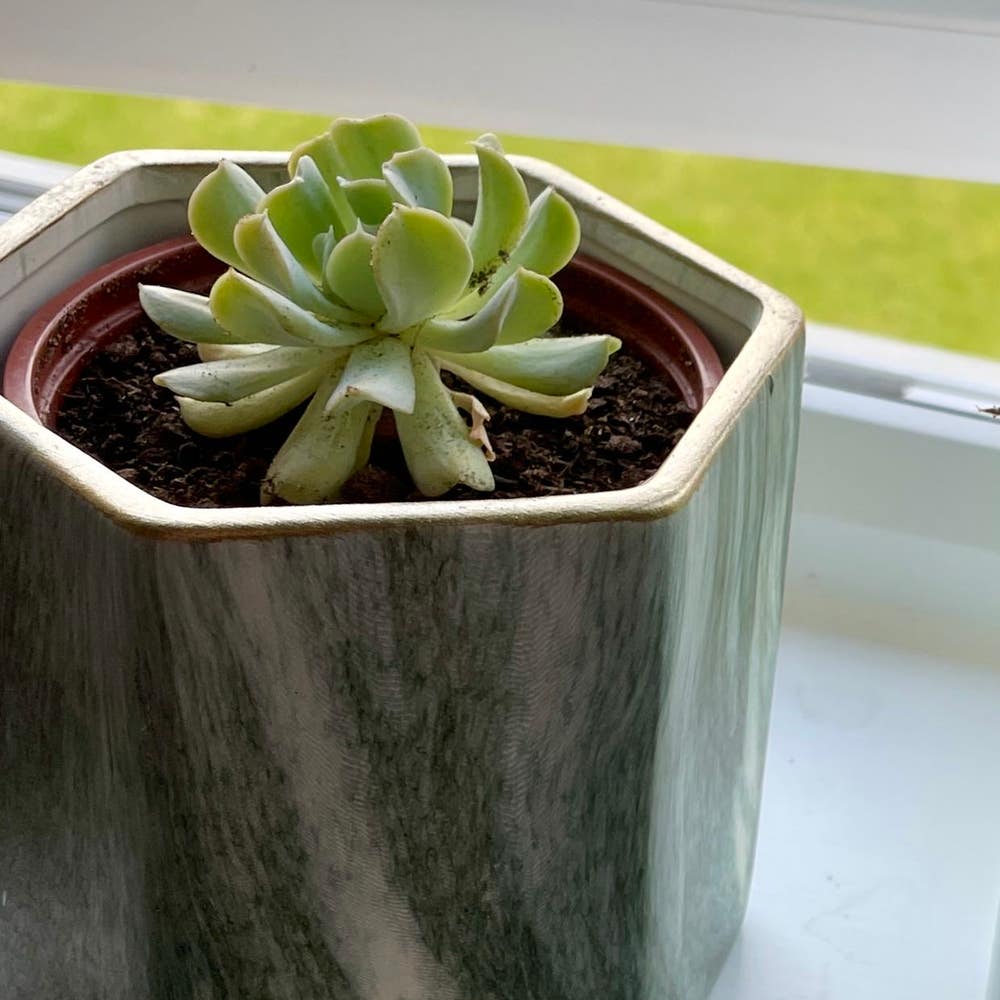
🌞 Your Echeveria 'Topsy Turvy''s Sunlight Needs
Echeveria runyonii 'Topsy Turvy'
By the Greg Editorial Team
Jun 18, 2024•3 min read
This article was created with the help of AI so we can cover more plants for you. May contain errors. See one? Report it here.
- 🌞 5-6 hours of direct sunlight daily, morning sun is best.
- 🏡 South or east-facing windows ideal for indoor 'Topsy Turvy'.
- 💡 LED grow lights recommended, mimic natural light with timers.
Soaking Up the Sun: Outdoor Light Perfection
🌞 Finding the Sweet Spot
Echeveria 'Topsy Turvy' craves sunshine like a cat craves a warm windowsill. 5-6 hours of direct sunlight is the magic number for these outdoor succulents. The morning sun is your ally, offering a gentle touch compared to the afternoon's harsh slap.
Transitioning to the Great Outdoors
Acclimating your 'Topsy Turvy' to the sun is a bit like teaching a kid to swim—start in the shallow end. Begin with dappled shade and gradually shift to more sun over a week or two. Sunburn signs? Think yellowing or crispy leaves. If your plant's throwing shade (by looking burnt), dial back the sun exposure.
Remember, the sun's path is a moving target, so a perfect spot in spring might be a scorcher by summer. Keep those eyes peeled and be ready to shuffle your succulent to maintain that sweet light balance.

Basking by the Window: Indoor Light Mastery
⭐️ Prime Real Estate for Indoor Rays
Identifying the best window for your indoor 'Topsy Turvy' is crucial. South-facing windows in the Northern Hemisphere are the jackpot, offering bright direct light. However, east-facing windows can be the next best thing, providing bright indirect light that's gentler on the leaves. Check for light-colored shadows with blurry edges; it's a telltale sign your plant is soaking up enough rays.
🕶️ Sun Shields Up!
Sheer curtains are your plant's sunscreen. They diffuse intense sunlight, protecting your 'Topsy Turvy' from the harsh midday glare. Remember, it's a balancing act—too much heat can stress your succulent. If you notice signs of sun stress, like bleaching or wilting, it's time to adjust the blinds or move the plant a few feet away from the window. Keep an eye on the light dance throughout the day; your plant's health depends on it.

When Sunlight Sparks Blooms
🌟 The Light-Bloom Connection
Bright, indirect light is akin to a VIP pass for the 'Topsy Turvy' to enter the blooming stage. While this succulent isn't the most prolific bloomer, the right light conditions can nudge it to showcase its flowers.
🌅 The Ideal Light Conditions to Encourage Flowering
Your 'Topsy Turvy' craves a light buffet of morning or evening sun. Think of it as a soft wake-up call or a gentle goodnight kiss—too harsh, and you risk a sunburnt succulent. Avoid the midday glare like you'd dodge spoilers for your favorite show.

Artificial Sun: Grow Light Game Plan
💡 Choosing Your Indoor Sun
In the quest for the optimal glow for your Echeveria 'Topsy Turvy', the grow light market is a veritable jungle. LEDs are the sleek, energy-sipping Ferraris of the grow light world, emitting a spectrum that can turbocharge growth without the heat hangover. On the other hand, fluorescent T5 bulbs are the reliable sedans, less flashy but budget-friendly and still effective, especially for smaller setups.
💡 Timing is Everything
Your 'Topsy Turvy' craves a routine as much as you do. Aim for 13-18 hours of light, mimicking the generous sun of its natural habitat. A timer is your best friend here, automating the sunrise and sunset to keep your succulent in circadian rhythm. Remember, even sun worshippers need their beauty sleep to avoid getting frazzled.
⚠️ Safety First
This content is for general information and may contain errors, omissions, or outdated details. It is not medical, veterinary advice, or an endorsement of therapeutic claims.
Always consult a qualified healthcare professional before using any plant as food, medicine, or supplement.
Never eat any plant (or feed one to pets) without confirming its identity with at least two trusted sources.
If you suspect poisoning, call Poison Control (800) 222-1222, the Pet Poison Helpline (800) 213-6680, or your local emergency service immediately.
Spotted an error? Please report it here.
Watch your Echeveria 'Topsy Turvy' flourish by letting Greg 🌞 measure light levels and remind you when it's time to soak up the sun or seek shade.