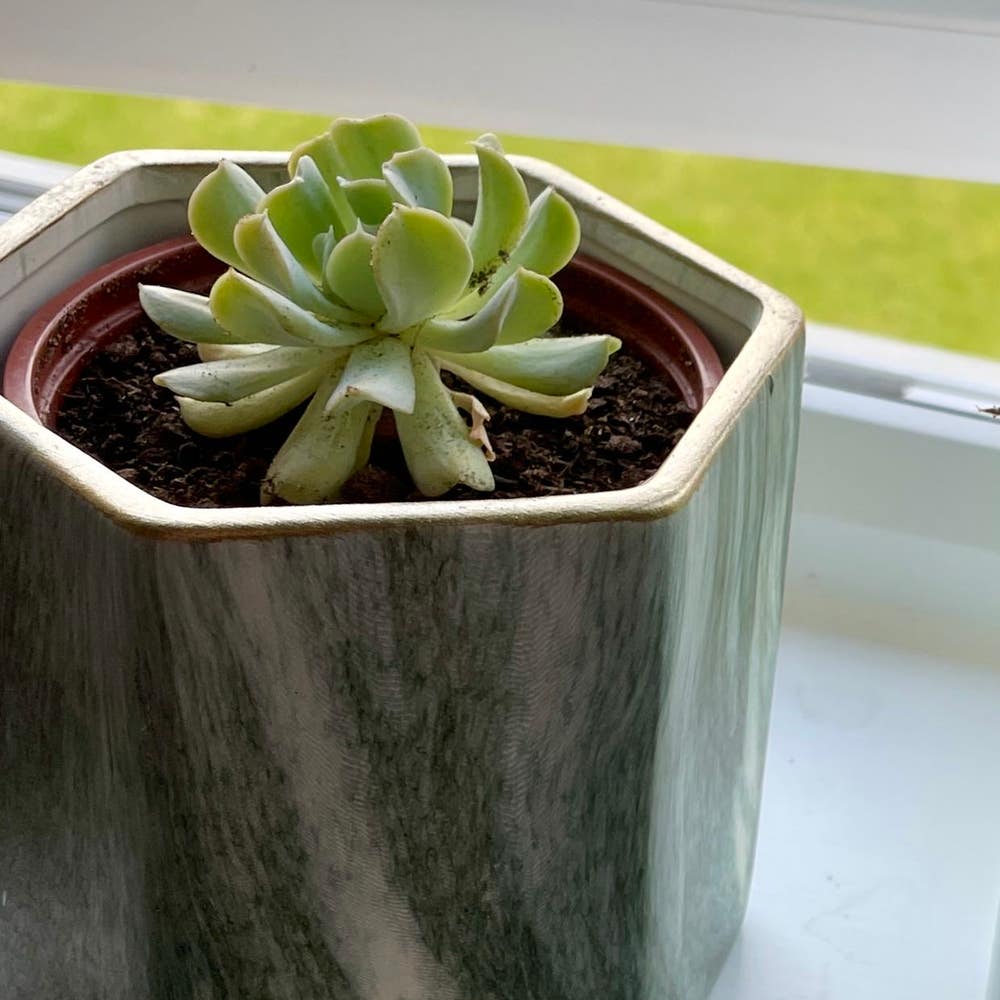
🌞 Does My Echeveria 'Topsy Turvy' Need Direct Sunlight?
Echeveria runyonii 'Topsy Turvy'
By the Greg Editorial Team
Jun 18, 2024•5 min read
This article was created with the help of AI so we can cover more plants for you. May contain errors. See one? Report it here.
- 🌞 Direct sunlight is essential, but avoid too much to prevent sunburn.
- Bright, indirect light for 4-6 hours is ideal for thriving 'Topsy Turvy'.
- Rotate and adjust position to balance light exposure and prevent stress.
Sunlight and Echeveria 'Topsy Turvy': Finding the Sweet Spot
🌞 What 'Direct Sunlight' Means for Your Succulent
Direct sunlight is like the main course for your Echeveria 'Topsy Turvy'—it's where the plant gets its energy. But just as with any feast, too much can lead to a bellyache, or in this case, sunburn. Indirect sunlight, on the other hand, is more like a light snack—satisfying but not always enough to keep your succulent robust and colorful.
Echeveria 'Topsy Turvy' thrives when it basks in bright light, but it doesn't mean you should let it roast all day under the scorching sun. Bright, indirect light is the sweet spot, where it gets its fill without the risk of a sunburn. If your plant starts stretching out, it's reaching for more light—time to move it closer to the sun's rays.
🐻 The Goldilocks Principle: Not Too Much, Not Too Little
Finding the ideal sunlight conditions for your Echeveria 'Topsy Turvy' is a bit like Goldilocks tasting porridge—it should be just right. Aim for a spot that gets 4-6 hours of gentle morning sun, followed by dappled or indirect light for the rest of the day. This will keep your succulent's colors vibrant and its form compact.
Be vigilant for signs of too much sun. If your Echeveria 'Topsy Turvy' starts sporting a sunburn—evidenced by discolored, crispy leaves—it's time to provide some shade. Remember, a little tan is chic, but lobster red is definitely not in this season for succulents.

When the Sun Hits Your Windowsill: Direction Matters
🧭 North, South, East, or West: Navigating Your Home's Geography
Window direction is crucial for your Echeveria 'Topsy Turvy'. South-facing windows are the sunbathing champions, offering the most intense light. Your succulent can thrive here, but summer might call for a bit of shade to prevent a sunburn. North-facing windows are the low-light lounges, not ideal for these light-loving plants. East-facing windows provide a gentle morning glow, perfect for a soft start. West-facing windows deliver a strong afternoon light, which can be a bit much—think of it as the plant world's happy hour that could use some moderation.
🌍 Hemisphere Hacks: Sun Angles and Your Succulent
Your hemisphere plays a role too. In the Northern Hemisphere, south-facing windows are your succulent's best friend, while in the Southern Hemisphere, it's the north-facing windows that win the prize. If your Echeveria 'Topsy Turvy' isn't getting the light it craves, get creative. Reflective surfaces can help, and grow lights can fill in the gaps—but don't overdo it. And remember, as seasons change, so should your plant's position to catch those precious rays. Keep an eye on the sun's angle and be ready to shuffle your succulent to that just-right spot.

Acclimating Your Echeveria 'Topsy Turvy' to Sunlight
🌞 Gradual Tans are In: Easing Your Plant into the Sun
Slow and steady wins the race when introducing your Echeveria 'Topsy Turvy' to sunlight. Start by placing it in a spot with filtered light and gradually shift it towards more exposure over a period of weeks. This mimics the natural progression of the sun's intensity, preventing the shock and awe that could lead to a sunburnt succulent.
- Begin with indirect light for a week or two.
- Move to a spot with morning sun and afternoon shade.
- Gradually increase the plant's time in the sun by 1-2 hours every few days.
- Monitor the plant's response, dialing back if you notice signs of stress.
🛡️ Sun Shields: Protecting Your Plant from Harsh Rays
Even sun worshippers need protection. Use sheer curtains or blinds as a sunscreen for your Echeveria 'Topsy Turvy' during the harshest midday hours. If outdoors, a shade cloth can provide a similar effect, filtering out the intensity while still letting your plant bask in the glory of the sun.
- Indoors, position behind a sheer curtain during peak sunlight.
- Outdoors, set up a shade cloth with 30-50% light transmission.
- Consider a temporary parasol for unexpected heat waves.
- Keep the soil evenly moist to help with temperature regulation.

Keeping an Eye on Your Sun-Kissed Succulent
🚨 Spotting Trouble: Signs of Sunburn and Stress
Sunburn on your Echeveria 'Topsy Turvy' is no joke. Look for white or brown spots on the leaves, a clear SOS from your succulent. If it's sporting more brown than a beach bum after a sun-soaked day, it's time to act. Move it to a spot with gentler light; think of it as a succulent sanctuary from the solar onslaught.
Color changes can be tricky; reds and pinks might just be your plant flaunting its sun-kissed best. But if the leaves are looking more fried than fabulous, you've got a problem. It's not just about aesthetics—sun-stressed plants are in genuine distress.
🌅 Sunlight Shuffle: Adjusting Your Plant's Position
When your Echeveria starts leaning like it's eavesdropping, it's craving more light. But if it's looking scorched, it's had too much. Adjust its position like a chess piece, always aiming for that perfect balance.
The sun's position isn't static, and neither should your plant be. Rotate your Echeveria regularly for even exposure, and avoid the midday sun's harsh rays like you'd avoid spoilers for your favorite show. If you're seeing signs of sunburn, consider a gradual shift to a brighter spot to avoid further damage.
Remember, your Echeveria 'Topsy Turvy' is tough, but it's not invincible. Keep a watchful eye, and it'll reward you with its quirky, spiraled beauty.
⚠️ Safety First
This content is for general information and may contain errors, omissions, or outdated details. It is not medical, veterinary advice, or an endorsement of therapeutic claims.
Always consult a qualified healthcare professional before using any plant as food, medicine, or supplement.
Never eat any plant (or feed one to pets) without confirming its identity with at least two trusted sources.
If you suspect poisoning, call Poison Control (800) 222-1222, the Pet Poison Helpline (800) 213-6680, or your local emergency service immediately.
Spotted an error? Please report it here.
Keep your Echeveria 'Topsy Turvy' sun-kissed ☀️ without the burn by letting Greg guide you in finding the perfect spot for just the right light.