


Dieffenbachia standleyi
About Dieffenbachia standleyi
Dieffenbachia was cultivated in England before 1759 and upper Amazon indigenous groups are known to have used their calcium oxalates to make poison arrows. Dieffenbachia flowers can generate large amounts of excess heat which botanists believe attracts potential pollinators to the flower's warmth. 🐝
Taxonomy

Dieffenbachia standleyi
Dieffenbachia
Araceae
Alismatales

How to care for Dieffenbachia standleyi
How often to water your Dieffenbachia standleyi

every 9
Dieffenbachia standleyi needs 0.5 cups of water every 9 when it doesn’t get direct sunlight and is potted in a 5" pot.
Use our water calculator to personalize watering recommendations to your environment or download Greg for more advanced recommendations for all of your plants.

Water 0.5 cups every
9
Finding light for Dieffenbachia standleyi in your home

a window
Dieffenbachia standleyi can tolerate being far from a window and light source.
Place it less than 6 feet from a south-facing window to ensure it receives enough light to survive 💪.
Select your region to see how the current weather in your area affects the placement of Dieffenbachia standleyi in your home 🏡.
How to fertilize Dieffenbachia standleyi

Most potting soils come with ample nutrients which plants use to produce new growth.
By the time your plant has depleted the nutrients in its soil it’s likely grown enough to need a larger pot anyway.
To replenish this plant's nutrients, repot your Dieffenbachia standleyi after it doubles in size or once a year—whichever comes first.
-
My plant is looking really down. I have been watering her and even changed her soil about 2 weeks back. Can someone give me some tips. I feel like she’s dying on me. #Dieffenbachia
-
A client gave me some cuttings from his dieffenbachia. They were pretty thin. But I rooted them in water for a few weeks until they got some sturdy roots. I finally put them into soil yesterday. Here’s to hoping that they will grow big and strong like their big brother Dieter. #PlantsMakePeopleHappy #PlantAddict #Dieffenbachia
-
Hello #GregGang! 😁 My mother ended up giving me some plants today, and I got this guy? Does anyone know what kind of plant it is? the app said #Dieffenbachia but idkkk. 😅 #WhatPlantIsThis #HappyPlants #PlantsMakePeopleHappy #PlantAddict #PlantID
-
Delilah had to have another pruning she needed to get rid of all those bad sick leaves but her roots still look great so I still have hope for her she will be back up in no time! #Dieffenbachia #Delilahjourney #PlantTherapy #GregGang #HappyPlants #newplantmomma
-
Help! #Dieffenbachia Can anyone diagnose my dumb cane plant? 2 weeks ago, the leaves turned yellow with brown fringing, I've cut the worst of the leaves and there are new shoots in their place. I think my dumb cane has root rot. Do I need to repot? What should I look for when buying new soil?
-
Does this look like spider mites? Just got it in the last week from a nursery! #Dieffenbachia
-
Hi! A fee of my Dieffenbachia's leaves have stated to turn yellow, but there also a lot new leaves growing? is there anything I should do? Any suggestions are appreciated :) #Dieffenbachia
-
Poor Nick is turning brown on its tips. What can I do to help!? #Dieffenbachia
-
Whats wrong with my dieffenbachia? Its got these yellow and brown spots on its leaves even new ones, should i be worried? #help #Dieffenbachia
-
#StartedFromACuttingNowWereHere #Dieffenbachia #ChineseEvergreen


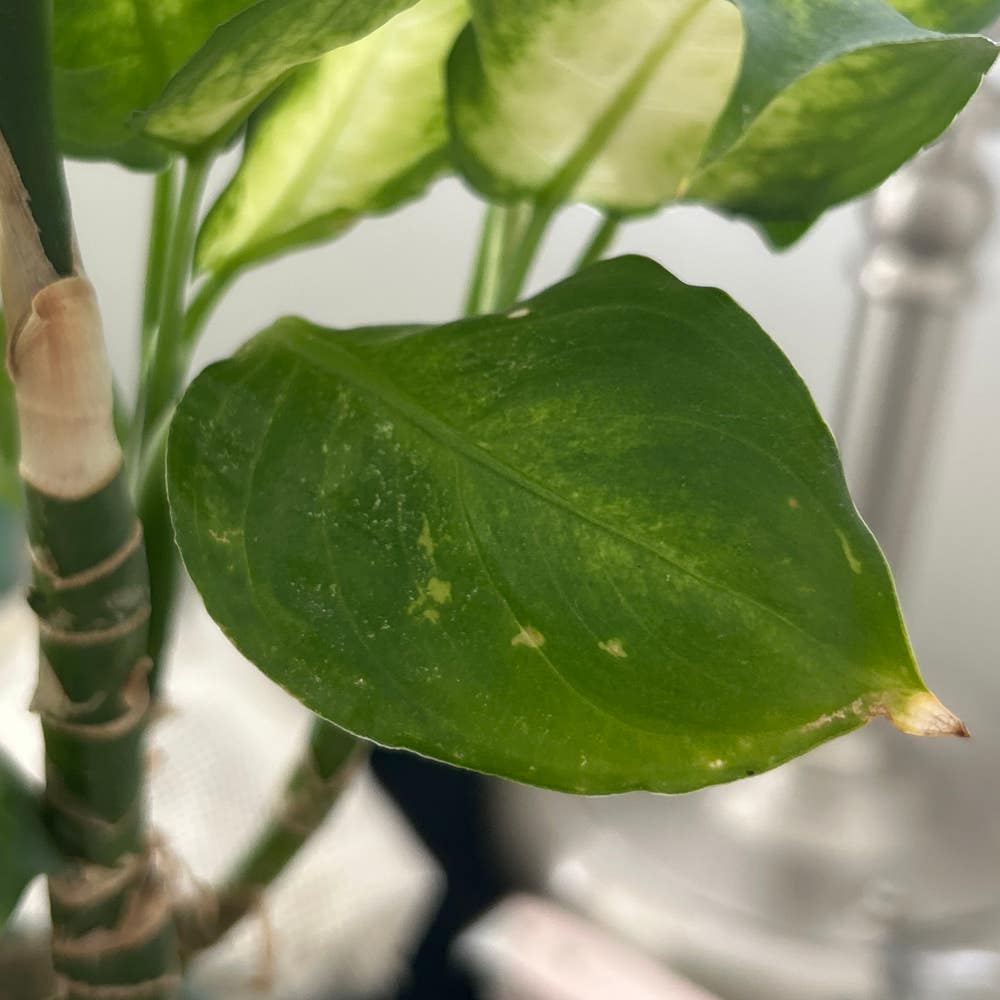


Care Summary for Dieffenbachia standleyi

Dieffenbachia standleyi
 Greg recommends:
 Water
Water
0.5 cups every 9 days
 Placement
< 6ft from a window
 Nutrients
Repot after 2x growth
Based on the 4” pot your plant is in, and that it doesn’t get direct sunlight.
 Trending in your area










 Similar to Dieffenbachia standleyi


✨ Discover rare plants

Electric Blue Gecko
Linnaei Kunth

Blue Moon Wisteria
Thelocactus macdowell…

Fagraea ceilanica
Phalaenopsis schiller…

Orange Lipstick Plant

Cleistocactus icosago…

Aglaonema 'Green Bowl'
Rosularia platyphylla

Echeveria Arrow

Echeveria Esther

Christmas Candle

Tillandsia caerulea A…
Philodendron 'Rio'

Haworthia emelyae com…

Red Mistletoe Cactus
