

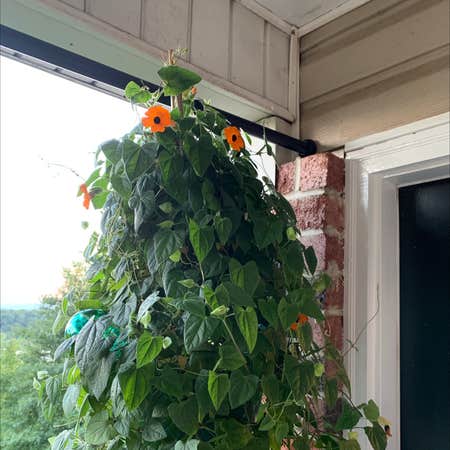


Blackeyed Susan Vine

3.0 out of 5 (1 experiences)
 Browns easily
Also known as
Black-eyed susan vine
Taxonomy

Thunbergia alata
Thunbergia
Acanthaceae
Lamiales

How to care for Blackeyed Susan Vine
How often to water your Blackeyed Susan Vine

every 9
Blackeyed Susan Vine needs 0.5 cups of water every 9 when it doesn’t get direct sunlight and is potted in a 5" pot.
Use our water calculator to personalize watering recommendations to your environment or download Greg for more advanced recommendations for all of your plants.

Water 0.5 cups every
9
Finding light for Blackeyed Susan Vine in your home

a window
Blackeyed Susan Vine love being close to bright, sunny windows 😎.
Place it less than 1ft from a south-facing window to maximize the potential for growth.
Blackeyed Susan Vine does not tolerate low-light 🚫.
Select your region to see how the current weather in your area affects the placement of Blackeyed Susan Vine in your home 🏡.
How to fertilize Blackeyed Susan Vine

Most potting soils come with ample nutrients which plants use to produce new growth.
By the time your plant has depleted the nutrients in its soil it’s likely grown enough to need a larger pot anyway.
To replenish this plant's nutrients, repot your Blackeyed Susan Vine after it doubles in size or once a year—whichever comes first.
-
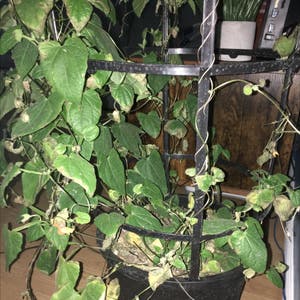
Repotting Black Eyed Susan #BlackeyedSusanVine Hello fellow plant lovers! I have a BES and it's on a cute trillis but I want to replant in a bigger pot . What's the best way to replant it with the vines all tied to the trellis it's hard to get out of the pot. Do I have to replace the trellis do it has more room to grow?
-
Hi friends! What kind of container do you grow your black-eyes Susan vine in? I have not moved mine out of the Home Depot pot it came in yet. #BlackeyedSusanVine
-
My big plant table dedicated to just plants! Lots of cacti and vining plants! #pothos #englishivy #fishbonecactus #goldenbarrelcactus #christmascactus #wanderingdude #blackeyedsusanvine #chives #mooncactus #succulentsquad #pumpkins


Care Summary for Blackeyed Susan Vine

Blackeyed Susan Vine
 Greg recommends:
 Water
Water
0.5 cups every 9 days
 Placement
< 1ft from a window
 Nutrients
Repot after 2x growth
Based on the 4” pot your plant is in, and that it doesn’t get direct sunlight.
What other plant parents say
Browns easily 1


 05/28/2021
Blooms early and not very resilient. Besides being a more expensive addition they do not withstand the outdoor elements and require lots of water.
Browns easily
 Trending in your area






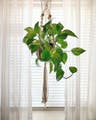


 Similar to Blackeyed Susan Vine


✨ Discover rare plants

Cleistocactus icosago…

Philodendron eximium

Hoya sipitangensis

Treasure Flower

Pseudorphipsalis 'Blu…
Skeleton Key Pothos

Christmas Candle
Graptopetalum 'Marqui…

Caladium

Radiator Plant

Aglaonema Spitfire
Philodendron 'Gabby'

Munstead Lavender

Hoya 'Millie'

Bonsai Crassula

Sarcochilus fitzgeral…

Ace of Spades
