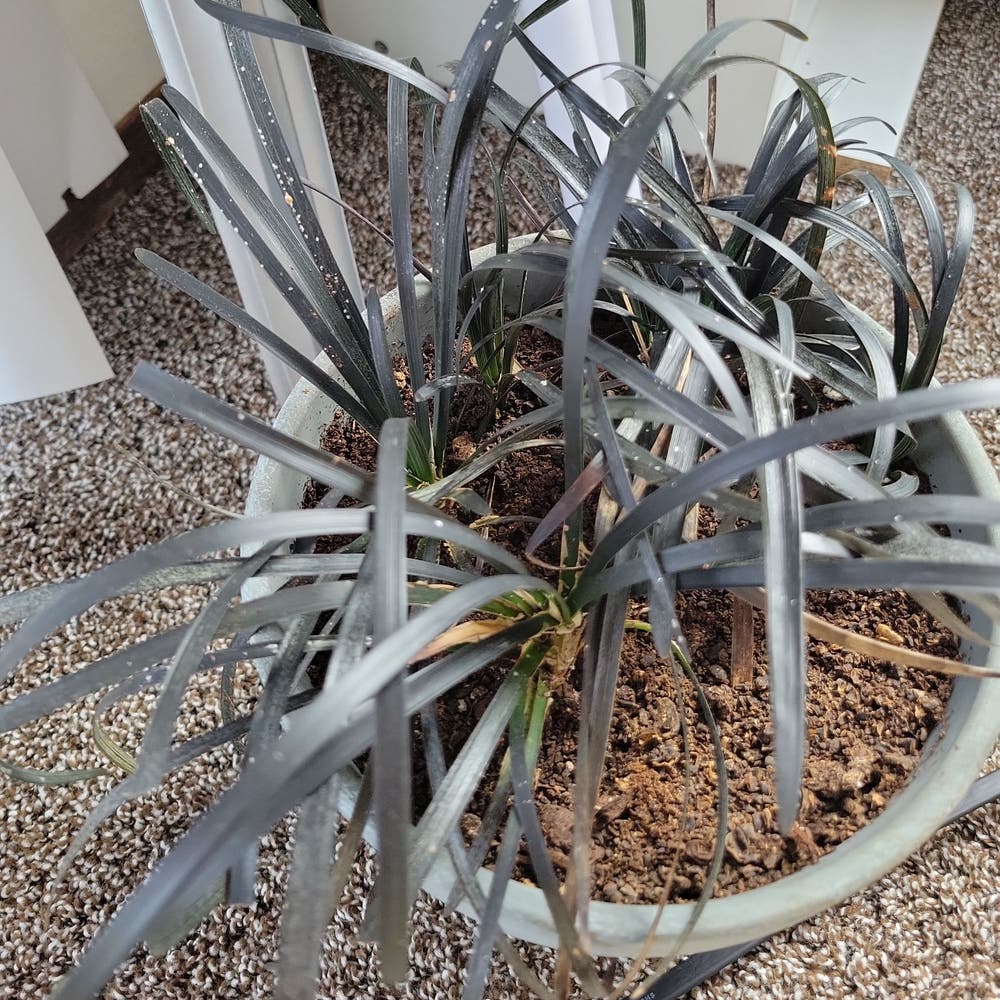
Black mondo grass root rot Solutions
Ophiopogon planiscapus
By the Greg Editorial Team
Mar 19, 2024•3 min read
This article was created with the help of AI so we can cover more plants for you. May contain errors. See one? Report it here.
- 🍂 Yellow leaves and musty smell signal root rot in Black Mondo Grass.
- 🚫 Overwatering causes root rot; adjust watering based on soil dryness.
- ✂️ Prune and repot with well-draining soil to combat and prevent rot.
Spotting the Trouble: Recognizing Root Rot Symptoms
🍂 Yellowing and Browning Leaves
When yellow patches start to invade the lush darkness of your Black Mondo Grass, it's not just a fashion faux pas—it's a cry for help. Browning leaves are the next chapter in this sad story. If your plant's leaves are more autumnal than evergreen, it's time to play plant detective.
🌱 Wilting and Stunted Growth
Wilting is the plant equivalent of a limp handshake; it lacks vigor and is downright disappointing. Stunted growth is another red flag. If your Black Mondo Grass is growing slower than a snail on a leisurely stroll, you've got a problem brewing underground.
👃 The Smell Test
Trust your nose. If a sniff of the soil around your Black Mondo Grass conjures images of a damp basement, you're likely dealing with root rot. That musty stench is the signature perfume of decay, and it's not the new hit fragrance—it's a warning sign.
First Response: Immediate Actions to Combat Root Rot
🚱 Stop the Waterworks
Overwatering is the archenemy of Black Mondo Grass, leading to root rot. It's time to dial back on the H2O. Wait for the top inch of soil to dry before the next watering. When you do water, think moderation—your plant's not at a buffet.
💨 Get the Air Flowing
Good air circulation is like a breath of fresh air for your plant's roots. Increase airflow around your Black Mondo Grass to help combat root rot. A fan or an open window can work wonders, reducing excess moisture and giving your plant a better shot at recovery.
Surgical Strike: Pruning and Repotting
🌱 Snip the Damage
In the battle against root rot, precision is your ally. With sterilized shears, target only the damaged roots, cutting them back to where they join the healthy tissue. It's a delicate operation—clean your tools after each cut to prevent spreading any infection. This isn't a race; take your time to ensure you're only removing the parts of the root that are beyond saving.
🏡 Fresh Start with Repotting
Once you've pruned the roots, it's time for a fresh start. Select a pot with drainage holes to prevent future waterlogging, and fill it with well-draining soil. Think of it as setting up a new home for your Black Mondo Grass, one that's safe from the previous rot-inducing conditions. After repotting, water sparingly to help the plant settle in without overwhelming it. Remember, overwatering is the fast track back to root rot city.
Keeping It Dry and High: Prevention Strategies
💧 Watering Wisdom
Watering your Black Mondo Grass is less about sticking to a schedule and more about responsive care. Check the soil's top inch; if it's dry, it's time to water. If not, hold off. Overwatering is the express lane to root rot, so keep that watering can at bay until it's truly needed.
🌱 Soil and Drainage Mastery
The right soil mix is like a VIP lounge for roots, where air and water mix in perfect harmony. Drainage holes in your pot are non-negotiable; they're the bouncers that keep excess water from crashing the party. Consider terra cotta pots for their breathability, which helps soil dry out more efficiently than plastic. If you're in a humid environment, adjust your soil mix to include more perlite or sand to keep it light and airy.
⚠️ Safety First
This content is for general information and may contain errors, omissions, or outdated details. It is not medical, veterinary advice, or an endorsement of therapeutic claims.
Always consult a qualified healthcare professional before using any plant as food, medicine, or supplement.
Never eat any plant (or feed one to pets) without confirming its identity with at least two trusted sources.
If you suspect poisoning, call Poison Control (800) 222-1222, the Pet Poison Helpline (800) 213-6680, or your local emergency service immediately.
Spotted an error? Please report it here.
Prevent root rot 🚫 in your Black Mondo Grass by letting Greg monitor your plant's environment and tailor a watering plan to keep the soil perfectly balanced.