
Fertilizing Monstera!
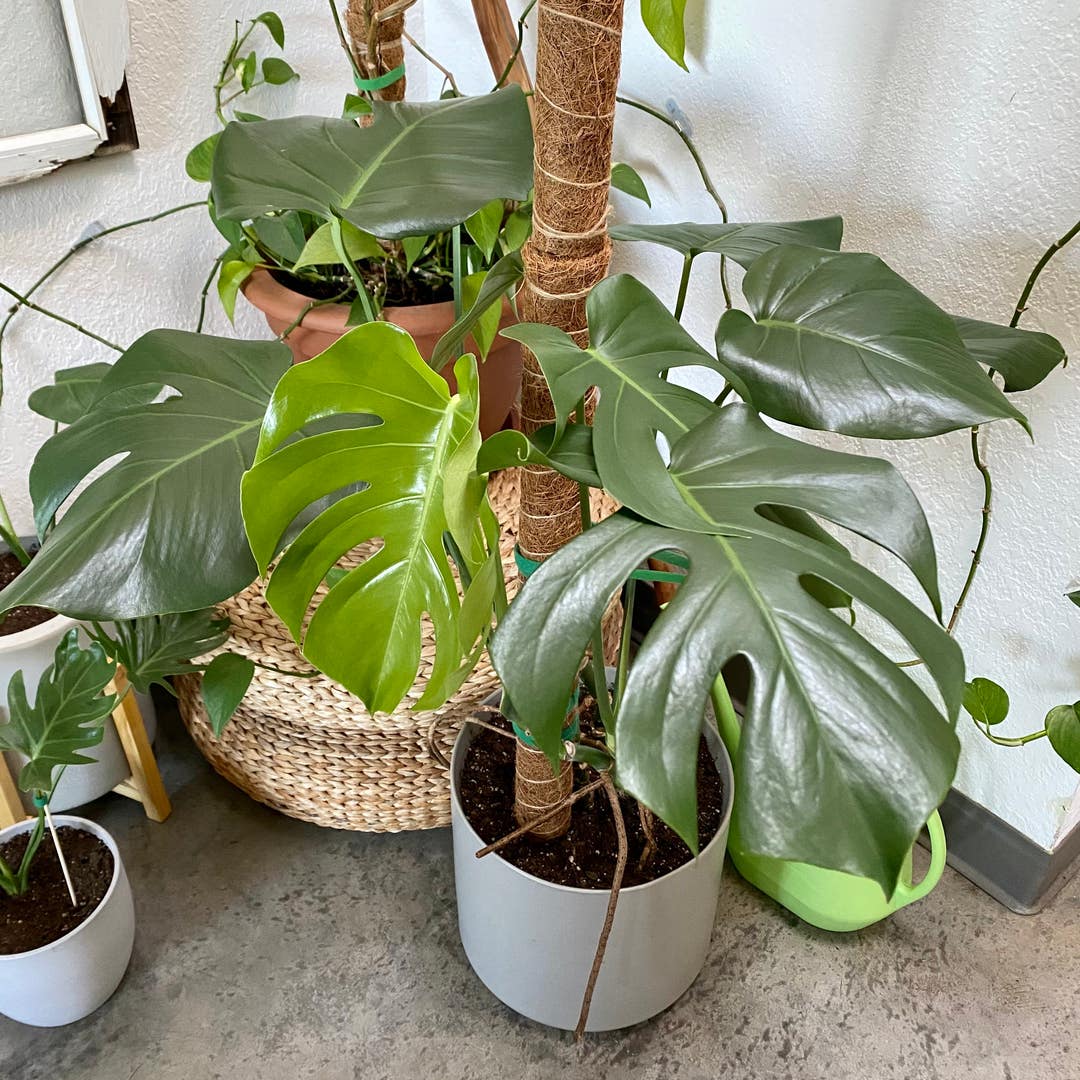
I want to start fertilizing my Monstera Deliciosa but I’m not sure where to start! Any recommendations on specific fertilizers? I’d love to hear your methods/tips/tricks and what I should AVOID doing or using! Thank you plant fam!
Side note: I may switch its current soil out for FoxFarm soil (I’ve heard great things). I’m not sure if there should be a waiting period between the soil swap and starting to fertilize. #Monstera #MonsteraMonday #HappyPlants #PlantTherapy #monsteradeliciosa
Side note: I may switch its current soil out for FoxFarm soil (I’ve heard great things). I’m not sure if there should be a waiting period between the soil swap and starting to fertilize. #Monstera #MonsteraMonday #HappyPlants #PlantTherapy #monsteradeliciosa


 27
27





I like an All Purpose organic fertilizer. It helps to use organic over chemical, in my opinion. It will pervert over fertilizing or burning your plants. Still, try to avoid getting your mixture on the foliage if possible. If you do, just wipe the leaves down with a damp cloth. I only fertilize once a month during the growing season or if a plant is struggling or in recovery. But if you have houseplants that stay inside all the time, you can fertilize all year around. I found a brand called Elm Dirt last year and I’m a big fan now. Do a little research and feed your plants according to their specific needs. It can be fun and it will teach you more about your plant family.


@hiddenchicken. Hi there—welcome to Greg. I’m going to provide a helpful like from House Plant Journal Blog—the creator, Daryl Cheng, has an engineering background and I like how he breaks down very complicated information into an easy to read reference. I read this article a long time ago and started using Dyna-Gro Foliage Pro. It has an NPK ration of 3-1-2 which is ideal for houseplants. NPK refers to macronutrients of nitrogen, phosphorus, and potassium. This is a big of an oversimplification but some nutrients are better suited for foliage, some for flowers, other for roots. A 3-1-2 ratio is ideal for foliage plants like monsters. What I like about Dyna-Gro is that it is distinct (not unique) among fertilizers that contain all essential macro and micronutrients for houseplants. You can also use it as a foliar feed (spray the diluted amount on the leaves itself to feed the plant. You cant do this with just any fertilizer). A lot of professional grow operations use Dyne-Grow. One thing to keep in mind when fertilizing is that it is better to err on the side of too little than too much. Many fertilizers will burn the roots if too much is added. You can buy disposable measuring cups or pipettes which is what I use to ensure proper fertilization. Cheng recommends to fertilize during the growing season—instead of stopping at the end of the season, if the plant is still growing, go ahead and feed it.
Personally I prefer to micro-dose. Using micro doses of fertilizer for houseplants continually during the growing season has several benefits compared to more periodic dosages:
1. Consistent Nutrition: Providing small doses of fertilizer consistently ensures that your houseplants receive a steady supply of nutrients throughout the growing season. This can help avoid nutrient deficiencies or excesses, which can cause stunted growth, yellowing of leaves, and other problems.
2. Reduced Risk of Over-fertilization: Over-fertilizing plants can cause nutrient burn, which can damage roots, leaves, and stems. By using micro doses of fertilizer, you reduce the risk of over-fertilization because you are providing a smaller amount of nutrients at a time.
3. Improved Plant Growth: Providing a steady supply of nutrients can improve the overall health of your plants and promote vigorous growth. With consistent fertilization, you may see more lush foliage, bigger blooms, and faster growth.
4. Better Absorption: Using micro doses of fertilizer allows your plants to absorb nutrients more efficiently because they are not overwhelmed with a large amount of fertilizer at once. This can lead to better overall plant health and appearance.
5. Cost-Effective: By using micro doses of fertilizer, you can stretch your fertilizer supply further, making it more cost-effective in the long run.
Here is how to micro dose should you choose to do so:
1. Prepare a container with water, and add a small amount of the fertilizer to it. You can start with a dilution of 1/8 or 1/4 of the recommended dose.
2. Mix the solution thoroughly until the fertilizer is fully dissolved in the water.
3. Use the microdose fertilizer solution to water your plants or apply it as a foliar spray. Be sure to apply only a small amount of the solution, enough to moisten the soil or foliage, but not to oversaturate it.
4. Repeat this process every time you water your plants or on a regular schedule, such as every two weeks.
Here is the link:
https://www.houseplantjournal.com/fertilizer-for-most-houseplants/
Personally I prefer to micro-dose. Using micro doses of fertilizer for houseplants continually during the growing season has several benefits compared to more periodic dosages:
1. Consistent Nutrition: Providing small doses of fertilizer consistently ensures that your houseplants receive a steady supply of nutrients throughout the growing season. This can help avoid nutrient deficiencies or excesses, which can cause stunted growth, yellowing of leaves, and other problems.
2. Reduced Risk of Over-fertilization: Over-fertilizing plants can cause nutrient burn, which can damage roots, leaves, and stems. By using micro doses of fertilizer, you reduce the risk of over-fertilization because you are providing a smaller amount of nutrients at a time.
3. Improved Plant Growth: Providing a steady supply of nutrients can improve the overall health of your plants and promote vigorous growth. With consistent fertilization, you may see more lush foliage, bigger blooms, and faster growth.
4. Better Absorption: Using micro doses of fertilizer allows your plants to absorb nutrients more efficiently because they are not overwhelmed with a large amount of fertilizer at once. This can lead to better overall plant health and appearance.
5. Cost-Effective: By using micro doses of fertilizer, you can stretch your fertilizer supply further, making it more cost-effective in the long run.
Here is how to micro dose should you choose to do so:
1. Prepare a container with water, and add a small amount of the fertilizer to it. You can start with a dilution of 1/8 or 1/4 of the recommended dose.
2. Mix the solution thoroughly until the fertilizer is fully dissolved in the water.
3. Use the microdose fertilizer solution to water your plants or apply it as a foliar spray. Be sure to apply only a small amount of the solution, enough to moisten the soil or foliage, but not to oversaturate it.
4. Repeat this process every time you water your plants or on a regular schedule, such as every two weeks.
Here is the link:
https://www.houseplantjournal.com/fertilizer-for-most-houseplants/

@TexanExpat for microdosing, should I water it w the fertilizer and water it in general (not sure how much it yields)

@hiddenchicken Dyna-Gro foliage pro calls for 1/4 teaspoon per gallon. The container is itself not large but considering this dosage it gives you a LOT of nutrients. Cf. miracle-grow houseplant food, which requires several “pumps”
Per gallon of water means that even though the sticker price for miracle gro is a fraction of the price of Dyna gro the cost per nutrient is exhorbitant to Dyna grow by comparison. Keeping the already small dose of Dyna gro called for, what I do is use half a milliliter per gallon of water. I use plastic Pipettes to help with dosing. Here is a link below. What you do next is water with this solution every time you water. For a foliar feed, add this ratio solution to a spray bottle and spray the leaves (I recommend putting plants in front of a fan to dry them to prevent fungal disease. There is a lot of buzz for the Happy Happy Houseplant fertilizer on this app. People love it. However, for me, I know the Macro and micro nutrients are tailored to foliage plants and the Dyna grow is a clear blue liquid thin liquid that mixes easily for micro dosing and foliar feed. Hope that helps !
Per gallon of water means that even though the sticker price for miracle gro is a fraction of the price of Dyna gro the cost per nutrient is exhorbitant to Dyna grow by comparison. Keeping the already small dose of Dyna gro called for, what I do is use half a milliliter per gallon of water. I use plastic Pipettes to help with dosing. Here is a link below. What you do next is water with this solution every time you water. For a foliar feed, add this ratio solution to a spray bottle and spray the leaves (I recommend putting plants in front of a fan to dry them to prevent fungal disease. There is a lot of buzz for the Happy Happy Houseplant fertilizer on this app. People love it. However, for me, I know the Macro and micro nutrients are tailored to foliage plants and the Dyna grow is a clear blue liquid thin liquid that mixes easily for micro dosing and foliar feed. Hope that helps !
@hiddenchicken 100pcs Plastic Disposable Transfer Pipettes - 3ml Plastic Calibrated Graduated Eye Dropper Suitable for Lip Gloss Transfer Essential Oils Science Laboratory Experiment https://a.co/d/9SVchRN
@hiddenchicken, when the plant is actually growing, everytime i water the plant, what I do is I take a gallon milk jug fill it with distilled water (I have a distiller, my tap water here is very hard and I’ve noticed flouride and chlorine poisoning from using tap water here) and I add half a milliliter to it. I water my plants slowly and methodically to ensure consistent saturation of the soil until water comes out the drainage hole. Then I stop. I continue this until the plant goes into its dormant season. Some of my plants keep growing for a solid year before they take a break so I continue microdosing them continuously despite the season to provide nutrients until growing ceases and the plant takes a break
@TexanExpat Absolutely! I’m sure I’ll have more questions along the way! I’m going to be replacing my soil (I currently am using a standard potting mix) so I’ve been working on that research. I’m going to be using Fox Farms Ocean Forest and I’m figuring out what would be best to add to it (i.e., orchid bark, activated charcoal, pumice etc.) I’d love to hear your expertise! I’m also looking for a good succulent and cacti mix/recipes.
@hiddenchicken I recently had the ear of a very knowledgeable guy in the houseplant dept of a big nursery here and he sold me on the ocean mix by fox farms. He doesn’t add anything to it except perlite if necessary. He says it’s that good. Bark can cause nutrient imbalance eventually he says. Have you heard of Lechuza pon? For aroids especially, I think it is superior. It is an inorganic substrate that you use with planters that have sub irrigation systems. If you wanna know more Lmk
@TexanExpat that’s great to know - I hadn’t come across that info about eventual nutrient imbalance. I haven’t heard of that! I’d love to hear more
@hiddenchicken Here is an insightful article that details how popular pon is becoming I think you will find as interesting as I did.
https://www.thespruce.com/what-is-pon-and-why-are-plant-influencers-obsessed-5176625
Here are my comments on pon: Lechuza Pon is a substrate made from lightweight, porous, and pH-stabilized granulate material that is designed to provide optimal growing conditions for plants. It is an alternative to traditional potting soil mixes and is particularly popular among aroid enthusiasts. Here are some of its pros and cons, as well as a comparison to indoor potting mix peat-based substrates:
Pros of Lechuza Pon:
1. Excellent Drainage: The porous structure of Lechuza Pon allows water to flow through it easily, preventing the roots from getting waterlogged and preventing fungal growth.
2. pH-stabilized: Lechuza Pon has a neutral stable pH range which is ideal for most plants.
3. Lightweight: Lechuza Pon is significantly lighter than traditional potting soil mixes, making it easier to handle and transport.
4. Reusable: Lechuza Pon can be reused multiple times, as long as it is properly sterilized between uses.
Cons of Lechuza Pon:
1. Limited availability: Lechuza Pon can be difficult to find in some areas, which may limit its accessibility.
2. Expensive: Lechuza Pon can be more expensive than traditional potting soil mixes, especially for larger plants or when used in large quantities.
Comparison to indoor potting mix peat-based substrates:
Indoor potting mix peat-based substrates are a commonly used substrate for aroids and other houseplants. Here are some differences between Lechuza Pon and indoor potting mix peat-based substrates:
1. Drainage: Indoor potting mix peat-based substrates may retain more water than Lechuza Pon, which can lead to overwatering and root rot if not properly monitored.
2. Nutrient content: Indoor potting mix peat-based substrates may contain more nutrients than Lechuza Pon, which can be beneficial for plants that require more frequent feeding.
3. pH levels: Peat-based substrates tend to be more acidic than Lechuza Pon, which may require additional pH adjustments to ensure optimal growing conditions for plants.
4. Weight: Peat-based substrates can be heavier than Lechuza Pon, making them more difficult to handle and transport.
Overall, Lechuza Pon offers excellent drainage, pH-stabilization, and is reusable, but can be more expensive and difficult to find. Indoor potting mix peat-based substrates offer more nutrients and are more widely available, but can be heavier and require more monitoring to avoid overwatering. The choice between these substrates will depend on the specific needs of your plants and your personal preferences
Lechuza planters filled with Pon offer several advantages for aroids compared to non-sub-irrigated planters with traditional peat-based potting media. Here are some of the benefits of using a Lechuza planter filled with Pon:
1. Excellent Drainage: The porous structure of Pon ensures excellent drainage, preventing the roots from getting waterlogged and reducing the risk of root rot. This is particularly important for aroids, which are susceptible to overwatering.
2. Consistent Moisture: Lechuza planters are designed with a self-watering system, meaning that the plant sits on a water reservoir that allows the plant to take up water as needed. This ensures consistent moisture levels and helps prevent the soil from drying out, which is beneficial for aroids that prefer evenly moist soil.
3. pH Stability: Pon is pH-stabilized, which ensures that the pH levels remain consistent and within the optimal range for aroids. This can be particularly important for aroids that are sensitive to changes in pH levels.
4. Reduced Maintenance: The self-watering system in Lechuza planters means that plants require less frequent watering and can go longer between watering sessions. This can reduce the maintenance required for aroids and make them easier to care for.
5. Reusable: Pon is a durable substrate that can be reused multiple times, which can make it more cost-effective in the long run compared to traditional peat-based potting media, which may need to be replaced more frequently.
Lechuza planters are competitively priced but if you search around someone is usually having a sale on them. There are copycats available on Amazon, but they are not aesthetically pleasing to look at. Lechuza uses high quality plastics.
https://www.thespruce.com/what-is-pon-and-why-are-plant-influencers-obsessed-5176625
Here are my comments on pon: Lechuza Pon is a substrate made from lightweight, porous, and pH-stabilized granulate material that is designed to provide optimal growing conditions for plants. It is an alternative to traditional potting soil mixes and is particularly popular among aroid enthusiasts. Here are some of its pros and cons, as well as a comparison to indoor potting mix peat-based substrates:
Pros of Lechuza Pon:
1. Excellent Drainage: The porous structure of Lechuza Pon allows water to flow through it easily, preventing the roots from getting waterlogged and preventing fungal growth.
2. pH-stabilized: Lechuza Pon has a neutral stable pH range which is ideal for most plants.
3. Lightweight: Lechuza Pon is significantly lighter than traditional potting soil mixes, making it easier to handle and transport.
4. Reusable: Lechuza Pon can be reused multiple times, as long as it is properly sterilized between uses.
Cons of Lechuza Pon:
1. Limited availability: Lechuza Pon can be difficult to find in some areas, which may limit its accessibility.
2. Expensive: Lechuza Pon can be more expensive than traditional potting soil mixes, especially for larger plants or when used in large quantities.
Comparison to indoor potting mix peat-based substrates:
Indoor potting mix peat-based substrates are a commonly used substrate for aroids and other houseplants. Here are some differences between Lechuza Pon and indoor potting mix peat-based substrates:
1. Drainage: Indoor potting mix peat-based substrates may retain more water than Lechuza Pon, which can lead to overwatering and root rot if not properly monitored.
2. Nutrient content: Indoor potting mix peat-based substrates may contain more nutrients than Lechuza Pon, which can be beneficial for plants that require more frequent feeding.
3. pH levels: Peat-based substrates tend to be more acidic than Lechuza Pon, which may require additional pH adjustments to ensure optimal growing conditions for plants.
4. Weight: Peat-based substrates can be heavier than Lechuza Pon, making them more difficult to handle and transport.
Overall, Lechuza Pon offers excellent drainage, pH-stabilization, and is reusable, but can be more expensive and difficult to find. Indoor potting mix peat-based substrates offer more nutrients and are more widely available, but can be heavier and require more monitoring to avoid overwatering. The choice between these substrates will depend on the specific needs of your plants and your personal preferences
Lechuza planters filled with Pon offer several advantages for aroids compared to non-sub-irrigated planters with traditional peat-based potting media. Here are some of the benefits of using a Lechuza planter filled with Pon:
1. Excellent Drainage: The porous structure of Pon ensures excellent drainage, preventing the roots from getting waterlogged and reducing the risk of root rot. This is particularly important for aroids, which are susceptible to overwatering.
2. Consistent Moisture: Lechuza planters are designed with a self-watering system, meaning that the plant sits on a water reservoir that allows the plant to take up water as needed. This ensures consistent moisture levels and helps prevent the soil from drying out, which is beneficial for aroids that prefer evenly moist soil.
3. pH Stability: Pon is pH-stabilized, which ensures that the pH levels remain consistent and within the optimal range for aroids. This can be particularly important for aroids that are sensitive to changes in pH levels.
4. Reduced Maintenance: The self-watering system in Lechuza planters means that plants require less frequent watering and can go longer between watering sessions. This can reduce the maintenance required for aroids and make them easier to care for.
5. Reusable: Pon is a durable substrate that can be reused multiple times, which can make it more cost-effective in the long run compared to traditional peat-based potting media, which may need to be replaced more frequently.
Lechuza planters are competitively priced but if you search around someone is usually having a sale on them. There are copycats available on Amazon, but they are not aesthetically pleasing to look at. Lechuza uses high quality plastics.
@TexanExpat you’re amazing! Thank you! I got some Dyna-Gro yesterday and Fox Farms OF so I’m excited to see how it goes! I’m guessing I should let the plant acclimate in the soil for a while before starting the fertilizer?
@hiddenchicken yes i would wait a month or so. The fox farms mix is chock full of nutrients as it is
@TexanExpat Hi! I’ve been putting off fertilizing because I’m nervous lol.. I’m still not sure if I should give my plant a little water, then give it some of the microdosed fertilizer water. Or if I should water it completely with the fertilizer water. I water it in the bathtub so it’s hard to tell sometimes when the water is running out of the pot
@TexanExpat Also, do you think my snake plants and philodendron Xanadu would tolerate the microdosed Dyna-Gro Foliage Pro fertilizer water
@hiddenchicken sorry for the delay. I had a life-induced hiatus from Greg. Dyna-Grow has been rebranded as “superthrive” and is also now available in a smaller $10 bottle (used to have to shell out $25). It is appropriate for all foliage houseplants, including philodendrons and sanseverias. Plants that bloom like African violets benefit from fertilizer that has more nutrients for bloom production but I give mine dynagro and they are happy nonetheless