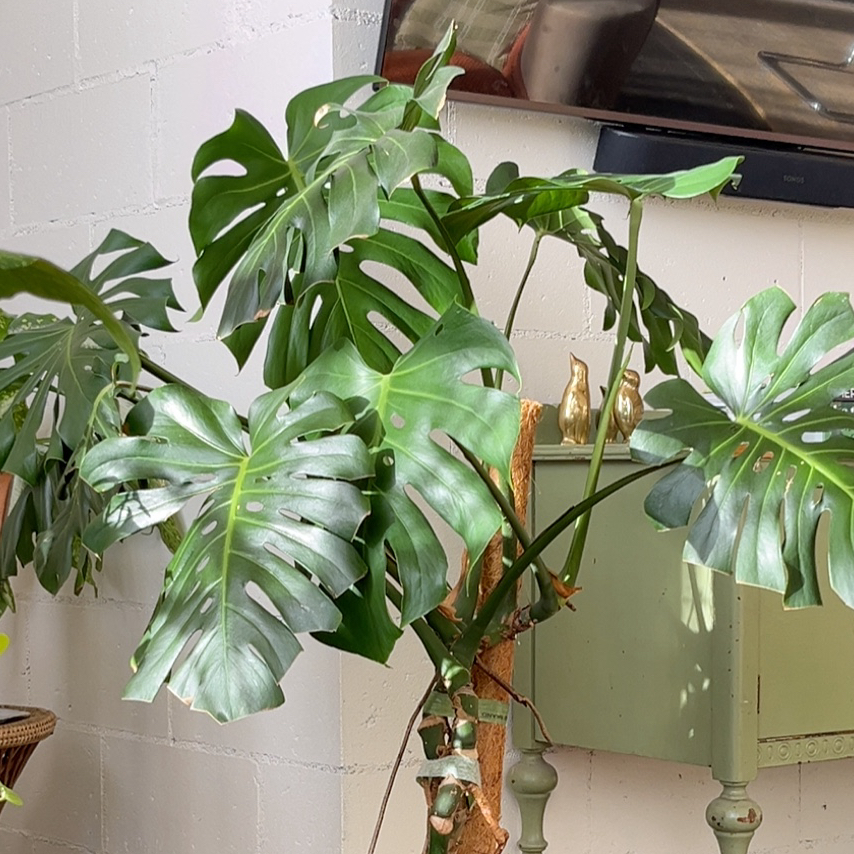
Best Soil Mix for Monstera
Monstera deliciosa
By the Greg Editorial Team
Dec 16, 2023•10 min read
This article was created with the help of AI so we can cover more plants for you. May contain errors. See one? Report it here.
Unleash your Monstera's full potential πΏ by mastering its unique soil needs and maintenance! π±π§
- π± Well-draining soil with perlite, coarse sand, and peat moss is crucial for healthy Monstera plants.
- π§ͺ Maintaining pH balance (5.5-7) and nutrient content enhances Monstera's growth and nutrient uptake.
- π Proper soil preparation and maintenance prevent common soil-related problems in Monstera plants.
Importance of Well-Draining Soil
Let's dive into the nitty-gritty of Monstera soil. The first thing you need to understand is that Monstera plants are like the Goldilocks of the plant world. They don't like their feet too wet or too dry. They need it just right. That's why well-draining soil is crucial.
It's not just about keeping your Monstera from drowning. It's about preventing the dreaded root rot. It's like the plant equivalent of athlete's foot, but worse. Much worse. It can kill your plant. And no one wants a dead Monstera on their hands.
πͺ΄ The Magic of Perlite, Coarse Sand, and Peat Moss
Now, you might be wondering how to achieve this perfect balance of moisture and drainage. Enter perlite, coarse sand, and peat moss. These are the three musketeers of Monstera soil.
Perlite is like tiny white rocks that create space between soil particles, improving drainage and ensuring your Monstera's roots have enough oxygen. It's like giving your plant its own personal oxygen bar.
Coarse sand also aids in drainage, but it's heavier than perlite. It's like the bouncer at the club, making sure excess water doesn't hang around too long.
Lastly, peat moss retains moisture without being heavy. It's like the perfect sponge, soaking up water without getting soggy.
Together, these three components create a soil mix that's light, airy, and just moist enough. It's like the perfect cocktail for your Monstera's roots.
π± Customizing Your Monstera's Soil Mix
But don't just take my word for it. Experiment with different ratios of perlite, coarse sand, and peat moss to find the perfect mix for your Monstera. Some plants might prefer a little more perlite, while others might thrive with extra peat moss.
Remember, your Monstera is unique. It deserves a custom soil mix tailored to its specific needs. And who knows, you might just discover the secret recipe for the perfect Monstera soil.
Nutrient Requirements for Monstera Soil
Monstera plants are like the Goldilocks of the plant world. They don't ask for much, but what they do ask for, they want just right. And when it comes to nutrients, they're no different.
πͺ Essential Nutrients
Monstera plants have a moderate appetite for nutrients. They're not the gluttons of the plant world, but they're not exactly fasting either.
Nitrogen is a biggie. It's like the protein shake of the plant world. Without it, your Monstera might start looking a bit yellow and sickly. In nature, plants get a steady supply of nitrogen from decomposing plant and animal material. But your potted Monstera only has access to the nutrients in its potting soil, which can be used up in a matter of months.
Other essential nutrients include phosphorus, potassium, and a smattering of trace elements. Think of these as the vitamins and minerals of the plant world.
π± Organic Matter
To keep your Monstera well-fed, you'll want to enrich the soil mix with organic matter. This is like adding a multivitamin to your Monstera's diet.
Compost or well-rotted manure can greatly enhance the quality of the soil mix. These are packed full of nutrients and will help keep your Monstera happy and healthy.
πΏ Fertilizer
Even with the best soil mix, your Monstera will still benefit from regular fertilization. Think of this as a top-up to keep your Monstera in peak condition.
A gentle liquid fertilizer, especially one formulated for Monstera plants, is a good choice. This can be mixed into your plant's water every week, so you won't have to remember a fertilization schedule.
π§οΈ Rainwater
And here's a tip straight from the plant pros: rainwater. It's rich in nitrogen and oxygen, and slightly acidic, which helps release nutrients held in the soil. Catching rainwater in a pitcher to use as an occasional "treat" for your plant is a great idea.
So there you have it. With the right nutrients and a little TLC, your Monstera will be the envy of all your plant-loving friends.
Maintaining the Ideal pH Balance
πΏ The pH Sweet Spot for Monstera Plants
Monstera plants are a bit like Goldilocks when it comes to soil acidity. They don't want it too acidic or too alkaline. They want it just right. The sweet spot for these leafy divas is a pH range between 5.5 and 7.
π§ Why pH Matters
So, why is pH such a big deal? Well, it's all about the nutrients. Soil pH plays a crucial role in nutrient uptake. If the pH is off, your Monstera might not be able to absorb the nutrients it needs. Or worse, it might absorb too much of the wrong ones. It's like trying to eat soup with a fork. Not very effective, right?
π§ͺ Testing Your Soil's pH
Now, you might be wondering, "how do I know if my soil's pH is in the right range?" The answer is simple: get a pH testing kit. It's like a pregnancy test for your soil. But instead of a baby, you're expecting a healthy Monstera.
π± Adjusting Soil Acidity
If your soil's pH is outside the ideal range, don't panic. You can adjust it. To raise the pH, add lime. To lower it, add sulfur. It's like adding sugar or lemon to your tea to get the perfect balance.
π₯ The Role of Charcoal
Charcoal isn't just for barbecues. It can also improve your Monstera's soil quality. It helps balance pH levels and absorbs excess moisture and nutrients. Think of it as a sponge, soaking up what your plant doesn't need.
π¦ The Impact of pH on Bacteria
The right pH balance also affects the bacteria in your soil. Good bacteria can be beneficial to your Monstera, while bad bacteria can make it sick. It's like having the right friends in high school. You want the ones who will help you grow, not the ones who will get you into trouble.
Remember, maintaining the ideal pH balance is key to keeping your Monstera healthy and happy. So, don't neglect it. Your Monstera will thank you.
Best Soil Options for Monstera Plants
π± Ready-Made Potting Mixes
There's a world of ready-made soil mixes out there, and some are just perfect for your Monstera. Premium Monstera Potting Soil is a top contender, available on Amazon and ready to go straight out of the bag. It's got the right balance of drainage, water retention, and nutrient content for your leafy friend. Another option is the Miracle-Gro Moisture Control Potting Mix, a well-loved choice for many indoor plant enthusiasts.
πΏ DIY Soil Mixes
If you're the hands-on type, making your own soil mix can be a rewarding endeavor. Here's a recipe that's been tried and tested by Monstera owners:
- 1/2 potting soil (alternating between Ocean Forest & Happy Frog)
- 1/2 coco fiber
- A few handfuls of coco chips (similar to orchid bark)
- A few handfuls of compost
- Top dressing with a 1/4-1/2" layer of worm compost
This mix provides the right balance of nutrients, moisture retention, and drainage. Remember, the goal is to mimic the Monstera's natural habitat, which is rich, loose, and well-draining.
πΎ Alternative Soil Mediums
For those who like to experiment, LECA (Lightweight Expanded Clay Aggregate) offers an alternative to traditional soil. This medium provides excellent drainage and can be used in combination with other soil components.
π΄ Soil for Epiphytic Monsteras
Some Monstera varieties, like the Monstera Peru, are epiphytic, meaning they grow on other plants in their natural habitat. These types prefer a mix of one part coco coir, one part orchid bark, and one part perlite. This combo provides the perfect amount of drainage, moisture retention, and nutritional content.
π± Soil for Propagation
When propagating your Monstera, it's crucial to use fresh, clean soil that drains well. A mix of perlite and Miracle Gro potting mix is a popular choice among Monstera enthusiasts.
πΏ Final Thoughts
Whether you opt for a ready-made mix, a DIY concoction, or an alternative medium, the key is to provide a nutrient-rich, well-draining environment for your Monstera. And remember, no matter how perfect your soil, it's not a magic bullet. Proper light exposure, watering, and overall care are equally important for your Monstera's health and happiness.
Soil Preparation and Maintenance for Monstera Plants
π¦ Preparing the Soil for Repotting
Repotting is a bit like moving house for your Monstera. It's stressful, but with a little TLC, your plant will settle into its new digs just fine.
Start by watering your Monstera a couple of days before the big move. This keeps the plant hydrated and less stressed during the transition.
Next, gently remove the plant from its current pot. If it's playing hard to get, run a knife along the edge of the root ball to loosen it.
Then, massage the roots. Yes, you read that right. This helps them untangle and find their way in the new soil mix.
Now, it's time to prepare the new pot. Fill it with enough mix so that the top of the root ball sits about 1/2" below the top of the pot.
Add the plant and fill in around the root ball with the mix. Make sure to tamp the soil down between the root ball and sides of the pot to keep the plant upright.
Finally, top with a 1/4" layer of worm compost. This gives your Monstera a nutrient boost right from the start.
π± Maintaining the Soil
After repotting, water your Monstera well. Then, place it back in its bright spot.
Avoid letting the soil completely dry out while the plant is settling in. Monsteras prefer lightly moist soil and like to dry out a little bit between waterings.
Rotate your Monstera periodically to ensure even growth on all sides. And don't forget to dust the leaves often to allow efficient photosynthesis.
π§ Watering Tips
Before watering, check the moisture level in the soil. If the top 2 to 4 inches of the soil are dry, your plant might need a drink.
Remember, each Monstera is unique and may have varying needs, especially in different locations. Pay attention to the condition of your Monstera and its watering needs for a long and happy relationship.
πΏ A Final Note
In the end, it's all about understanding your Monstera's needs and providing the right conditions. With the right soil preparation and maintenance, your Monstera will thrive and bring you joy for years to come.
Troubleshooting Soil-Related Issues for Monstera Plants
π The Soil Sleuth: Identifying Soil-Related Problems
Let's play detective. Compacted soil, drainage issues, and nutrient deficiencies are the usual suspects when it comes to Monstera plant problems.
Stunted growth? Check. Tearing leaves? Check. Yellowing leaves? Check. Brown spots? Check. Wilting? Check. All these are telltale signs that your Monstera is sending out an SOS.
Root rot is another common issue. If your Monstera's growth is stunted, or if you notice a lack of drainage, it's time to investigate. Mushy, smelly roots are a dead giveaway.
π₯ The Soil Surgeon: Fixing Soil-Related Problems
Now, let's switch from detective to surgeon.
Repotting is often the first step to recovery. If your soil is holding onto water for too long, or if it's compacted, it's time to give your Monstera a fresh start.
Nutrient deficiencies can also cause problems. If you notice black spots on your Monstera's leaves, it might be time to up the fertilizer game.
π« The Soil Saver: Rejuvenating and Revitalizing Old Soil
Finally, let's talk about rejuvenation.
If your soil is old or depleted, it's time to breathe new life into it. Fresh, clean soil that drains well is the key to preventing problems from returning.
When repotting, remember to sterilize the old pot to avoid transferring any potential diseases. And don't forget to provide proper and consistent soil moisture.
Remember, your Monstera is depending on you to be its soil superhero. So put on your cape and get to work!
β οΈ Safety First
This content is for general information and may contain errors, omissions, or outdated details. It is not medical, veterinary advice, or an endorsement of therapeutic claims.
Always consult a qualified healthcare professional before using any plant as food, medicine, or supplement.
Never eat any plant (or feed one to pets) without confirming its identity with at least two trusted sources.
If you suspect poisoning, call Poison Control (800) 222-1222, the Pet Poison Helpline (800) 213-6680, or your local emergency service immediately.
Spotted an error? Please report it here.