
Zantedeschia 'Pillow Talk'
Taxonomy

Zantedeschia 'Pillow Talk'
Zantedeschia
Araceae
Alismatales

How to care for Zantedeschia 'Pillow Talk'
How often to water your Zantedeschia 'Pillow Talk'

every 9
Zantedeschia 'Pillow Talk' needs 0.5 cups of water every 9 when it doesn’t get direct sunlight and is potted in a 5" pot.
Use our water calculator to personalize watering recommendations to your environment or download Greg for more advanced recommendations for all of your plants.
Water 0.5 cups every
9
Finding light for Zantedeschia 'Pillow Talk' in your home

a window
Zantedeschia 'Pillow Talk' love being close to bright, sunny windows 😎.
Place it less than 1ft from a south-facing window to maximize the potential for growth.
Zantedeschia 'Pillow Talk' does not tolerate low-light 🚫.
Select your region to see how the current weather in your area affects the placement of Zantedeschia 'Pillow Talk' in your home 🏡.
How to fertilize Zantedeschia 'Pillow Talk'

Most potting soils come with ample nutrients which plants use to produce new growth.
By the time your plant has depleted the nutrients in its soil it’s likely grown enough to need a larger pot anyway.
To replenish this plant's nutrients, repot your Zantedeschia 'Pillow Talk' after it doubles in size or once a year—whichever comes first.
-
Spotted Calla Lily blooming nicely today!
-
I need to know what kind of pot to repot my calla lily #CallaLily
-
Why would the leaves start drooping? I water only when all the way dry, south facing window. I kept her in her original plastic pot because shes been super happy but all of a sudden the leaves look like this. I don't see root rot but the roots are bound. #CallaLily
-
Do I need to replant? What kind of soil and planter? They are starting to sag because they are growing longer. And also after the color fades, like the one pictured, what am I to do? Thank You in advance 😊😊
-
 it’s dying #CallaLily
-
My plant seems to be suffering, it has no flowers and the leaves are not looking good and getting less #CallaLily
-
My moneyplant have this small white, feels like white sugar on it? Starts from the edges? What is it? #CallaLily
-
My plant looks terrible. Half the leaves died a brown gooey death. The pot has drainage but maybe not enough? I’ve repotted it and removed all the dead leaves, so fingers crossed. Anything else I should consider? #ZantedeschiaRehmannii
-
What am I doing wrong? Why are my leaves turning yellow/brown & how do I fix it?
-
So my zr seems unhappy. What do you guys do to help yours thrive indoors? #ZantedeschiaRehmannii


Care Summary for Zantedeschia 'Pillow Talk'
Zantedeschia 'Pillow Talk'
 Greg recommends:
 Water
Water
0.5 cups every 9 days
 Placement
< 1ft from a window
 Nutrients
Repot after 2x growth
Based on the 4” pot your plant is in, and that it doesn’t get direct sunlight.
 Trending in your area












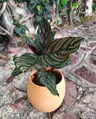





 Similar to Zantedeschia 'Pillow Talk'


✨ Discover rare plants

Euphorbia

Philodendron eximium

Lavandula Pedunculata

Betel

Scindapsus pictus 'Si…

Scotch Moss

Parrot Pitcher Plant

Fagraea ceilanica

Chandelier Plant
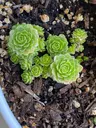
Rosularia platyphylla

Linnaei Kunth

Aloe 'Lavender Star'

Hoya pottsii 'Khao Ya…

Aglaonema Spitfire
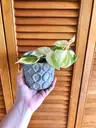
Philodendron 'Gabby'

Peperomia 'Harmony's …

Cleistocactus icosago…
