
Spring Bright Nectarine
Taxonomy

Prunus persica var. nucipersica 'Spring Bright'
Prunus
Rosaceae
Rosales

How to care for Spring Bright Nectarine
How often to water your Spring Bright Nectarine

every 9
Spring Bright Nectarine needs 0.5 cups of water every 9 when it doesn’t get direct sunlight and is potted in a 5" pot.
Use our water calculator to personalize watering recommendations to your environment or download Greg for more advanced recommendations for all of your plants.
Water 0.5 cups every
9
Finding light for Spring Bright Nectarine in your home

a window
Spring Bright Nectarine love being close to bright, sunny windows 😎.
Place it less than 1ft from a south-facing window to maximize the potential for growth.
Spring Bright Nectarine does not tolerate low-light 🚫.
Select your region to see how the current weather in your area affects the placement of Spring Bright Nectarine in your home 🏡.
How to fertilize Spring Bright Nectarine

Most potting soils come with ample nutrients which plants use to produce new growth.
By the time your plant has depleted the nutrients in its soil it’s likely grown enough to need a larger pot anyway.
To replenish this plant's nutrients, repot your Spring Bright Nectarine after it doubles in size or once a year—whichever comes first.
-
Is this the name of the Royal crimson cherry #BingCherry
-
I’m into growing some plants other than plain houseplants I also have a peach tree which are thriving
-
Propagation pay off! I took a cutting from my Weeping Fuji Cherry bonsai back at the end of June, and finally earlier this week I was able to transplant it into its own pot with bonsai soil. It’s going to live indoors under a grow light until next spring when I’ll transition it outdoors. #bonsai #Propagation #WeepingCherry
-
I DID IT!!! MY AMELIA CHERRY SEED HAS ROOTED!! I put her in soil and she is just fine☺️ I’m sure she will love this spot!!
-
#seed #Cherry #ThursdayPlantThrowback #NewGrowth #adoptedseed #GreenThumb I adopted a cherry seed!
-
Yellow leaves on skip laurels I have a few skip laurels that were planted in the fall and properly watered until the ground froze. Looked good all winter but now they are all developing yellow leaves. I thought it might be wind burn at first but it seems to be getting worse. Do I need to water?
-
Why yellow leaves?
-
The leaves are folded inwards on every leaf. It has grown that way. The leaves are waxy and not dry, but they are not broad, and as I said, fold inwards. What can I do to improve this? Or is this normal plum tree behavior? #AmericanPlumTree
-
Weeping cherry leaves are shrinking?
-
I'm a newbie bonsai owner.. I believe these are deciduous, but since I keep mine indoors - should it still be dropping all it's leaves?? I don't know how to check if it's still alive without causing damage #JapaneseFloweringCherry


Care Summary for Spring Bright Nectarine
Spring Bright Nectarine
 Greg recommends:
 Water
Water
0.5 cups every 9 days
 Placement
< 1ft from a window
 Nutrients
Repot after 2x growth
Based on the 4” pot your plant is in, and that it doesn’t get direct sunlight.
 Trending in your area





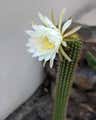











 Similar to Spring Bright Nectarine
✨ Discover rare plants

Burro's Tail

Crassula 'Calico Kitt…

Parrot Pitcher Plant

Lithops

Anthurium 'Fantasy Lo…

Echeveria 'Joan Danie…

Orange Lipstick Plant

Echeveria Arrow

Cleistocactus icosago…

Betel

Chinese Evergreen 'Ga…

Dinteranthus microspe…

Aglaonema 'Green Bowl'

Hoya sipitangensis

Sedum 'White Diamond'

Stanhopea tigrina

Kudu Lily
