
Paniculated Polyscias
Taxonomy

Polyscias paniculata
Polyscias
Araliaceae
Apiales

How to care for Paniculated Polyscias
How often to water your Paniculated Polyscias

every 9
Paniculated Polyscias needs 0.5 cups of water every 9 when it doesn’t get direct sunlight and is potted in a 5" pot.
Use our water calculator to personalize watering recommendations to your environment or download Greg for more advanced recommendations for all of your plants.
Water 0.5 cups every
9
Finding light for Paniculated Polyscias in your home

a window
Paniculated Polyscias may have difficulty thriving, and will drop leaves 🍃, without ample sunlight.
Place it less than 3 feet from a south-facing window to maximize the potential for growth.
Select your region to see how the current weather in your area affects the placement of Paniculated Polyscias in your home 🏡.
How to fertilize Paniculated Polyscias

Most potting soils come with ample nutrients which plants use to produce new growth.
By the time your plant has depleted the nutrients in its soil it’s likely grown enough to need a larger pot anyway.
To replenish this plant's nutrients, repot your Paniculated Polyscias after it doubles in size or once a year—whichever comes first.
-
It’s drooping an yellow. Has gone downhill since we brought it home. #MingAralia
-
Leaves turning yellow help #BalfourAralia
-
What else can I do? 😩 My #FabianAralia has been so happy and thriving for so long, and then suddenly it’s droopy and sad. Checked for pests and didn’t find any. I gave it a soil refresh and checked for root rot, which I didn’t see. I haven’t moved it or changed anything else about its environment. It’s SO SAD and I don’t know how to help it 😭 #SadPlant
-
Her leaves are drying out and falling off and I don’t know how to help! Found tiny spider webs on her last week then just wiped her down with cool water, but it’s only gotten worse. Help! 😭 #BalfourAralia
-
On average how tall will this plant get. And what pot type does it do well in. I have a metal pot in which I'd like to plant mine #BalfourAralia
-
My fabian aralia is dead? Hello everyone i have bought this flower a month ago and i have learned that he doesnt like new places and that he keeps shedding leaves and that it is normal. Well he doesnt have leaves anymlre and even the branches have started falling off what can i do please
-
Has been like this for a year… is this salvage able #MingAralia
-
Are you supposed to prune and if so could someone please explain how to do that? #MingAralia
-
White Stuff On Leaves? What’s this white stuff on his leaves? He just recently endured a spider mite attack, but I’m not sure whether or not this white stuff is related. It won’t come off, and he’s becoming droopy. He’s dropping leaves, too. Any idea what this is and how/if I can save him?
-
How do I prune my bonsai aralia ming golden #MingAralia


Care Summary for Paniculated Polyscias
Paniculated Polyscias
 Greg recommends:
 Water
Water
0.5 cups every 9 days
 Placement
< 3ft from a window
 Nutrients
Repot after 2x growth
Based on the 4” pot your plant is in, and that it doesn’t get direct sunlight.
 Trending in your area










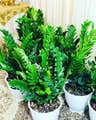


 Similar to Paniculated Polyscias


✨ Discover rare plants

Raphionacme flanaganii

Variegated Arrowhead …

Lithops
Anthurium papillilami…

Betel

Philodendron 'Glorius'

Fernleaf Lavendar
Ace of Spades
Astroloba congesta
Hoya 'Memoria'
Rosularia platyphylla

Miss All-American Bea…

Echeveria 'Joan Danie…

Christmas Candle

Echeveria Esther
Philodendron 'Rio'

Blue Moon Wisteria
