
Philodendron rhodospathiphyllum
Taxonomy

Philodendron rhodospathiphyllum
Philodendron
Araceae
Alismatales

How to care for Philodendron rhodospathiphyllum
How often to water your Philodendron rhodospathiphyllum

every 9
Philodendron rhodospathiphyllum needs 0.5 cups of water every 9 when it doesn’t get direct sunlight and is potted in a 5" pot.
Use our water calculator to personalize watering recommendations to your environment or download Greg for more advanced recommendations for all of your plants.
Water 0.5 cups every
9
Finding light for Philodendron rhodospathiphyllum in your home

a window
Philodendron rhodospathiphyllum can tolerate being far from a window and light source.
Place it less than 6 feet from a south-facing window to ensure it receives enough light to survive 💪.
Select your region to see how the current weather in your area affects the placement of Philodendron rhodospathiphyllum in your home 🏡.
How to fertilize Philodendron rhodospathiphyllum

Most potting soils come with ample nutrients which plants use to produce new growth.
By the time your plant has depleted the nutrients in its soil it’s likely grown enough to need a larger pot anyway.
To replenish this plant's nutrients, repot your Philodendron rhodospathiphyllum after it doubles in size or once a year—whichever comes first.
-
Please help. Is this plant labeled correctly? Also I was given her from my mother.. she’s found her on clearance and I very much appreciate the gift firstly, my issue is though she’s very top heavy and I’m having a difficult time staking her so she doesn’t flop over. I’m thinking of heading to Home Depot to get some untreated boards or something but idk. Some of her leaves look burnt too, should I chop them off? Since I’ve received her she’s grown two new leavessoi think she’s doing well. It’s just bothering me that’s she’s so floppy lol.
-
Hi all- my Prince of Orange has really shot up- straight up and I don’t know how or if to trim or shape him. He’s one long fella and really unsustainable in this state. Also has gone totally dark in color. Thoughts? Thanks! #Philodendron
-
Is it normal for a PPP to show orange hues as the leafs harden off? I don’t think this is rust fungus, but I could be wrong. Would 12 hours of grow lights do this? Any and all information is appreciated! #PlantAddict #PlantTherapy #GrowLights #PlantLove
-
How to add supports to philodendron? Hello! Need some advice for adding supports to my #Philodendron. Used chat gpt and it suggested either bendable moss poles or the extendable vertical support pictured. I’m leaning towards moss poles. I’ve never used them before so any advice or specific product recs are appreciated! It said 36-48” poles would be ideal. I’m thinking maybe 48”, possibly 2? It’s in a SW facing window, 8inch pot and has been thriving. I water about once a week right now. I didn’t realize it had grown up under my curtain and is poking out at the ceiling!! Would it get enough light if I had it sitting on the floor instead of up on the table? I have a poinsettia from Christmas that sits next to it that has also been thriving in that spot. @SuperbRaspfern
-
I took a new photo of my plant today, i am a newer plant lover hence why i ask so many questions😭 does this look like it needs to be trimmed? and where exactly would i trim so i can propagate the trimmings? #HappyPlants #PlantsMakePeopleHappy #PlantAddict #NewGrowth #PropagationStation #NewPlantMom
-
Can it be saved? It’s been in a chunky soil mix for sometime now. #PlantTherapy
-
My first house plant! I love her #happyplants #newplantmom #plantshelfie
-
Do I repot after buying or let it do it’s thing ?? #NewPlantMom #Philodendron
-
Christine gave me some pink!!!! I’m so happy 😁 she’s a prop from Demi (got a little leggy this winter ✂️✂️) #WhitePrincessPhilodendron #philodendronwhiteprincess #PhiloFlock #Philodendron #variegatedplants #HappyPlants #PlantsMakePeopleHappy #PlantAddict #NewGrowth #PropagationStation #PlantTherapy #GrowLights #GregGang #Greggers #PLANTMAFIA
-
Time to chop and prop? I think it’s time to chop and prop my Silver Sword… the bottom has gotten bare and is top heavy 🤣 #Philodendron #SilverSwordPhilodendron #Propagation where should i chop? I know between the nodes, but I can’t handle 14 new propagations! Also, is this sap normal? Very sticky and all over the stems (except for the bare bottom). If you say thrips, I will have a mid-life plant-parent crisis


Care Summary for Philodendron rhodospathiphyllum
Philodendron rhodospathiphyllum
 Greg recommends:
 Water
Water
0.5 cups every 9 days
 Placement
< 6ft from a window
 Nutrients
Repot after 2x growth
Based on the 4” pot your plant is in, and that it doesn’t get direct sunlight.
 Trending in your area

Purple Shamrocks
Fiddle Leaf Fig
Golden Torch

Swiss Cheese Vine

Blushing Bride Air Pl…

Cylindrical Snake Pla…
Dieffenbachia
Weeping Fig

Ghost Plant

Blue-Stem Yucca

Chinese Money Plant

Tradescantia Nanouk
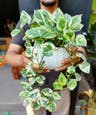
Pothos N' Joy

Philodendron Brasil
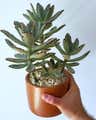
Panda Plant

Satin Pothos

String of Buttons
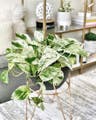
Marble Queen Pothos
 Similar to Philodendron rhodospathiphyllum





✨ Discover rare plants

Euphorbia baioensis

Aglaonema Spitfire

Crassula 'Purple Drag…

Betel

Parrot Pitcher Plant

Sedum 'White Diamond'

Orange Lipstick Plant

Hoya pottsii 'Khao Ya…
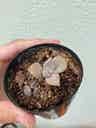
Graptopetalum 'Marqui…

Anthurium papillilami…

Graptoveria 'Douglas …

Maroon Pitcher Plant

Starfish Snake Plant

Echeveria Arrow

Stomatium acutifolium

Variegated Arrowhead …
