
Biribiri Philodendron
Taxonomy

Philodendron biribiriense
Philodendron
Araceae
Alismatales

How to care for Biribiri Philodendron
How often to water your Biribiri Philodendron

every 9
Biribiri Philodendron needs 0.5 cups of water every 9 when it doesn’t get direct sunlight and is potted in a 5" pot.
Use our water calculator to personalize watering recommendations to your environment or download Greg for more advanced recommendations for all of your plants.
Water 0.5 cups every
9
Finding light for Biribiri Philodendron in your home

a window
Biribiri Philodendron can tolerate being far from a window and light source.
Place it less than 6 feet from a south-facing window to ensure it receives enough light to survive 💪.
Select your region to see how the current weather in your area affects the placement of Biribiri Philodendron in your home 🏡.
How to fertilize Biribiri Philodendron

Most potting soils come with ample nutrients which plants use to produce new growth.
By the time your plant has depleted the nutrients in its soil it’s likely grown enough to need a larger pot anyway.
To replenish this plant's nutrients, repot your Biribiri Philodendron after it doubles in size or once a year—whichever comes first.
-
Can it be saved? It’s been in a chunky soil mix for sometime now. #PlantTherapy
-
My first house plant! I love her #happyplants #newplantmom #plantshelfie
-
Do I repot after buying or let it do it’s thing ?? #NewPlantMom #Philodendron
-
Christine gave me some pink!!!! I’m so happy 😁 she’s a prop from Demi (got a little leggy this winter ✂️✂️) #WhitePrincessPhilodendron #philodendronwhiteprincess #PhiloFlock #Philodendron #variegatedplants #HappyPlants #PlantsMakePeopleHappy #PlantAddict #NewGrowth #PropagationStation #PlantTherapy #GrowLights #GregGang #Greggers #PLANTMAFIA
-
Time to chop and prop? I think it’s time to chop and prop my Silver Sword… the bottom has gotten bare and is top heavy 🤣 #Philodendron #SilverSwordPhilodendron #Propagation where should i chop? I know between the nodes, but I can’t handle 14 new propagations! Also, is this sap normal? Very sticky and all over the stems (except for the bare bottom). If you say thrips, I will have a mid-life plant-parent crisis
-
My new plant, isn’t she a Beauty 🪴 💚. What should I name her ? #Philodendron #HappyPlants #PlantTherapy
-
let her flop? Hey! My pink princess that has been ñ growing rapidly for the last 2 years (i’ve propagated it twice) “fell over”. i’d actually much rather it grow down than up since it can’t really support itself growing up, but i wanted to see if you guys thought that was healthy/ ok for it? i haven’t repotted it in 2+ years.I also have 2 big propagation plants from it from forever ago that i just haven’t done anything with (they’re still in water). i’d love to know what i should do with them… put them all in the same pot? plant individually? idk… ah! it also has 2 babies that have been growing for a long time. so many things!!! #PinkPrincessPhilodendron
-
Just repotted Mollie! She’s definitely looking healthier! Can’t wait to see her grow!
-
I’m wondering if I should repot Mollie into dirt Mollie’s roots have had this cloudiness around them for some time, it’s still there even though I changed the water out yesterday! Is she sick? If so, how do I fix her?
-
Failed leaves #Philodendron I am at a loss with my philo melano. It has several failed leaves and I'm not sure why. It sits about a foot from west window and a bit off to side so not getting direct sun. Any ideas? I haven't had a new leaf in probably 6 months and the last one that actually developed is smaller than previous ones. Btw I live in Arizona, so not sure if maybe it's my dry air.


Care Summary for Biribiri Philodendron
Biribiri Philodendron
 Greg recommends:
 Water
Water
0.5 cups every 9 days
 Placement
< 6ft from a window
 Nutrients
Repot after 2x growth
Based on the 4” pot your plant is in, and that it doesn’t get direct sunlight.
 Trending in your area













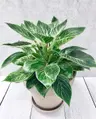
 Similar to Biribiri Philodendron




✨ Discover rare plants
Carolina Reaper
Philodendron 'Silver …

Blue Moon Wisteria
Rosularia platyphylla
Phalaenopsis schiller…

Raphionacme flanaganii

Bonsai Crassula

Echeveria Arrow

Chinese Evergreen 'Go…
Philodendron 'Gabby'

Crassula 'Calico Kitt…

Philodendron 'Glorius'

Picasso's Paintbrush
Skeleton Key Pothos

Hoya kalimantan

Lavandula Pedunculata

Caladium
