
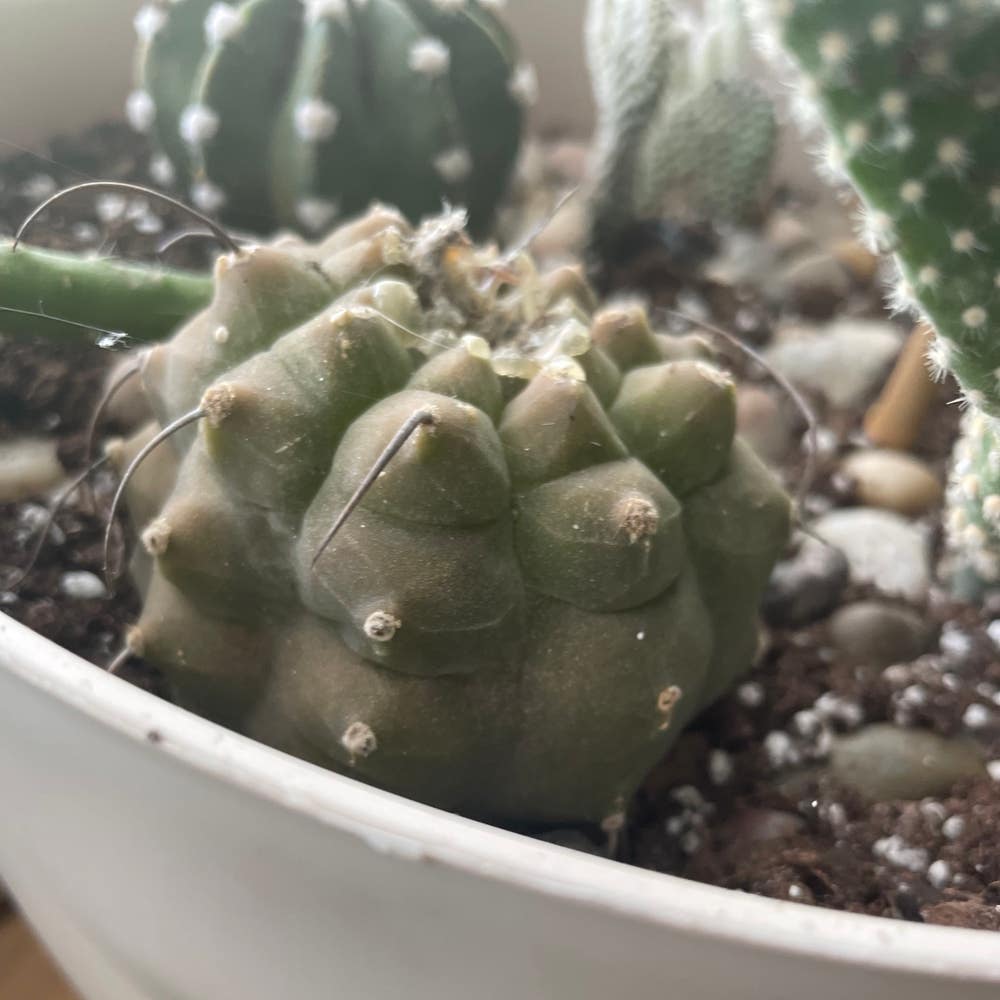
False Peyote
Taxonomy

Lophophora diffusa subsp. kubesae 'Album'
Lophophora
Cactaceae
Caryophyllales

How to care for False Peyote
How often to water your False Peyote

every 12
False Peyote needs 0.5 cups of water every 12 when it doesn’t get direct sunlight and is potted in a 5" pot.
Use our water calculator to personalize watering recommendations to your environment or download Greg for more advanced recommendations for all of your plants.
Water 0.5 cups every
12
Finding light for False Peyote in your home

a window
False Peyote love being close to bright, sunny windows 😎.
Place it less than 1ft from a south-facing window to maximize the potential for growth.
False Peyote does not tolerate low-light 🚫.
Select your region to see how the current weather in your area affects the placement of False Peyote in your home 🏡.
How to fertilize False Peyote

Most potting soils come with ample nutrients which plants use to produce new growth.
By the time your plant has depleted the nutrients in its soil it’s likely grown enough to need a larger pot anyway.
To replenish this plant's nutrients, repot your False Peyote after it doubles in size or once a year—whichever comes first.
-
#Lophophora #CactusClique Una amiga tiene esta Lophophora W. Cómo por una semana atrás. Creo que su prima le dio un paquete con ella y luego my amiga olvidó🙄su cajita de cartón antes de su viaje. Me avisó donde estaba y que cuidara de ella pues significa mucho para ella. Apenas unos días la planté y hoy le di su primer riego. Y noté que en el centro tiene un fruto :o 🌶️
-
 what is wrong?
-
August 2024 to December 2024 #CactusClique
-
How's my plant look #Peyote
-
My small clump of lophophora fricii is in bloom. So awesome to see the offset throw a flower. #HappyPlants #PlantsMakePeopleHappy #WhatTheSuccWednesday #CactusClique #Cactus #SucculentSquad
-
Advice on this guy? Is he okay? How do we plump him? Get him more vibrant? A while ago my boyfriend put keys on him and that’s how he got the ugly bruising / scars around the top. Any advice would be appreciated (: #Peyote #CactusClique #SucculentSquad #SucculentLove #PlantAddict #HappyPlants #PlantsMakePeopleHappy #NewGrowth
-
I placed Froto in the sun on the porch. Brought him in and he is now a brownish color (from green) #Lophophora
-
According to Greg my peyote needs 28 mL of water each watering. Is that accurate? #Peyote


Care Summary for False Peyote
False Peyote
 Greg recommends:
 Water
Water
0.5 cups every 12 days
 Placement
< 1ft from a window
 Nutrients
Repot after 2x growth
Based on the 4” pot your plant is in, and that it doesn’t get direct sunlight.
 Trending in your area

Swiss Cheese Vine

Marijuana

Peace Lily

Venus Fly Trap

Tradescantia Zebrina

Pearl Echeveria

Bird's Nest Fern

Ficus Ginseng

Baby Rubber Plant

False Christmas Cactus

Arabian Coffee Plant

Philodendron Birkin

Chinese Money Plant

Dwarf Umbrella Tree

Pothos N' Joy
Bird of Paradise

Elephant Bush

Emerald Ripple Pepero…
 Similar to False Peyote
✨ Discover rare plants

Ceropegia simoneae

Hoya pottsii 'Khao Ya…

Pseudorphipsalis 'Blu…

Kudu Lily

Begonia hydrocotylifo…

Milky Widow's Thrill

Royal Flush Split Rock

Picasso's Paintbrush

Echeveria Esther

Kilimanjaro Plant

Anthurium Fingers

Pine Cone Plant

Crassula 'Purple Drag…

Skeleton Key Pothos

Rhipsalis clavata

Hoya fitchii

Euphorbia baioensis
