
Lavender 'Bee Pretty'
Taxonomy

Lavandula 'Bee Pretty'
Lavandula
Lamiaceae
Lamiales

How to care for Lavender 'Bee Pretty'
How often to water your Lavender 'Bee Pretty'

every 9
Lavender 'Bee Pretty' needs 0.5 cups of water every 9 when it doesn’t get direct sunlight and is potted in a 5" pot.
Use our water calculator to personalize watering recommendations to your environment or download Greg for more advanced recommendations for all of your plants.
Water 0.5 cups every
9
Finding light for Lavender 'Bee Pretty' in your home

a window
Lavender 'Bee Pretty' love being close to bright, sunny windows 😎.
Place it less than 1ft from a south-facing window to maximize the potential for growth.
Lavender 'Bee Pretty' does not tolerate low-light 🚫.
Select your region to see how the current weather in your area affects the placement of Lavender 'Bee Pretty' in your home 🏡.
How to fertilize Lavender 'Bee Pretty'

Most potting soils come with ample nutrients which plants use to produce new growth.
By the time your plant has depleted the nutrients in its soil it’s likely grown enough to need a larger pot anyway.
To replenish this plant's nutrients, repot your Lavender 'Bee Pretty' after it doubles in size or once a year—whichever comes first.
-
Omg...I just got this plant and look at him now. I don't know what to do. Please help. It's an English Laveder #EnglishLavender
-
Help #Lavender
-
Did I kill my lavender plant? Is there any way of saving her or is it too late? #Lavender
-
I think she’s dying :( Anyone know why my lavender may be dying? It normally soaks up water and droops if I don’t soak it every few days. Maybe she finally had enough? Should I check the roots and change the soil?
-
How and when do I winterize? #EnglishLavender #PlantsMakePeopleHappy #HappyPlants #GregGang #OutdoorGrowing I have never winterized potted plants that are pre-annuals.
-
Hi everyone!! Need some tips! I got a small lavender bush! But it started to droop! Her soil is wet (Since the day I got her about 6 days ago) I don't water het yet but I did mist her! Some of her stems is turning brown! Is it normal for a lavender am I doing something wrong! She gets about 6 or more hours of direct sunlight!
-
I've had this plant for about 3 months now and it's not getting very big I put in a different pot with holes it's about 5 inches I had it in a bigger pot but it wasn't doing to good #EnglishLavender
-
after a long wait #lavender
-
Is my lavender dying? To much sun? Or need to repot ? Please any assistance will help #EnglishLavender
-
Grow Lights? Hi all! I just got a grow light for my lavender and peace lily, and wanted to see if my light distance looks right. My ZZ plant hopefully does well (in a north-facing window). Thanks!


Care Summary for Lavender 'Bee Pretty'
Lavender 'Bee Pretty'
 Greg recommends:
 Water
Water
0.5 cups every 9 days
 Placement
< 1ft from a window
 Nutrients
Repot after 2x growth
Based on the 4” pot your plant is in, and that it doesn’t get direct sunlight.
 Trending in your area










 Similar to Lavender 'Bee Pretty'


✨ Discover rare plants

Blue Moon Wisteria

Electric Blue Gecko

Tuber Fleeceflower
Rosularia platyphylla

Sedeveria 'Blue Elf'
Philodendron 'Rio'

Variegated Arrowhead …

Christmas Candle

Lithops

Dinteranthus microspe…

Caladium

Croton Nervia

Philodendron eximium

Cereus peruvianus 'Pa…

Pine Cone Plant

Radiator Plant
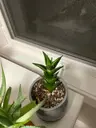
Astroloba congesta
