
Poinsettia 'Early Joy'
Taxonomy

Euphorbia pulcherrima 'Early Joy'
Euphorbia
Euphorbiaceae
Malpighiales

How to care for Poinsettia 'Early Joy'
How often to water your Poinsettia 'Early Joy'

every 12
Poinsettia 'Early Joy' needs 0.5 cups of water every 12 when it doesn’t get direct sunlight and is potted in a 5" pot.
Use our water calculator to personalize watering recommendations to your environment or download Greg for more advanced recommendations for all of your plants.
Water 0.5 cups every
12
Finding light for Poinsettia 'Early Joy' in your home

a window
Poinsettia 'Early Joy' love being close to bright, sunny windows 😎.
Place it less than 1ft from a south-facing window to maximize the potential for growth.
Poinsettia 'Early Joy' does not tolerate low-light 🚫.
Select your region to see how the current weather in your area affects the placement of Poinsettia 'Early Joy' in your home 🏡.
How to fertilize Poinsettia 'Early Joy'

Most potting soils come with ample nutrients which plants use to produce new growth.
By the time your plant has depleted the nutrients in its soil it’s likely grown enough to need a larger pot anyway.
To replenish this plant's nutrients, repot your Poinsettia 'Early Joy' after it doubles in size or once a year—whichever comes first.
-
How do you know it’s alive and growing? #Euphorbia
-
I live in MT, it gets really cold in the winter, will the cactus survive sitting in the window in that season or will i have to get a sun lamp to keep it alive in a warmer spot in the house? #Euphorbia
-
African Milk Tree This is what they’re looking like now! ChatGPT says they look good overall, but what do yall think? I live in New Mexico, near ABQ. I live up at around 7300ft above sea level so we get a lot of intense sunlight. Right now, they’re outside as it’s summer. They’re in a shaded part (to the side of a planter box) so they’re not getting full sun all day. I say they get about maybe 5ish hours? I water them about once a week to about a week in a half since we are so high up and with the sun, everything dries out and evaporates faster. I plan to repot them eventually. When would be the best time?
-
Best fertilizer? Best way to move to a larger pot? #FairyCastleCactus
-
Just repotted based on advice I got on here. How does it look? #Euphorbia
-
Just bought this little guy on a whim and am currently in love. Advise for repotting it into something more aesthetically pleasing? It just sits in the window sill of my kitchen and I want to get it to grow. #Euphorbia #advice #NewGrowth
-
Just got my first plant. It is still in the plastic container I bought it in. #Euphorbia
-
Brown base Not sure what's happening with my plant, I took him out to reply him and trim root rot, his base is turning brown. What does that mean? Is it normal?
-
Leaning My plant is leaning, much worse than at first. When I first got him he leaned quite a bit so I semi jokingly named him Leanardo. Now he's leaning much worse and I'm not sure how to fix this. I'd really appreciate some ideas on how to make him better. Thank you!
-
Hmm is this a euphorbia mayurnathanii? #Euphorbia


Care Summary for Poinsettia 'Early Joy'
Poinsettia 'Early Joy'
 Greg recommends:
 Water
Water
0.5 cups every 12 days
 Placement
< 1ft from a window
 Nutrients
Repot after 2x growth
Based on the 4” pot your plant is in, and that it doesn’t get direct sunlight.
 Trending in your area








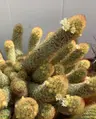





 Similar to Poinsettia 'Early Joy'
✨ Discover rare plants
Skeleton Key Pothos

Radiator Plant

Blue Moon Wisteria

Aloe 'Lavender Star'

Peperomia 'Harmony's …

Anthurium 'Fantasy Lo…

Variegated Arrowhead …

Miss All-American Bea…

Scotch Moss

Rainbow Echeveria
Linnaei Kunth

Crassula 'Purple Drag…

Royal Flush Split Rock
Hoya crassipetiolata

Hoya pottsii 'Khao Ya…

Sedeveria 'Blue Elf'
Anthurium papillilami…
