
Ribseed Sandmat
Also known as
ridge-seed spurge, ridgeseed spurge, ridge-seeded spurge, corrugate-seeded spurge and rib-seed sandmat
Taxonomy

Euphorbia glyptosperma
Euphorbia
Euphorbiaceae
Malpighiales

How to care for Ribseed Sandmat
How often to water your Ribseed Sandmat

every 12
Ribseed Sandmat needs 0.5 cups of water every 12 when it doesn’t get direct sunlight and is potted in a 5" pot.
Use our water calculator to personalize watering recommendations to your environment or download Greg for more advanced recommendations for all of your plants.
Water 0.5 cups every
12
Finding light for Ribseed Sandmat in your home

a window
Ribseed Sandmat love being close to bright, sunny windows 😎.
Place it less than 1ft from a south-facing window to maximize the potential for growth.
Ribseed Sandmat does not tolerate low-light 🚫.
Select your region to see how the current weather in your area affects the placement of Ribseed Sandmat in your home 🏡.
How to fertilize Ribseed Sandmat

Most potting soils come with ample nutrients which plants use to produce new growth.
By the time your plant has depleted the nutrients in its soil it’s likely grown enough to need a larger pot anyway.
To replenish this plant's nutrients, repot your Ribseed Sandmat after it doubles in size or once a year—whichever comes first.
-
Can someone please help me! My milk tree cactus is not doing good. It is not root rot. Idk if it’s the lighting or being spayed by gnat killer for indoor plants. #Euphorbia
-
This is my Crown or Queen of Thorns. I’ve done everything I’ve read about on how to take care of it but it continues to drop have yellow leaves and drop leaves. ??? I’m at a loss. I haven’t overwatered either. So I’m not sure what the deal is. Help! #Euphorbia
-
What can I use to fertilize this big guy. He is looking slightly puney lately! #Euphorbia
-
Do other #Greggers out there like #thrifting pots and planters?! It’s one of my favorite things!! All of the plants in the pics are in #thrifted vessels! 😍 What #ThriftStoreFinds do you guys have?! #ReuseAndRelove #ThriftShopFinds #GregThrifters #HensAndChicks #CactusClique #StringOfTurtles #Lithops #Euphorbia
-
I just received my new Euphorbia milk plant so I haven’t created an account for it yet but does anyone know whats going on with the leaves? Does he need to be quarantined? #Euphorbia
-
Excited about my new plant 😍 #euphorbia #tanzanianzipperplant
-
Just repotted my guys. How long should I wait to water them? They have barely any roots. #Euphorbia
-
They’ve arrived 😍 Sorry for the terrible pics, but I will take better ones very soon! My white princess has a pink stripe 🥰 The only problems were my perle von Nurburg lost a leaf and looks thirsty (prop time) my Hoya had a bent stem which is already propped lol, this girl has 6 peduncles already 🥹 My begonia escargot is a little crispy on the edges. My euphorbia is perfect! My Melo has a brand new leaf ☺️ Welcome home my beautiful babies #PlantAddict #PlantsMakePeopleHappy #HappyPlants #NewPlants #PlantHaul #Philodendron #Begonia #Euphorbia #AlocasiaAddicts #SucculentSquad #HoyaHangout
-
Is this leaf texture normal? Plant appears otherwise healthy (no stem rot, etc) #Euphorbia
-
Happy new year! Only took me about a week before I started buying plants. 🤣🌱 found 2 wishlist plants already! Cannot believe it! #wishlistplant #WhaleFinSnakePlant #VariegatedStringOfHearts #dragonboneeuphorbia #Euphorbia #HappyPlants #PlantsMakePeopleHappy #PlantAddict #PlantTherapy #PlantMommy #RarePlants





Care Summary for Ribseed Sandmat
Ribseed Sandmat
 Greg recommends:
 Water
Water
0.5 cups every 12 days
 Placement
< 1ft from a window
 Nutrients
Repot after 2x growth
Based on the 4” pot your plant is in, and that it doesn’t get direct sunlight.
 Trending in your area









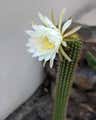
 Similar to Ribseed Sandmat
✨ Discover rare plants

Chandelier Plant

Hoya fitchii

Betel

Peperomia 'Harmony's …

Dinteranthus microspe…

Stomatium acutifolium

Anthurium Fingers

Parrot Pitcher Plant

Rhipsalis clavata

Begonia lubbersii

Black Monkey Thorn Tr…
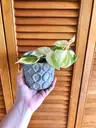
Philodendron 'Gabby'

Cereus peruvianus 'Pa…

Fagraea ceilanica

Anastasia Weeping Fig

Aglaonema 'Green Bowl'
