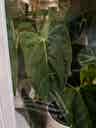
Ceropegia thwaitesii
Taxonomy

Ceropegia thwaitesii
Ceropegia
Apocynaceae
Gentianales

How to care for Ceropegia thwaitesii
How often to water your Ceropegia thwaitesii

every 12
Ceropegia thwaitesii needs 0.5 cups of water every 12 when it doesn’t get direct sunlight and is potted in a 5" pot.
Use our water calculator to personalize watering recommendations to your environment or download Greg for more advanced recommendations for all of your plants.
Water 0.5 cups every
12
Finding light for Ceropegia thwaitesii in your home

a window
Ceropegia thwaitesii may have difficulty thriving, and will drop leaves 🍃, without ample sunlight.
Place it less than 3 feet from a south-facing window to maximize the potential for growth.
Select your region to see how the current weather in your area affects the placement of Ceropegia thwaitesii in your home 🏡.
How to fertilize Ceropegia thwaitesii

Most potting soils come with ample nutrients which plants use to produce new growth.
By the time your plant has depleted the nutrients in its soil it’s likely grown enough to need a larger pot anyway.
To replenish this plant's nutrients, repot your Ceropegia thwaitesii after it doubles in size or once a year—whichever comes first.
-
help with string of hearts my variegated string of hearts’ leaves are wrinkly and thin. am i over or under watering?
-
Happy Monday! String of Hearts Q Good Monday morning #TheWateringHole gang!! I hope this week brings you peace, joy, and.. growth! 🌱 I do wish we were all sitting around sharing some coffee (or tea!) on this chilly NYC morning. I have a question for our String Of.. veterans. I’ve had mine for about 2 weeks now, and I am decidedly not a succulent grower (yet!), so I wanted to hivemind my plan of attack here. This String of Hearts was watered 7 days ago, has not been repotted from plant store as it was stringing so much in their care. Greg is telling me it’s due for another water, which I’ve read it should be more on par with 1.5- 2 weeks. I am blasting the crown for about 1.5 hours every day with a grow light to make sure it stays happy up there after I noticed a couple yellow leaves last week, and happy to report no yellowing this week and multiple growth points on the strings. The strings get the grow light the rest of the day. The pot feels very light and taco test definitely looks like it’s ready for a water. When I took it down, it looked a little dark so I tried both the finger test AND a water meter (the water meter is new, so I don’t fully trust it yet). I’m confused why taco test could be so definitive yet there’s apparently still water to be had in the soil. I’m a little scared to repot because I read the roots are rather shallow. But maybe those shallow roots aren’t grabbing the water below? What say yall? Give it more time to water? What is your normal water rhythm for your home, and is that with grow lights?
-
How to make sure this plant stays alive? Hi there! I'm new here. I'm brand new in planting. I love flowers and so I thought I'd have these water lilies. When they were 9 days old or so, I transferred them to the soil and kept them soaked in water. But, I didn't know the bucket I used had a hole and I didn't check in time, the soil dried, the leaves dried. I only have one seed left and this is it, after a few days, there's a leaf now and another stalk growing. How do I make sure this doesn't die? I'm hoping to see some flowers from this. I placed it in a wine bottle, the bottle filled with water. Thanks for your help! 😊
-
my plant is not feeling well Hopefully you can see my plant and its picture, he doesn't look so well. Should i water him more or maybe fertilize it? I watered it yesterday and im planing to fertilize it next time i would water it. Any ideas? #stringofhearts #plantcare
-
My string of hearts shed all its leaves? I’ve cut it back and hoping it will revive itself has anyone got any tips? It was thriving and had a 7ft long shoot which has no leaves so I’ve cut it back
-
My String Of Hearts did not survive the root rot treatment and repotting 😞😫😖😭🥺💔❤️🩹 it was a strong root system so hopefully something will come to fruition but it just declined so quickly ❤️🩹💔
-
My princess getting the princess treatment this morning In her spa 🤗🛁🫧 I cannot believe how long, bushy & healthy she is! My boyfriend got this for me about two or three years ago on my first birthday we shared together. It’s a very special plant to me! She was so small when I first got her compared to now. I have struggled with strings & have had lots of ups & downs with them when it comes to caring for them & keeping them alive, but this baby has always been forgiving with me & has given me grace. 🫶🏻 & for that I thank her & treat her extra special & extra care to be fragile with her & her delicate long tendrils.. 🥹 I only bottom water her, and I keep her outside until winter in my screened in porch. I have her in a shallow teracotta pot for good drainage. I love her one all white tendril she has, it’s so cool to me. I always wonder what causes that in Varigated plants. 🌱 #HappyPlants #PlantsMakePeopleHappy #PlantAddict #NewGrowth #vsoh #StringOfHearts #VariegatedStringOfHearts #variegatedplants #StringLoversTogether #stringsofthings #ButtChug #BottomWatering #OutdoorGrowing #OutsidePlants #SucculentSquad #SucculentLove #Succulents #Succulent #succulentsunday #Teracotta #GrowingSuccs
-
I just got it. And a lot of leaves have fallen since after 2weeks. But also a lot new growths. Is that just a part of adapting to change of environment? I water it ever week, draining pot, indirect light 1 ft from window. #VariegatedStringOfHearts
-
#succulentsaturday 🌿 I cut some of my flowers off my Echeveria Blue Sky, & used this vase my grandma gave me to put them in. *tip*- don’t use water if you want to cut them to display them, it will rot them & won’t last. They have lasted about a month or a little less, since I’ve cut them and had them inside. That’s a long time for cut flowers if you ask me. Also wanted to brag on my VSOH, it’s so long & is doing so good! My boyfriend got me this for my first birthday we had together, so it’s a special plant! It even had a little string of all white hearts (photo 4) which is super cool. Hope everyone is having a good weekend so far! 💕 #HappyPlants #PlantsMakePeopleHappy #PlantAddict #NewGrowth #SucculentLove #PlantShelfie #SucculentSquad #Succulents #Succulent #GrowingSuccs #vsoh #StringOfHearts #stringsofthings #HangingPlants #variegatedplants #VariegatedStringOfHearts #Variegated #NewGrowth #cuteafsuccs #CutFlowers #BloomingSuccs #PlantLove #OutdoorGrowing
-
Why is my string of hearts not growing? I bought her as a clipping MONTHS ago. I started her in water where she very slowly developed a few roots, and I saw little to no growth elsewhere. Eventually I transferred her to soil where she then put out one new set of leaves and one flower bud but that shrivelled and dried up. I’d been quite on top of watering at the time so this confused me. I was giving her fertiliser etc every other watering (about twice a month) when I remember, but otherwise once a month or every other month during the warmer months. She isn’t dead, she doesn’t look dead, but she isn’t growing. This is an issue I’ve had with some plants before, and they either end up growing or dying. This girly isn’t doing either. I’ve had her under a grow light for at least a month now, and last week I bought. A humidifier which is maybe a metre away from her. Any ideas whats happening? Any advice is appreciated. Thank you! #PlantsMakePeopleHappy #PlantAddict #NewGrowth #StringOfHearts #help #PlantTherapy #GrowLights #humidifier


Care Summary for Ceropegia thwaitesii
Ceropegia thwaitesii
 Greg recommends:
 Water
Water
0.5 cups every 12 days
 Placement
< 3ft from a window
 Nutrients
Repot after 2x growth
Based on the 4” pot your plant is in, and that it doesn’t get direct sunlight.
 Trending in your area












 Similar to Ceropegia thwaitesii

✨ Discover rare plants

Bonsai Crassula

Scotch Moss

Milky Widow's Thrill

Royal Flush Split Rock

Aglaonema Spitfire

Vatricania guentheri

Echeveria Esther

Caladium

Electric Blue Gecko

Carolina Reaper

Hoya kalimantan

Chinese Evergreen 'Go…

Orange Lipstick Plant

Parrot Pitcher Plant
Phalaenopsis schiller…

Euphorbia baioensis

Rhipsalis clavata