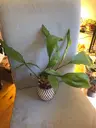
Cora Cascade Shell Pink Vinca
Taxonomy

Catharanthus roseus 'Cora Cascade Shell Pink'
Catharanthus
Apocynaceae
Gentianales

How to care for Cora Cascade Shell Pink Vinca
How often to water your Cora Cascade Shell Pink Vinca

every 9
Cora Cascade Shell Pink Vinca needs 0.5 cups of water every 9 when it doesn’t get direct sunlight and is potted in a 5" pot.
Use our water calculator to personalize watering recommendations to your environment or download Greg for more advanced recommendations for all of your plants.
Water 0.5 cups every
9
Finding light for Cora Cascade Shell Pink Vinca in your home

a window
Cora Cascade Shell Pink Vinca love being close to bright, sunny windows 😎.
Place it less than 1ft from a south-facing window to maximize the potential for growth.
Cora Cascade Shell Pink Vinca does not tolerate low-light 🚫.
Select your region to see how the current weather in your area affects the placement of Cora Cascade Shell Pink Vinca in your home 🏡.
How to fertilize Cora Cascade Shell Pink Vinca

Most potting soils come with ample nutrients which plants use to produce new growth.
By the time your plant has depleted the nutrients in its soil it’s likely grown enough to need a larger pot anyway.
To replenish this plant's nutrients, repot your Cora Cascade Shell Pink Vinca after it doubles in size or once a year—whichever comes first.
-
My bright eyes looks sad in some areas and has growth in others. What can I go to help the plant?
-
My plants looking sad, I water it like I should and it gets plenty of sun. Is there anything I can do to help it? #BrightEyes
-
Can she be planted outside in soil? #BrightEyes
-
Are the annuals or perenials? #BrightEyes
-
The leaves of my plants are yellowing, does this mean too much water? #BrightEyes
-
While watering curie i saw this little orange cutie relaxing on the leaf #gregpets #spiders #happyplants #plantsmakepeoplehappy #plantaddict #newgrowth
-
Curie, so far, hasn't come back, but a few months back, I propagated a piece of her into Anne's pot and great news she caught, and curie is on her way back but i hope og curie will make it back still have hope because her roots are still good and healthy #happyplants #plantsmakepeoplehappy #plantaddict #brighteyes #propagationstation #newgrowth
-
First flower 🌸🌸🌸 #plantaddict
-
Curies flowers went from dark pink to light pink 💗 so beautiful. Is this cause of winter time?? #happyplants #plantsmakepeoplehappy #winteriscoming #brighteyes
-
Is it just me, or did Star have a growth spurt? She's recovering good! #happyplants #plantsmakepeoplehappy #plantaddict #planttherapy #plantcorner #plantlove #iloveplants #newgrowth #planttlc #greggang #adhdplantlovers #growthspurt #brighteyes


Care Summary for Cora Cascade Shell Pink Vinca
Cora Cascade Shell Pink Vinca
 Greg recommends:
 Water
Water
0.5 cups every 9 days
 Placement
< 1ft from a window
 Nutrients
Repot after 2x growth
Based on the 4” pot your plant is in, and that it doesn’t get direct sunlight.
 Trending in your area












 Similar to Cora Cascade Shell Pink Vinca

✨ Discover rare plants

Starfish Snake Plant

Cereus peruvianus 'Pa…

Aglaonema Spitfire

Cleistocactus icosago…

Peperomia 'Harmony's …

Chinese Evergreen 'Go…

Haworthia emelyae com…

Electric Blue Gecko
Philodendron 'Gabby'

Graptoveria 'Douglas …

Euphorbia baioensis

Begonia hydrocotylifo…

Pine Cone Plant

Croton Nervia

Parrot Pitcher Plant
Thelocactus macdowell…

Fernleaf Lavendar