
Aspidistra 'Big Spotty'
Taxonomy

Aspidistra grandiflora 'Big Spotty'
Aspidistra
Asparagaceae
Asparagales

How to care for Aspidistra 'Big Spotty'
How often to water your Aspidistra 'Big Spotty'

every 9
Aspidistra 'Big Spotty' needs 0.5 cups of water every 9 when it doesn’t get direct sunlight and is potted in a 5" pot.
Use our water calculator to personalize watering recommendations to your environment or download Greg for more advanced recommendations for all of your plants.
Water 0.5 cups every
9
Finding light for Aspidistra 'Big Spotty' in your home

a window
Aspidistra 'Big Spotty' may have difficulty thriving, and will drop leaves 🍃, without ample sunlight.
Place it less than 3 feet from a south-facing window to maximize the potential for growth.
Select your region to see how the current weather in your area affects the placement of Aspidistra 'Big Spotty' in your home 🏡.
How to fertilize Aspidistra 'Big Spotty'

Most potting soils come with ample nutrients which plants use to produce new growth.
By the time your plant has depleted the nutrients in its soil it’s likely grown enough to need a larger pot anyway.
To replenish this plant's nutrients, repot your Aspidistra 'Big Spotty' after it doubles in size or once a year—whichever comes first.
-
My plant’s leaves are browning on the tips and starting to droop #CastIronPlant
-
Trying to become a better plant mom. Why are my leaves brown? It’s in a self watering plant from easy plant. Was 3 feet from a south facing window. I moved it upstairs to a darker room away from a window. Will that help? How long should I wait?
-
Bought my wishlist plant today! #CastIronPlant #HappyPlants #PlantsMakePeopleHappy #PlantAddict #PlantTherapy
-
When a cast iron plant has brown tips what does that mean? Too much light?
-
What are the brown spots on my leaves? #CastIronPlant
-
Hi, my plant is big, in a 10-inch pot, why is the app telling me to give it a half cup of water? #CastIronPlant
-
Cast iron plant leaning? I replaced the soil in my cast iron plant in an effort to combat fungus gnats. Despite my best efforts to keep all pieces up straight, they are all leaning to some degree. Should I try again or leave it alone?
-
Why are my leaves turning?
-
This has a burnt look on a couple of leaves.
-
Some of the leaves are turning brown. Is that due to lo humidity? #CastIronPlant


Care Summary for Aspidistra 'Big Spotty'
Aspidistra 'Big Spotty'
 Greg recommends:
 Water
Water
0.5 cups every 9 days
 Placement
< 3ft from a window
 Nutrients
Repot after 2x growth
Based on the 4” pot your plant is in, and that it doesn’t get direct sunlight.
 Trending in your area





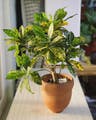




 Similar to Aspidistra 'Big Spotty'
✨ Discover rare plants

Radiator Plant

Philodendron eximium
Ace of Spades

Crassula 'Calico Kitt…

Ruby Ball

Red Mistletoe Cactus

Hoya sipitangensis

Echeveria Esther

Lavandula Pedunculata

Hoya kalimantan

Graptoveria 'Douglas …
Phalaenopsis schiller…
Stanhopea tigrina

Anthurium 'Fantasy Lo…

Dinteranthus microspe…

Milky Widow's Thrill
