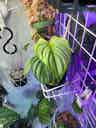
Anthurium erythrospadix
Taxonomy

Anthurium erythrospadix
Anthurium
Araceae
Alismatales

How to care for Anthurium erythrospadix
How often to water your Anthurium erythrospadix

every 9
Anthurium erythrospadix needs 0.5 cups of water every 9 when it doesn’t get direct sunlight and is potted in a 5" pot.
Use our water calculator to personalize watering recommendations to your environment or download Greg for more advanced recommendations for all of your plants.
Water 0.5 cups every
9
Finding light for Anthurium erythrospadix in your home

a window
Anthurium erythrospadix may have difficulty thriving, and will drop leaves 🍃, without ample sunlight.
Place it less than 3 feet from a south-facing window to maximize the potential for growth.
Select your region to see how the current weather in your area affects the placement of Anthurium erythrospadix in your home 🏡.
How to fertilize Anthurium erythrospadix

Most potting soils come with ample nutrients which plants use to produce new growth.
By the time your plant has depleted the nutrients in its soil it’s likely grown enough to need a larger pot anyway.
To replenish this plant's nutrients, repot your Anthurium erythrospadix after it doubles in size or once a year—whichever comes first.
-
Hello, I am wondering if this plant could be planted outside where it get plenty of sun #Anthurium
-
My plant has one yellow leaf. Overall I believe the plant to be thriving and very healthy. Will too much or too little sun cause this? I have it about 2ft. from the south window #Anthurium
-
What can I do to get them to bloom again? #Anthurium
-
How often should my Painter’s Oalette bloom? #Anthurium
-
Any suggestion as to how to treat this problem. My guess is it’s lacking nutrients. Please help. #Anthurium
-
Why my anthurium doesnt flower?
-
Does my plant prefer moisture retaining or well draining soil? Greg is telling me both for some reason. #Anthurium
-
It doesn't grow the red flowers #Anthurium
-
Why is my painters pallete looking so sad?
-
How do I get my plant to bloom? It's healthy, just won't bloom #Anthurium


Care Summary for Anthurium erythrospadix
Anthurium erythrospadix
 Greg recommends:
 Water
Water
0.5 cups every 9 days
 Placement
< 3ft from a window
 Nutrients
Repot after 2x growth
Based on the 4” pot your plant is in, and that it doesn’t get direct sunlight.
 Trending in your area










 Similar to Anthurium erythrospadix


✨ Discover rare plants
Skeleton Key Pothos

Euphorbia

Philodendron eximium

Haworthia emelyae com…

Sarcochilus fitzgeral…

Sedum 'White Diamond'

Aglaonema Spitfire
Stanhopea tigrina

Milky Widow's Thrill

Hoya kalimantan
Rosularia platyphylla

Scindapsus pictus 'Si…

Rhipsalis clavata

Dinteranthus microspe…

Electric Blue Gecko
Anthurium papillilami…