


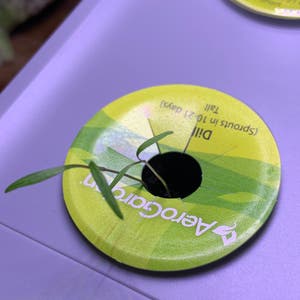
Dill

4.0 out of 5 (1 experiences)
 Fast grower
 Easy to propagate
About Dill
Anethum graveolens is an aromatic self-seeding annual herb. It grows best in temperate climates with full sun in well-drained, slightly acidic soil. Dill is susceptible to aphids, tomato horn worms and powdery mildew. It is a good companion plant for cucumber and broccoli.
Taxonomy

Anethum graveolens
Anethum
Apiaceae
Apiales

How to care for Dill
How often to water your Dill

every 9
Dill needs 0.5 cups of water every 9 when it doesn’t get direct sunlight and is potted in a 5" pot.
Use our water calculator to personalize watering recommendations to your environment or download Greg for more advanced recommendations for all of your plants.

Water 0.5 cups every
9
Finding light for Dill in your home

a window
Dill love being close to bright, sunny windows 😎.
Place it less than 1ft from a south-facing window to maximize the potential for growth.
Dill does not tolerate low-light 🚫.
Select your region to see how the current weather in your area affects the placement of Dill in your home 🏡.
How to fertilize Dill

Most potting soils come with ample nutrients which plants use to produce new growth.
By the time your plant has depleted the nutrients in its soil it’s likely grown enough to need a larger pot anyway.
To replenish this plant's nutrients, repot your Dill after it doubles in size or once a year—whichever comes first.
-
Hanging Leaves Heyy, I'm pretty new in having herbs. One of the herbs I'm trying to grow in my kitchen is Dill, but the leaves are hanging and I have no clue why. It would be awesome to get some ideas on this :)
-
OMG PICKLE ISN’T A DILL 
-
Help! I just transplanted my dill from a garden cube to a herb box and now she looks like this :( what did I do? They rest of them look fine #Dill
-
Dose pickle have to be in direct sunlight ?
-
My plant is growing a pup, and I was wondering if I HAVE to remove it and put it in its own pot  #Dill
-
My indoor dill plant needs water every four days vs this rogue outdoor dill plant across the street from my apartment block that just gets water whenever the sky decides it's time 😆 #anethumgraveolens #dill #herbs #edibleplants #sidewalkplants #plantsreclaimingtheearth #urbanwilderness #plantsmakepeoplehappy
-
How do you fertilize a your dill plant? #Dill
-
Dill suddenly going limp and yellowing overnight. Any ideas or tips? New to growing dill! #Dill
-
I water this dude every 7 to 8 days as suggested, he gets more than enough sunlight, and he has a HUGE drainage hole on the bottom covered by a filter. What do I do to revive him? #Dill
-
Tips are turning brown, what am I doing wrong? #Dill


Care Summary for Dill

Dill
 Greg recommends:
 Water
Water
0.5 cups every 9 days
 Placement
< 1ft from a window
 Nutrients
Repot after 2x growth
Based on the 4” pot your plant is in, and that it doesn’t get direct sunlight.
What other plant parents say
Fast grower 1
Easy to propagate 1
 Survivor 1


 07/05/2021
Easy to grow indoors.
Fast grower
Easy to propagate
Survivor
 Trending in your area





 Similar to Dill

✨ Discover rare plants
Philodendron 'Gabby'

Cleistocactus icosago…

Crassula 'Purple Drag…
Stanhopea tigrina
Philodendron 'Silver …

Electric Blue Gecko
Crassula 'Calico Kitt…

Aeonium 'Blushing Bea…

Tillandsia caerulea A…
Ace of Spades

Rhipsalis clavata

Philodendron eximium

Fagraea ceilanica

Burro's Tail

Kudu Lily

Pine Cone Plant
