
Amorphophallus suwidjianus
Taxonomy

Amorphophallus suwidjianus
Amorphophallus
Araceae
Alismatales

How to care for Amorphophallus suwidjianus
How often to water your Amorphophallus suwidjianus

every 9
Amorphophallus suwidjianus needs 0.5 cups of water every 9 when it doesn’t get direct sunlight and is potted in a 5" pot.
Use our water calculator to personalize watering recommendations to your environment or download Greg for more advanced recommendations for all of your plants.
Water 0.5 cups every
9
Finding light for Amorphophallus suwidjianus in your home

a window
Amorphophallus suwidjianus love being close to bright, sunny windows 😎.
Place it less than 1ft from a south-facing window to maximize the potential for growth.
Amorphophallus suwidjianus does not tolerate low-light 🚫.
Select your region to see how the current weather in your area affects the placement of Amorphophallus suwidjianus in your home 🏡.
How to fertilize Amorphophallus suwidjianus

Most potting soils come with ample nutrients which plants use to produce new growth.
By the time your plant has depleted the nutrients in its soil it’s likely grown enough to need a larger pot anyway.
To replenish this plant's nutrients, repot your Amorphophallus suwidjianus after it doubles in size or once a year—whichever comes first.
-
My Corpse Flower plant has come out of dormancy for the first time since I got it! It took about a year but I was patient and it paid off! Now only about 8 more years before I can hope for a bloom 🌸
-
She finally came out
-
My baby p*nis plant is growing :) this is the second leaf it put out and it is much bigger then the first one. I grew it from seed, so i am a happy mother :) Can't wait to have it flower one day and regret my decisions when i smell the plant😂 Plant bio picture is older leaf, not sure how well you can compare it though. #happyplants #plantsmakepeoplehappy #plantaddict #newgrowth #amorphophallus #amorphophallusgigas #nathaliezyx4
-
Twas a big stonk. All of a sudden a bjg sprout #Amorphophallus #HappyPlants #PlantsMakePeopleHappy #PlantAddict #NewGrowth #PropagationStation #PlantShelfie
-
High up!! #NewGrowth #HappyPlants #PlantsMakePeopleHappy #PLANTMAFIA #PlantShelfie


Care Summary for Amorphophallus suwidjianus
Amorphophallus suwidjianus
 Greg recommends:
 Water
Water
0.5 cups every 9 days
 Placement
< 1ft from a window
 Nutrients
Repot after 2x growth
Based on the 4” pot your plant is in, and that it doesn’t get direct sunlight.
 Trending in your area

Tomato Plant
Phalaenopsis Orchid

Tradescantia Nanouk

Blushing Bride Air Pl…

Fairy Washboard

Emerald Ripple Pepero…

Satin Pothos

Elephant Bush

Parlour Palm
Fiddle Leaf Fig

Kentia Palm

Polka Dot Begonia

Heartleaf Philodendron
Baby Rubber Plant
Philodendron Birkin
Sweet Basil

Painter's Palette
Monstera
 Similar to Amorphophallus suwidjianus


✨ Discover rare plants
Hoya crassipetiolata

Hoya pottsii 'Khao Ya…

Miss All-American Bea…

Electric Fern

Chandelier Plant
Hoya 'Memoria'
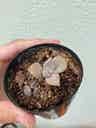
Graptopetalum 'Marqui…

Sedum 'White Diamond'

Graptoveria 'Douglas …

Rhipsalis clavata

Scindapsus pictus 'Si…
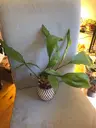
Stanhopea tigrina
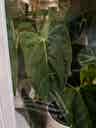
Anthurium papillilami…

Scindapsus pictus 'Si…

Royal Flush Split Rock

Ruby Ball

Aeonium 'Blushing Bea…
