Philodendron subhastatum Fertilizer: How and When to Use It
Philodendron subhastatum
By the Greg Editorial Team
Jun 18, 2024•4 min read
This article was created with the help of AI so we can cover more plants for you. May contain errors. See one? Report it here.
Nurture a lush Philodendron subhastatum 🌿 with perfect timing and fertilizer choice—your green thumb's secret weapon!
- Organic vs. Synthetic: Tailor to your Philodendron's needs.
- Fertilize in growth phases: Less in winter, more in spring/summer.
- Watch for over-fertilization: Yellow leaves and burnt tips signal trouble.
Picking the Right Fertilizer for Your Philodendron subhastatum
💡 Organic vs. Synthetic: Pros and Cons
Organic fertilizers are the tortoises in the race—slow and steady. They release nutrients as they break down, improving soil structure along the way. Think of them as your plant's multivitamin, gradually bolstering health over time. Synthetic fertilizers are the hares, offering a swift nutrient boost. They're the espresso shot to your plant's morning, but don't expect them to enrich the soil's long-term health.
🌱 Reading the Label: NPK Ratios Explained
The NPK ratio on a fertilizer label is like a recipe for your plant's diet. Nitrogen (N) is for foliage, Phosphorus (P) for roots and blooms, and Potassium (K) for overall vitality. For Philodendron subhastatum, a balanced meal—think a 3-1-2 ratio—is just right. It's the plant equivalent of a well-rounded diet, ensuring no nutrient is left behind.
🍶 Liquid, Granular, or Slow-Release: Which to Choose?
Liquid fertilizers are the control freaks of plant food. They allow for precise dosing, getting nutrients to roots posthaste. Granular types are the set-it-and-forget-it option, slowly releasing food over time. And slow-release pellets? They're the crockpots of the fertilizer world—convenient, but sometimes unpredictable in nutrient delivery. Your choice should hinge on your care style and the plant's environment.

Timing is Everything: When to Fertilize
🌱 Growth Spurts: Capitalizing on Active Phases
Philodendron subhastatum, like a teenager during a growth spurt, needs more nutrients when it's actively growing. This typically happens in spring and summer. During these seasons, fertilize your plant every two to four weeks to support its vigorous leaf production and overall growth.
❄️ Winter Blues: Understanding Dormancy
When winter rolls around, your Philodendron subhastatum isn't exactly hibernating, but it's definitely taking it easy. It's a period of dormancy, and your plant's appetite for nutrients drops. Scale back on fertilizing during these cooler months to prevent potential nutrient overload, which can be as counterproductive as pouring coffee into a sleeping person's mouth.

The Fertilization Process: Step by Step
🌱 Preparing the Feast: Mixing and Diluting
To kick off, mixing your fertilizer correctly is crucial. For liquid fertilizers, precision is your friend; use a measuring syringe to nail the dosage. Dilute as directed—usually, half-strength is a safe bet to avoid overwhelming your Philodendron subhastatum. Always mix with water to ensure a gentle, even spread of nutrients.
🍽️ Serving the Meal: Application Techniques
When it's time to apply, think of it as a delicate operation. Watering cans or drip systems are your go-to tools for an even spread at the plant's base. Avoid hitting the leaves; we're not making salad here. If you're using granular types, a spreader can help you avoid dumping a nutrient mountain in one spot. And remember, always water your plant before and after fertilizing to prevent nutrient burn and salt buildup. It's like bookending your plant's meal with a nice drink to aid digestion.

Spotting Success: Signs Your Fertilization is Working
🌱 New Growth: What to Look For
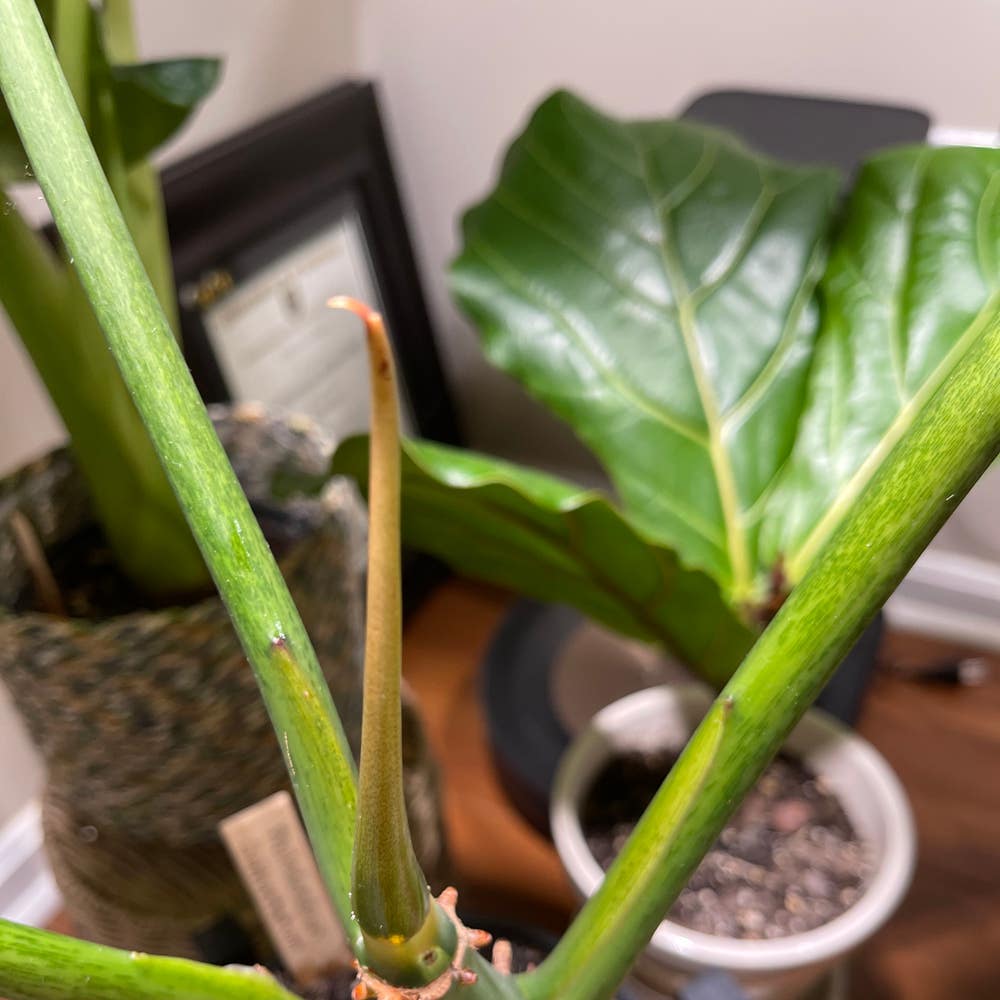
Philodendron subhastatum plants don't hold back when they're happy. New leaves unfurling is your cue that the fertilizer is doing its magic. These leaves should be vibrant and robust, a clear sign of effective nutrient uptake.
🌼 Blooms and More: The Rewards of Proper Fertilization
While Philodendron subhastatum isn't known for its flowers, proper fertilization can lead to an increase in vitality. Expect a plant that looks full of life, with leaves that are deep green and have a healthy sheen.
Oops, Too Much!: Dealing with Over-Fertilization
🚨 Spotting the Symptoms: From Yellow Leaves to Burnt Tips
Over-fertilization can turn your Philodendron subhastatum from a tropical treasure into a sorry sight. Yellow leaves and burnt tips are the plant's way of waving a red flag. A white crust on the soil's surface is like the plant's own version of a "Do Not Disturb" sign, indicating a salt buildup from excess fertilizer. If the roots have taken on a brown or black hue, consider it an S.O.S. signal from below the soil.
🏥 First Aid for Your Philodendron: Remedial Steps
When your Philodendron subhastatum sends out distress signals, it's time for some plant triage. Stop fertilizing immediately—this is non-negotiable. Next, remove any visible fertilizer from the soil to prevent further nutrient absorption. Then, give the soil a thorough flush with water to leach out the excess nutrients; think of it as a detox for your plant's roots. If the symptoms persist, consider repotting with fresh soil to give your plant a clean slate. Remember, your Philodendron prefers a light touch with nutrients, so when in doubt, fertilize less, not more.
⚠️ Safety First
This content is for general information and may contain errors, omissions, or outdated details. It is not medical, veterinary advice, or an endorsement of therapeutic claims.
Always consult a qualified healthcare professional before using any plant as food, medicine, or supplement.
Never eat any plant (or feed one to pets) without confirming its identity with at least two trusted sources.
If you suspect poisoning, call Poison Control (800) 222-1222, the Pet Poison Helpline (800) 213-6680, or your local emergency service immediately.
Spotted an error? Please report it here.
Ensure your Philodendron subhastatum flourishes with precision 🎯 by using Greg for exact fertilizer dosing and timely reminders based on the season's growth cycle.