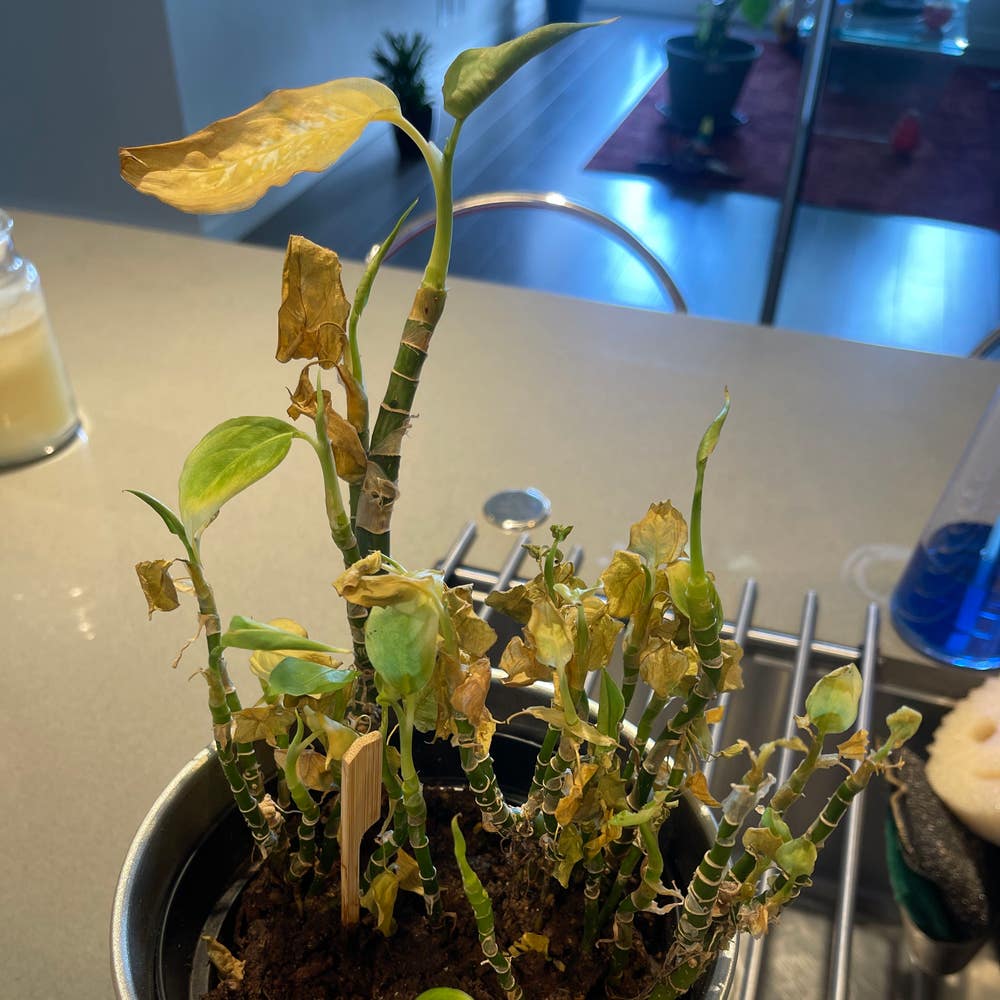
Why Are My Japanese Poinsettia Leaves Curling?
Euphorbia tithymaloides
By the Greg Editorial Team
Jun 08, 2024•5 min read
This article was created with the help of AI so we can cover more plants for you. May contain errors. See one? Report it here.
- Temperature, humidity, and watering impact leaf curling in Japanese Poinsettias.
- Bright, indirect light and nutrients like calcium and magnesium are essential.
- Consistent care and seasonal adjustments prevent future leaf curling.
Identifying the Causes of Leaf Curling in Japanese Poinsettia
🌡️ Temperature and Humidity: The Usual Suspects
Temperature swings are like mood swings for Japanese Poinsettias—they don't take them well. Keep the thermostat steady, because these plants dislike change more than a cat dislikes water. Humidity also plays a big role; too dry, and the leaves curl up tighter than a miser's fist.
💧 Watering Practices: A Balancing Act
Overwatering is the equivalent of force-feeding, while underwatering is akin to a desert trek without water. Both extremes lead to leaf curling. Imagine walking a tightrope with your watering can; that's the level of balance required.
🌞 Light: Not Too Bright, Not Too Dim
Think of the ideal light for a Japanese Poinsettia as a cloudy day; bright but not glaring. Direct sunlight? That's a no-go. It's like putting a vampire in a tanning bed—just don't do it.
🍽️ Nutrients: The Plant's Multivitamins
Nutrient deficiencies make Japanese Poinsettias as unhappy as a diner with an empty plate. A balanced diet is key; too much fertilizer and the leaves curl like they're trying to escape a bad meal. Calcium and magnesium are particularly important—think of them as the plant's daily multivitamin.

Immediate Actions to Alleviate Leaf Curling
🌡️ Adjusting Temperature and Humidity
Temperature is a diva for Japanese Poinsettia. Keep it above 50°F to prevent the cold shoulder—literally. Avoid placing your plant near drafty areas during winter months. If your home's air is drier than a comedian's humor, consider a humidifier or a pebble tray to up the humidity game.
💧 Optimizing Watering Practices
When it comes to watering, think Goldilocks—not too much, not too little, but just right. Water when the topsoil feels like a day-old sponge—damp but not dripping. Ensure your pot has drainage that could make a colander jealous. Overwatering leads to soggy roots and sad, curled leaves. Underwatering, on the other hand, will have your plant thirstier than a tourist in the desert. Use a drip irrigation system or a long-spout watering can to target the roots and keep the leaves as dry as a good martini.

Long-Term Strategies for Healthy Leaves
💡 Ideal Light Environment
Bright, indirect light is the sweet spot for Japanese Poinsettia. Too much sun, and you're looking at a crispy disaster; too little, and you've got a dull, lifeless plant. Aim to place your poinsettia near an eastern window or a bit further from a southern or western one to avoid the harsh afternoon rays. If you're dealing with a light glutton, consider using a sheer curtain as a sunscreen. Remember, you're not trying to tan your plant, just keep it happy and healthy.
🍽️ Balanced Fertilization Regimen
Now, onto the food talk. Your Japanese Poinsettia isn't picky, but it does need a balanced diet. A water-soluble fertilizer every few months should do the trick, but keep an eye on the pH—slightly acidic to neutral is where it's at. It's not just about NPK ratios; calcium, magnesium, and micronutrients, especially molybdenum, are part of the gang too. Don't just dump a one-size-fits-all fertilizer and call it a day. Sometimes, you'll need to play chef and mix in some extras like Epsom salts or calcium nitrate. It's like a plant smoothie—get the mix right, and you'll see the difference.
Remember, your Japanese Poinsettia's appetite changes with the seasons. When growth slows down in the winter, ease up on the watering can and the fertilizer. Overfeeding is as bad as starving—both will leave you with a sad poinsettia. Keep those leaves clean too; dust acts like a sunblock, but not the good kind. It blocks out the light your plant craves and needs to stay vibrant. A gentle wipe down now and then keeps the photosynthesis party going.

Proactive Measures to Prevent Future Leaf Curling
📅 Establishing a Consistent Care Routine
Consistency is the secret sauce to keeping your Japanese Poinsettia's leaves from throwing a curling tantrum. Like a well-oiled machine, a regular care schedule for watering, feeding, and pruning will keep your plant thriving.
👀 Monitoring and Adjusting Care
Stay vigilant. As seasons change, so do your plant's needs. Adjust your care tactics accordingly, and keep an eye out for the sneaky pests that love to munch on your plant's health. Quick action is your best defense.
🌦 Seasonal Adjustments
When winter whispers, don't let your plant shiver; keep it warm and away from drafts. Summer's blaze? Think sunscreen for your Poinsettia—shade can be a leaf-saver.
🥦 Nutrient Balance
Feed your plant like it's on a tailored diet. A balanced fertilizer is your best bet, but don't turn into a nutrient pusher—overfeeding is a no-go. If you've overdone it, flush the soil to give your plant a clean slate.
💧 Watering Wisdom
Watering is an art—too much, and you're drowning the roots; too little, and you're parching them. Aim for moist, not soggy or bone-dry soil. Consider a moisture meter for a no-drama check.
🌱 Pot and Soil Perfection
The right pot and soil are like a comfy home for your plant. Ensure good drainage to prevent waterlogged roots, and choose a pot that's the Goldilocks size—not too big, not too small.
🐜 Pest Patrol
Be your plant's personal bodyguard against pests. Regular inspections and prompt treatments with insecticidal soap or neem oil will keep those freeloading critters at bay.
Remember, your Japanese Poinsettia isn't just a plant; it's a living barometer of your care. Keep it happy, and those leaves will stay as flat and uncurled as a pancake.
⚠️ Safety First
This content is for general information and may contain errors, omissions, or outdated details. It is not medical, veterinary advice, or an endorsement of therapeutic claims.
Always consult a qualified healthcare professional before using any plant as food, medicine, or supplement.
Never eat any plant (or feed one to pets) without confirming its identity with at least two trusted sources.
If you suspect poisoning, call Poison Control (800) 222-1222, the Pet Poison Helpline (800) 213-6680, or your local emergency service immediately.
Spotted an error? Please report it here.
Keep your Japanese Poinsettia's leaves flawlessly smooth 🍃 with Greg's personalized care plans that adjust to your home's unique conditions and the plant's specific needs.