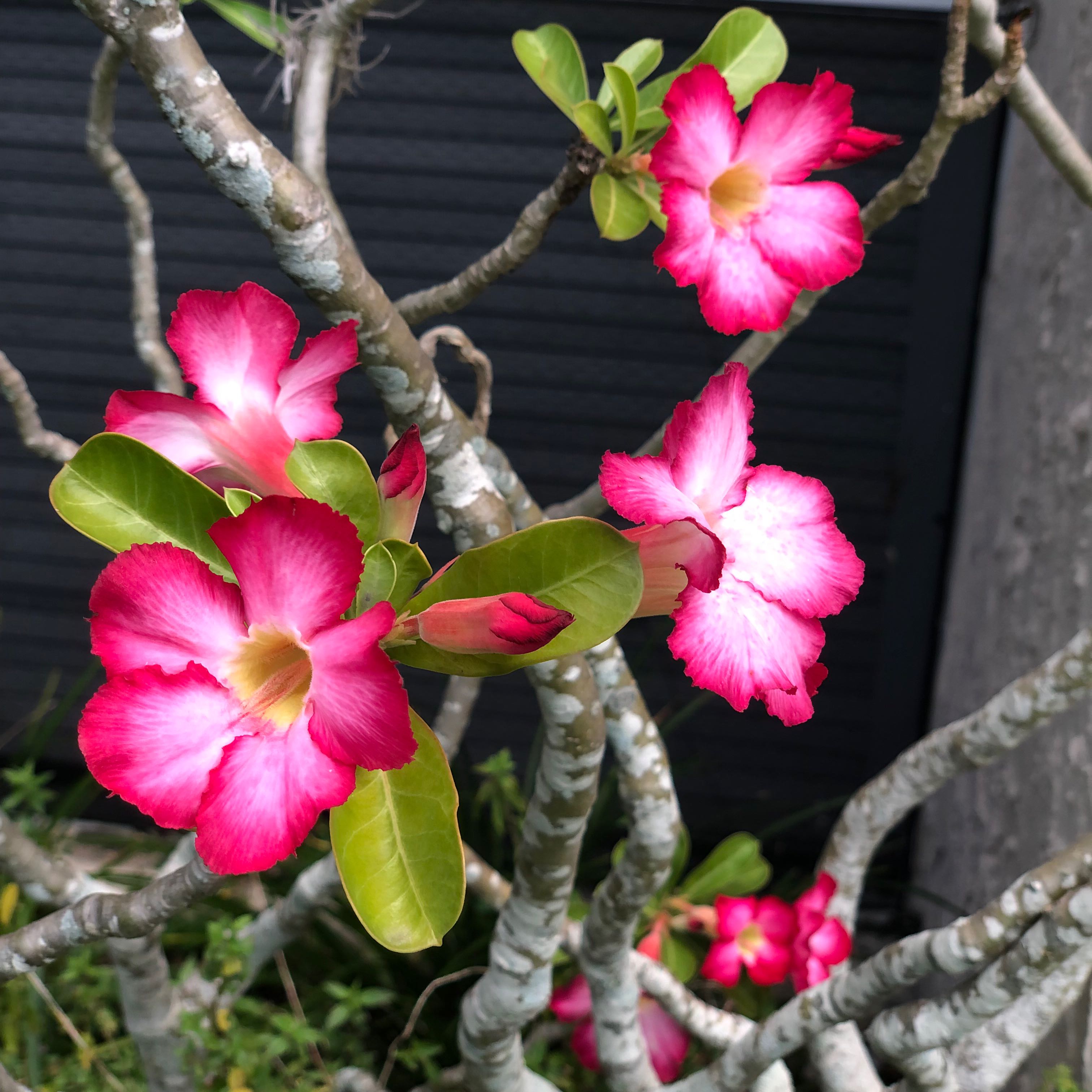
How to Plant a Desert Rose
Plant Desert Rose in a snug pot with drainage holes using a gritty cactus and succulent mix. Place it in your sunniest window where it gets four or more hours of direct light each day. Keep the room above 60°F year-round and water only after the soil dries completely. Expect new leaf growth in four to six weeks and trumpet flowers once the plant settles, often in the first warm season.

Where to put it
Desert Rose comes from hot dry parts of East Africa and the Arabian Peninsula, which means it wants the brightest spot you have. A south-facing window with four or more hours of direct sun is the floor for healthy growth and flowering, and a sunroom or unobstructed west-facing window works well too. In dim light the plant survives but grows leggy and rarely blooms.
Keep room temperatures above 60°F year-round, with a sweet spot between 70 and 90°F during active growth. Brief dips into the mid-50s in winter are tolerable while the plant rests, but anything below 50°F risks cold damage to the swollen base. Keep the pot well clear of cold window glass in winter and away from AC vents in summer.
In zones 11 and 12 a Desert Rose can live outdoors year-round in the ground. Everywhere cooler, treat it as a houseplant or summer container that moves indoors before nights drop below 55°F.
One safety note before placement. Every part of Desert Rose contains a milky latex sap that is toxic if chewed or swallowed by people, dogs, cats, or livestock. The sap was historically used to poison arrow tips. Keep the plant out of reach of young children and pets that might bite leaves or stems.
Planting from a nursery transplant
Give your Desert Rose two to three weeks in its nursery pot before repotting. Moving it the day it comes home stacks transplant shock on top of the change from greenhouse to your home. The single most important rule for this plant is drainage. The swollen base stores water and rots quickly in soggy soil, so the pot must have open drainage holes and the mix must drain within seconds of watering.
-
1Let the plant acclimate first Set the nursery pot in its new bright spot for two to three weeks before doing anything else. This gives the plant time to adjust to your light and humidity without also recovering from a root disturbance. During acclimation, water only when the soil feels fully dry an inch down.
-
2Pick a snug pot with drainage holes Choose a terracotta or glazed pot about an inch wider than the current nursery container, no more. Desert Rose flowers better when the roots are slightly crowded, and an oversized pot holds too much moisture around the swollen base. The pot must have one or more open drainage holes at the bottom, because a closed cachepot is the fastest way to rot the plant.
-
3Mix a gritty fast-draining blend Combine roughly half cactus and succulent mix with half pumice or coarse perlite for a mix that drains within seconds of watering. Standard houseplant potting soil holds far too much water and will cause root rot within weeks. To test the mix, pour water through a handful in your palm and watch how fast it runs clear.
-
4Add a base layer, set the plant, and backfill Pour two inches of your gritty mix into the bottom of the new pot, then ease the plant out of its nursery container and gently brush loose old soil off the outer roots, wearing gloves to avoid the latex sap. Set the plant so the top of the swollen base sits at the same level it did in the nursery pot, then backfill around the sides with your gritty mix, firming gently. Do not bury the swollen base deeper than it grew before.
-
5Wait a week, then water lightly Skip watering for the first five to seven days after planting so any nicked roots can callus over instead of rotting. After the wait, water thoroughly until liquid runs from the drainage holes, then let the mix dry completely before watering again. Empty the saucer immediately so the pot never sits in standing water.
The first month and a half
The first six weeks after planting are mostly about Desert Rose finding its footing in your home. Most of the action is happening underground, where the roots are pushing out of the old nursery soil into your gritty mix and rebuilding the network that supports the swollen base above. You should not expect dramatic top growth during this period.
The most common new-grower mistake during these first weeks is reading slow growth as a sign of thirst and overwatering. Desert Rose has built-in water storage in its swollen base, so it handles dry stretches far better than wet feet. Stick to the dry-between-waterings rule and let the plant ask for water through slightly wrinkled stem skin, not the other way around.
Healthy first-month signs look like firm green leaves, a swollen base that feels solid when gently pressed, and no foul smell from the soil. Soft mushy tissue near the soil line is the warning sign to act on.
What can go wrong
-
Soft mushy swollen base
Root rot from overwatering or a mix that holds too much moisture is the cause, and it is the fastest way to lose a Desert Rose. Unpot the plant immediately and inspect the swollen base and roots. Cut away any soft brown tissue with a clean blade, dust the cuts with cinnamon or sulfur powder, let the plant air-dry for several days, and repot into fresh dry gritty mix. Going forward, water only when the soil is completely dry and the swollen base feels firm. -
Wrinkled or shrunken swollen base
The plant is drawing on its stored water, which means it has gone too long between waterings or the mix is so fast-draining that water runs through before the roots can take it up. Water thoroughly until liquid runs from the drainage holes, then watch over the next week. The base should plump back up within a few days. If wrinkles persist, check that the roots are not damaged from earlier drought stress. -
Yellow leaves dropping after the move
Some leaf drop in the first few weeks is normal acclimation as the plant adjusts to lower light and different humidity than the greenhouse. Hold to a dry watering schedule and avoid the temptation to fertilize or move the plant again. New growth from the branch tips within four to six weeks confirms the plant is settling in. Persistent drop combined with soft tissue points back to overwatering instead. -
Long thin stems with sparse leaves
Leggy growth means the plant is reaching for more light than it is getting. Even a bright north-facing window is usually too dim for a Desert Rose to grow compactly or flower. Move the plant to the sunniest spot you have, ideally a south or unobstructed west-facing window, or add a strong grow light overhead. The existing stretched stems will not retract, but new growth from a sunnier spot will come in tighter. -
No flowers in the first season
Insufficient direct sun is the most common reason a healthy Desert Rose refuses to bloom. The plant needs four or more hours of direct light each day plus warm temperatures above 70°F during active growth to set buds reliably. Slightly snug roots also encourage flowering, so resist the urge to move into a larger pot too soon. A short controlled dry rest in late winter, then more water and warmth in spring, often triggers the first push of trumpets. -
Black spots on leaves after relocation
Sunburn from a sudden move into stronger light is the usual culprit, especially if the plant came from a shaded shelf in the store. Move the plant out of the harshest midday sun for a week, then reintroduce direct light gradually over ten days. New leaves that grow in after acclimation will tolerate the full window position. Affected leaves can be left in place or trimmed off with a clean blade once new growth has emerged. -
Skin irritation from handling the plant
The milky latex sap that oozes from any cut or broken stem is irritating to skin and dangerous to eyes and mucous membranes. Always wear gloves when repotting, pruning, or breaking off a damaged piece, and wash hands thoroughly after handling. Keep the plant out of reach of children and curious pets, since the sap is toxic if chewed or swallowed. Wipe any drip off furniture promptly so it does not stain or harm anyone touching the surface. -
Cold damage after a draft or chilly night
Temperatures below 50°F can cause sudden leaf drop, soft patches on the swollen base, or black tissue at the branch tips. Move the plant well away from cold windows, drafty doors, and unheated rooms, then withhold water until you can confirm the base is still firm. If only the tips are affected, trim back to clean firm tissue once the plant is warm and dry again. Severe cold damage to the swollen base itself is usually fatal.
About This Article
