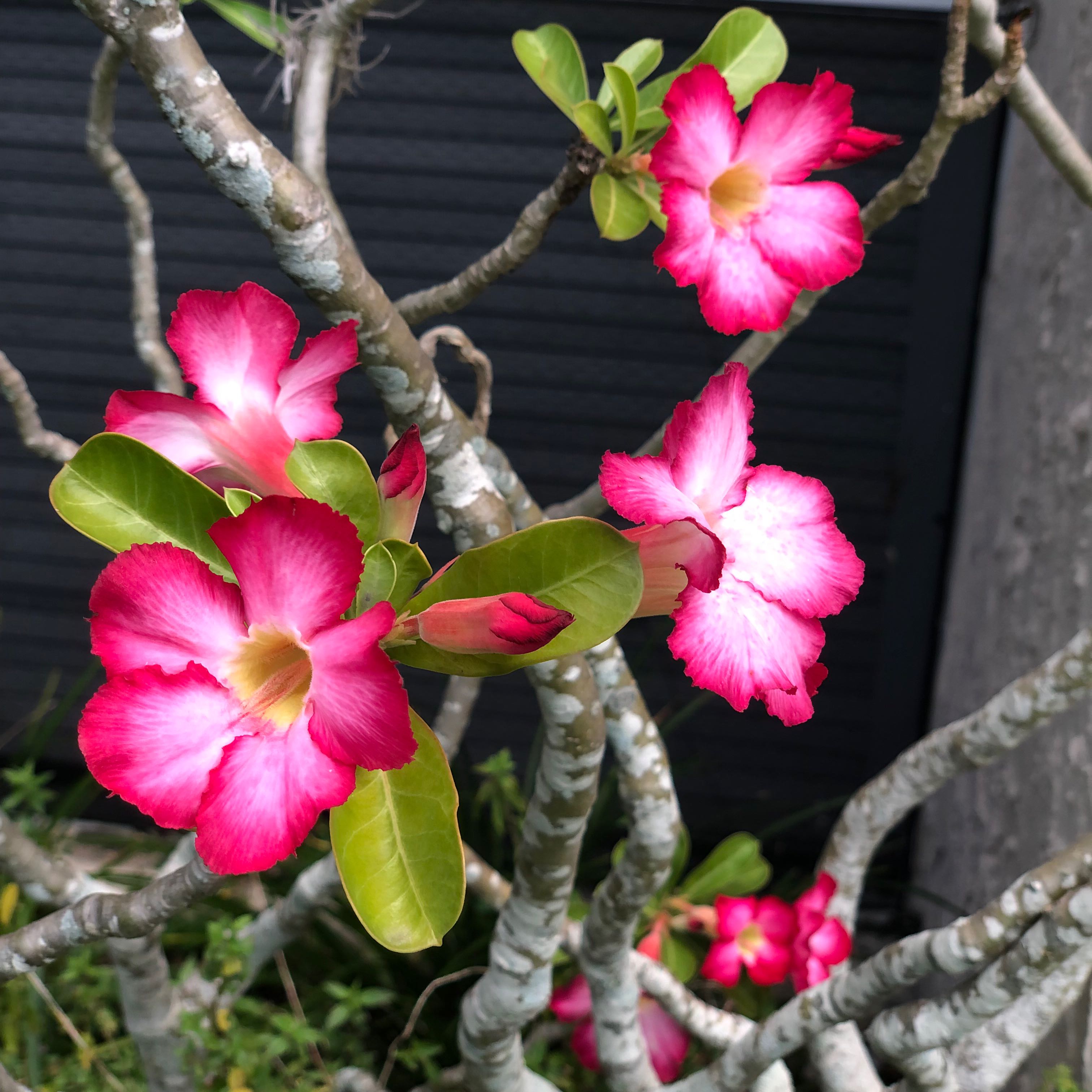
How to Grow a Desert Rose Plant
Plant Desert Rose in bright direct sun, in a gritty fast-draining mix, and a pot only one to two inches wider than the swollen base. Water deeply when the soil dries fully in summer, and back off almost entirely in winter. Blooms come in flushes through warm months. The plant is frost-tender and toxic to pets.

Where to put it
Desert Rose is a succulent flowering shrub native to dry parts of Africa and the Arabian Peninsula. Most growers keep the plant indoors or on a sunny porch in a pot that moves under cover for winter. Outdoors it survives only in USDA zones 11 and 12. The trunk swells at the base into the characteristic bottle shape that gives the plant its sculptural appeal.
Light
Bright direct sun for at least six hours a day produces the strongest growth and the heaviest bloom. A south-facing window indoors or a full-sun porch outdoors suits the plant well. Less than four hours of direct sun leads to weak floppy growth, few flowers, and a base that fails to swell.
After a winter indoors, ease the plant into outdoor summer sun over a week or two so the leaves do not scorch. Place it in part shade for the first few days, then move it into the full position gradually.
Avoid cold and drafts
Desert Rose is frost-tender. Anything under 50°F slows the plant, and a frost outright kills it. Bring the pot indoors before the first cool nights of fall and keep it away from cold window glass and AC vents during the warm months.
Soil and potting
A young Desert Rose does best in a pot only one to two inches wider than the swollen base. Bigger pots hold more wet soil than the plant can drink and lead to root rot. Spring is the best season to pot up or repot, while the plant is putting on active growth.
-
1Pick a snug pot with drainage Choose a pot only one to two inches wider than the swollen base, with at least one drainage hole in the bottom. Unglazed terracotta or shallow clay bonsai pots work especially well, since they breathe and dry out faster than glazed or plastic pots.
-
2Mix a gritty fast-draining blend Combine two parts cactus or succulent mix with one part coarse pumice or perlite. The mix should look mostly mineral, not loamy. Avoid heavy moisture-retentive potting soil, which keeps the roots wetter than the plant tolerates.
-
3Set the swollen base proud of the soil Position the plant so the upper part of the swollen base sits above the soil line. This is both the traditional look and a practical move, since covered swollen tissue is the part most prone to rot in damp conditions. The thin feeding roots below should be in soil, the bulged base above should not.
-
4Backfill and tap to settle Pour mix around the sides and tap the pot to settle it. Avoid pressing the mix down hard, since the roots need air pockets to breathe. The finished surface should sit half an inch or so below the rim to leave room for watering.
-
5Wait a week before watering Let the freshly potted plant sit dry for about a week. Repotting always nicks a few small roots, and giving them a few days to heal before water hits the cuts prevents rot. After the week, soak thoroughly until water runs out the bottom, then let the soil dry fully before the next watering.
Watering and feeding
Watering
Water deeply only when the soil has dried fully through the pot. Stick a finger or a wooden chopstick a few inches into the soil and check that it comes out clean and dry. Soak the pot until water runs from the drainage holes, then let it drain fully so the roots are never sitting in standing water.
Frequency runs roughly every 7 to 10 days through the warm sunny months, depending on the pot size and sun exposure. Through winter, water sparingly once every three to four weeks or only when the plant starts to look slightly shriveled. Cold wet soil in winter is the most common way a Desert Rose dies.
Feeding
Feed lightly every four to six weeks during active growth from spring through early fall, using a balanced fertilizer at half strength or a low-nitrogen product labeled for blooming plants. Heavy nitrogen produces lush leaves at the expense of flowers and prevents the trunk from swelling.
Skip fertilizer entirely through the cooler months, when the plant is barely growing and excess fertilizer salts burn the resting roots. Resume in early spring once new growth appears at the branch tips.
Pruning and shaping
Desert Rose tolerates pruning well and the cuts heal cleanly. A periodic shape-up encourages denser branching, more blooms, and a more interesting overall form. The sap is irritating to skin and toxic if ingested, so wear gloves and keep pets and children clear during pruning.
When to prune
The best time is early spring, just before active growth resumes. Cuts made in spring heal fast and the plant immediately responds with new branches. Avoid pruning in the cooler months, when the plant is not in active growth and the cuts heal slowly.
How to shape
Cut each branch back by roughly a third with sharp clean pruners, just above a leaf node. The plant responds by pushing two or three new shoots from buds just below the cut, so every snip multiplies into a fuller plant. Remove any inward-growing or crossing branches at the same time to open up the structure.
Pruning sometimes triggers a flush of blooms on the new shoots a few months later. Heavy pruning of a flowering plant sacrifices the immediate bloom but produces a denser plant with more flowers across the season.
Exposing the swollen base
An older plant develops an increasingly dramatic swollen trunk base, which growers often expose for display by gradually planting higher and higher in the pot each time the plant is repotted. The base is durable once exposed to the air. Avoid lifting any root that is actively feeding the plant, since suddenly bared roots dry out quickly.
Blooming and color
Desert Rose is grown for the trumpet-shaped pink or red blooms that appear in flushes through warm months and for the sculptural swollen base that thickens with age. Blooms last about a week each, with multiple flushes through a long growing season in good light.
Bloom timing
Blooms appear in flushes from late spring through early fall on a well-lit plant. Each flush lasts two to three weeks, and a healthy plant in plenty of direct sun produces three or four flushes through the growing season. Indoor plants in lower light flower less often.
Encouraging more flowers
More sun and less water during the growing season produce more blooms. A plant in a too-shady spot or one watered too often puts its energy into leaves instead of flowers. A dry stress period of two to three weeks in late winter, with very little water and no fertilizer, often triggers a heavy spring bloom flush as the watering picks back up.
Use a low-nitrogen or bloom-formula fertilizer through the growing season rather than a balanced or nitrogen-heavy product. The nitrogen drives leaf growth at the expense of flowers.
Common problems and pests
Most Desert Rose complaints are root or trunk rot from overwatering, scale and mealybugs on the foliage, or the surprise of no blooms on a plant that looks otherwise healthy. The plant rewards a slightly neglectful watering hand and a sunny location.
Soft mushy base or roots
Root or trunk rot from staying wet, the most common cause of Desert Rose loss. Unpot the plant, cut away every soft brown section back to firm tissue, and dust the cuts with cinnamon or sulfur powder. Let the plant sit dry for a week before repotting into fresh gritty mix. Hold back on watering for another two weeks while the roots heal.
Wrinkled or shriveled swollen base
Underwatering, easy to overcorrect into rot if a panic-soak follows. Soak the pot deeply once, then let the mix dry fully before watering again. The base plumps back up within a few weeks of restored watering. Some seasonal wrinkling in late winter is normal and signals the plant is ready for the spring watering ramp-up.
Yellow leaves dropping in fall
Normal seasonal drop as the plant slows for winter. A healthy plant loses most or all of its leaves through the cool dark months and pushes a fresh canopy in spring. Reduce watering significantly during the leaf drop, which is the plant's signal it does not need as much.
No blooms despite plenty of leaves
Usually too little direct sun, too much nitrogen-heavy feeding, or both. Move the plant into the brightest available position and switch to a low-nitrogen bloom fertilizer. A short dry stress period of two to three weeks in late winter often triggers a strong spring flush.
Sticky residue on leaves
Scale or mealybug feeding on sap and excreting a sugary residue. Wipe individual scales off with a cotton swab dipped in rubbing alcohol. White fuzzy mealybug clusters respond to the same treatment. Heavy infestations across the whole plant respond to a horticultural oil or insecticidal soap spray. The sticky residue often grows black sooty mold, which washes off with soapy water once the pest is gone.
Spider mites on the underside of leaves
Fine webbing and stippled bronze patches on the leaves in hot dry indoor air. Rinse the foliage with a strong spray of water in the shower once a week. Increase humidity with a small humidifier nearby. Insecticidal soap handles persistent infestations.
Curling leaves in summer
Heat stress on a plant in intense afternoon sun or short on water through a long dry stretch. Soak the pot deeply and move to a spot with brief afternoon shade through the hottest weeks. A potted plant on a hot porch dries out faster than expected in summer.
Black sap weeping from a cut or wound
Normal response to pruning or injury. The dark sticky sap is the plant's natural exudate and is also toxic, so wear gloves when handling pruned plants and keep pets and children away from the cuts. The wound dries and heals within a few days in warm dry conditions.
Failure to thicken at the base
A young plant in too small a pot, too much shade, or too much water keeps a slim straight trunk and never develops the characteristic swollen base. More sun, a slightly cramped pot, and less frequent deep watering all encourage the base to thicken. A graft or seed-grown origin also affects whether the swelling will ever be as dramatic as the show-grown plants in catalogs.
Toxic to pets
All parts of Desert Rose are toxic if chewed or ingested by pets and children. Place the plant out of reach and avoid keeping it on the floor or low table in a household with curious cats or dogs. The toxic sap is dangerous on its own, separately from any concern about the rest of the plant.
About This Article
