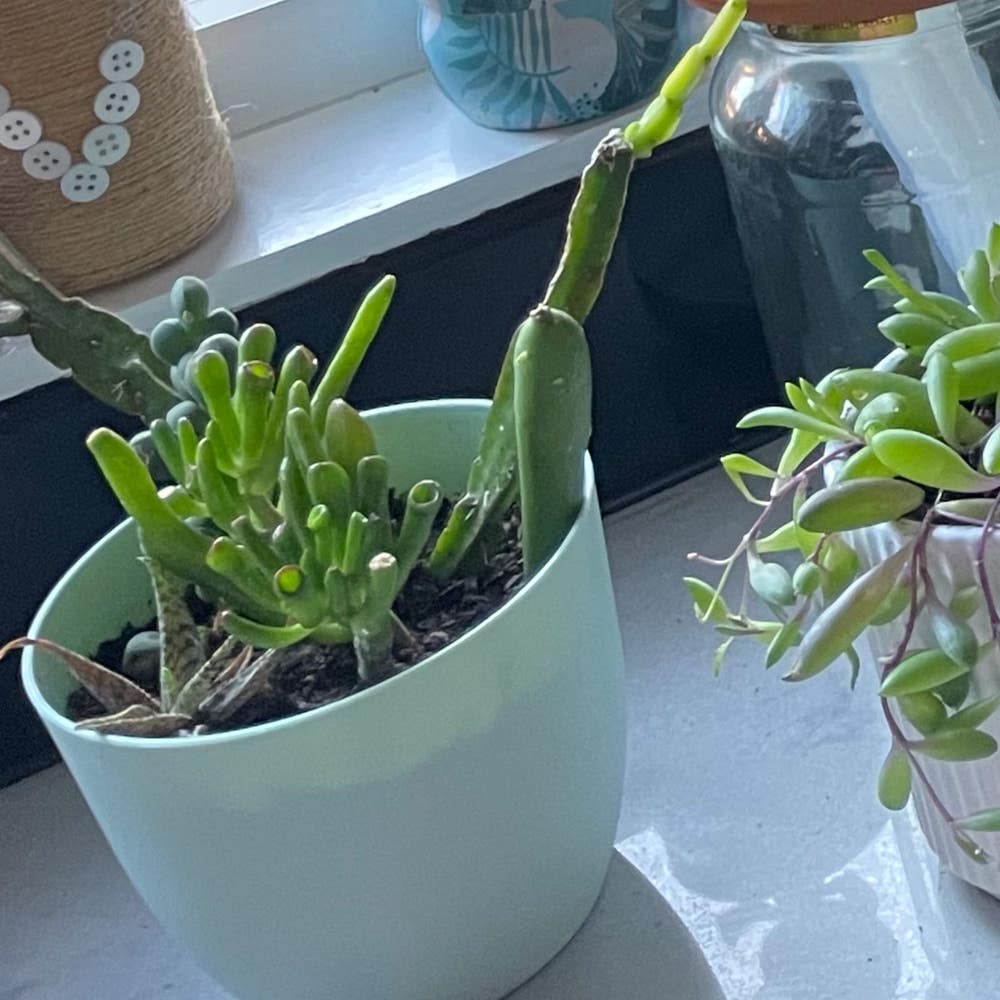
🕯 How Often Do I Need to Water My Candle Plant?
Baculellum articulatum
By the Greg Editorial Team
Jun 18, 2024•3 min read
This article was created with the help of AI so we can cover more plants for you. May contain errors. See one? Report it here.
- 🌱 Droopy leaves and dry soil signal it's time to water your Candle Plant.
- 💧 Use the soak and dry method with proper drainage for best hydration.
- 📆 Adjust watering with seasons and plant growth cycles for optimal care.
When to Water: Spotting Thirsty Candle Plants
💧 Dry Soil and Droopy Leaves
Droopy leaves are the plant's white flag of surrender to thirst. Before you rush to water, check the soil. If it's as dry as yesterday's toast and light to the touch, your Candle Plant is signaling an SOS for hydration. Plunge a finger 2-3 inches into the soil; if it feels like you've hit a dry spell, it's time to water.
🏋️ The Weight Test
Lifting the pot is like shaking hands with your plant—it tells you a lot. A lighter pot means the plant has been sweating out all its moisture. This nursery trick is simple: if the pot feels like it's been on a diet, it's time to water. Just remember, if you're dealing with a beefy plant, you might need to hit the gym first.
💡 Using Tools to Tell
For those who prefer a more high-tech approach, moisture meters are like having a plant whisperer at your fingertips. Stick the probes in, wait a minute, and get a readout that's more accurate than a weather forecast. Clean the probes after use because nobody likes a dirty sensor. And always remember, gadgets are great, but they don't replace getting to know your plant's personal thirst levels.

Watering Right: Best Practices for Hydrating Your Candle Plant
💦 The Soak and Dry Method
To water your Candle Plant like a pro, embrace the soak and dry method. Drench the soil until water runs free from the drainage holes, then back off. Let the soil dry out completely before the next watering. This simulates the feast-or-famine hydration of its native habitat and encourages robust root growth.
🕳️ Drainage: The Unsung Hero
Drainage isn’t glamorous, but it's critical. Ensure your pot has drainage holes to rival a colander. This prevents water from pooling around the roots, which can spell disaster for your Candle Plant. Pair with a saucer to catch the excess, and you've nailed the hydration game.

Seasonal Shifts: Tweaking Watering with the Calendar
⛅️ Summer Sips and Winter Wanes
In the summer heat, your Candle Plant's thirst spikes. It's not just sipping water; it's more like a full-on gulp. Increase watering frequency to keep up with the higher evaporation rates. But as winter approaches, your plant hits the brakes. It's a slow dance with hydration during the chill. Decrease watering to prevent soggy soil and the dreaded root rot.
🌱 Growth Spurts and Slowdowns
Your Candle Plant's life cycle is a rollercoaster of growth and rest. During the active growing season, typically spring through fall, it's all systems go. This means more water to fuel those growth spurts. When growth slows down, it's time to ease up on the watering. Think of it as your plant's version of a cozy winter nap.

Keeping Track: Monitoring Your Candle Plant's Hydration
💧 Making a Watering Schedule
Crafting a watering routine for your Candle Plant is more art than science. It's about setting up a framework, not chiseling commandments in stone. Mark your calendar with tentative watering dates, but stay nimble—your plant's thirst fluctuates with its environment.
🔄 Adjusting on the Fly
Your Candle Plant's feedback is the ultimate guide. If it perks up after a drink, you're on point. If it's looking more wilted than a forgotten salad, it's time to reassess. Adaptation is key; be ready to pivot your watering strategy based on what your green buddy tells you.
⚠️ Safety First
This content is for general information and may contain errors, omissions, or outdated details. It is not medical, veterinary advice, or an endorsement of therapeutic claims.
Always consult a qualified healthcare professional before using any plant as food, medicine, or supplement.
Never eat any plant (or feed one to pets) without confirming its identity with at least two trusted sources.
If you suspect poisoning, call Poison Control (800) 222-1222, the Pet Poison Helpline (800) 213-6680, or your local emergency service immediately.
Spotted an error? Please report it here.
Ensure your Candle Plant thrives with adaptive watering reminders 🕯 from Greg, based on real-time feedback and seasonal changes.