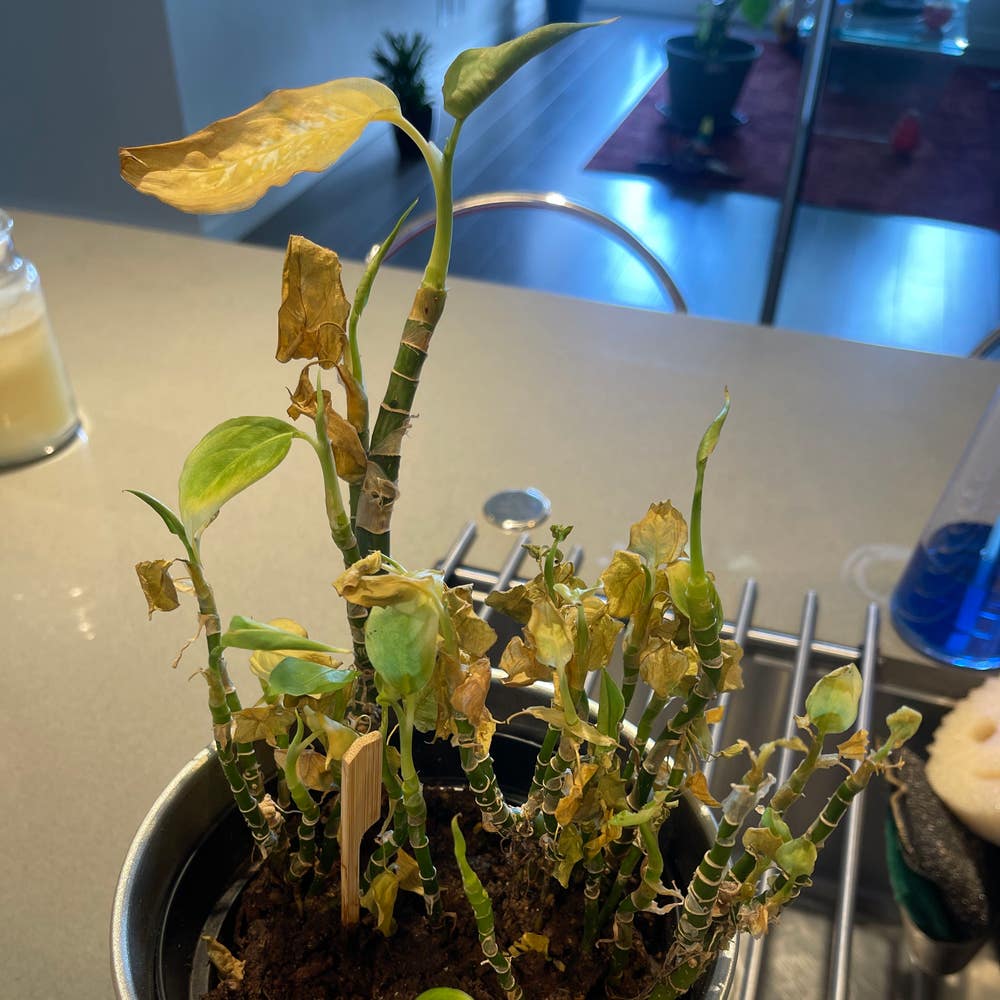
🛟 Zigzag Plant SOS: Rescue Your Plant from Root Rot
Euphorbia tithymaloides
By the Greg Editorial Team
Oct 11, 2024•5 min read
This article was created with the help of AI so we can cover more plants for you. May contain errors. See one? Report it here.
- 💧 Overwatering causes root rot; ensure soil dries out between waterings.
- 🌱 Yellowing leaves signal stress; check for root health and drainage issues.
- 🛠️ Treat root rot by trimming affected roots and repotting in well-draining soil.
Causes of Root Rot
Overwatering 🌊
Overwatering is a primary culprit behind root rot. When the soil is saturated, it creates anaerobic conditions that suffocate the roots.
Poor Soil Drainage 🚧
Another significant factor is poor soil drainage. Compacted or heavy soils trap water, preventing it from escaping and leading to root decay.
Fungal Infections 🦠
Fungal infections thrive in wet environments, making them a common issue for plants suffering from root rot. These pathogens can quickly take hold when conditions are favorable.
Environmental Factors 🌦️
Environmental factors also play a role. High humidity combined with low light can exacerbate moisture retention, creating a perfect storm for root rot to develop.
Understanding these causes is crucial for preventing root rot in your Zigzag Plant. With this knowledge, you can take proactive steps to ensure your plant thrives.
Symptoms of Root Rot
🌼 Yellowing Leaves
Yellowing leaves are often the first sign that something is amiss. This discoloration typically indicates stress and nutrient deficiencies, signaling that your Zigzag Plant is struggling.
💧 Wilting Despite Adequate Watering
Have you noticed your plant wilting even after watering? This perplexing symptom arises when the roots are unable to uptake water, leaving your plant thirsty and distressed.
🦠 Dark, Mushy Roots
One of the most alarming indicators of root rot is the presence of dark, mushy roots. These are clear signs of decay and fungal growth, and they require immediate attention to save your plant.
🤢 Foul Odor
A foul odor emanating from the soil is another red flag. This unpleasant smell often indicates rotting organic matter, suggesting that your plant's roots are in serious trouble.
Recognizing these symptoms early can make a significant difference in your Zigzag Plant's recovery. Next, let’s explore how to diagnose and treat root rot effectively.
Diagnosing and Treating Root Rot
Diagnosis 🕵️♂️
Diagnosing root rot in your Zigzag Plant starts with a visual inspection. Look for root color and texture; healthy roots should be firm and white, while unhealthy ones appear dark and mushy.
Next, perform a soil moisture test. You can do this by sticking your finger into the soil or using a moisture meter to assess how wet it is.
Finally, conduct a root examination. Gently remove the plant from its pot to inspect the roots closely, ensuring you don’t cause additional damage.
Treatment Process 🛠️
Once you've diagnosed root rot, it's time to take action.
Remove the plant from its pot: Carefully take out the Zigzag Plant to avoid further damage.
Inspect the roots: Identify which roots are healthy and which are unhealthy.
Trim affected roots: Use sterilized scissors to cut away any dark, mushy roots.
Clean the pot: Disinfect the pot with a bleach solution to eliminate any lingering pathogens.
Repot in fresh soil: Use a well-draining soil mix suitable for your Zigzag Plant to promote recovery.
By following these steps, you can effectively treat root rot and give your plant a fighting chance. Next, let’s explore how to prevent root rot from happening in the first place.
Preventing Root Rot
Best Soil Types 🌱
Choosing the right soil is crucial for your Zigzag Plant's health. A well-draining potting mix, ideally a blend of peat, perlite, and orchid bark, allows for proper aeration and moisture control.
Avoid heavy soils that retain too much water, such as garden soil or compacted mixes. These can create the perfect environment for root rot to thrive.
Proper Watering Techniques 💧
Establishing a proper watering schedule is essential. Allow the top 2-3 inches of soil to dry out before watering again to prevent excess moisture.
When you do water, do so thoroughly until it drains from the bottom. This ensures the roots receive adequate hydration without sitting in waterlogged soil.
Seasonal Adjustments 🍂
Adjust your watering frequency with the seasons. In winter months, reduce how often you water, as plants typically need less moisture during this time.
Importance of Drainage 🚰
Good drainage is non-negotiable for preventing root rot. Ensure your pots have adequate drainage holes to allow excess water to escape.
Elevate your pots using pot feet or trays to prevent water accumulation at the bottom. This simple step can make a significant difference in moisture management.
Monitoring Humidity Levels 🌬️
Keep an eye on humidity levels in your environment. High humidity can exacerbate moisture retention, so it's essential to monitor and adjust as needed.
By following these guidelines, you can create a thriving environment for your Zigzag Plant. With the right soil, watering techniques, and drainage practices, you'll significantly reduce the risk of root rot.
Next, let’s explore how to diagnose and treat root rot if it does occur.
Post-Treatment Care
Monitoring Recovery 🌱
After treating your Zigzag Plant, it's crucial to monitor its recovery closely. Start by observing the leaves for any signs of new growth or color improvement.
Regular soil moisture checks are essential. Ensure you're following proper watering practices to avoid overwatering again.
Avoiding Stress 😌
Keep your plant in a stable environment to minimize stress. Sudden changes can hinder recovery, so maintain consistent temperature and humidity levels.
Adjusting Care Routine After Treatment 🔄
As your plant begins to recover, gradually reintroduce it to light. Avoid placing it in direct sunlight initially to prevent shock.
Next, modify your watering schedule based on the plant's needs. Adjusting to its recovery will help it thrive.
Nutrient Supplementation 💧
Consider using diluted fertilizer to support recovery. This can provide the necessary nutrients your Zigzag Plant needs to bounce back.
By following these post-treatment care steps, you’ll set your plant on the path to health and vitality. With patience and attention, your Zigzag Plant can flourish once again.
⚠️ Safety First
This content is for general information and may contain errors, omissions, or outdated details. It is not medical, veterinary advice, or an endorsement of therapeutic claims.
Always consult a qualified healthcare professional before using any plant as food, medicine, or supplement.
Never eat any plant (or feed one to pets) without confirming its identity with at least two trusted sources.
If you suspect poisoning, call Poison Control (800) 222-1222, the Pet Poison Helpline (800) 213-6680, or your local emergency service immediately.
Spotted an error? Please report it here.
Revive your Zigzag Plant from root rot with Greg's personalized care tips 🌿 that ensure optimal watering and soil conditions for a thriving recovery!