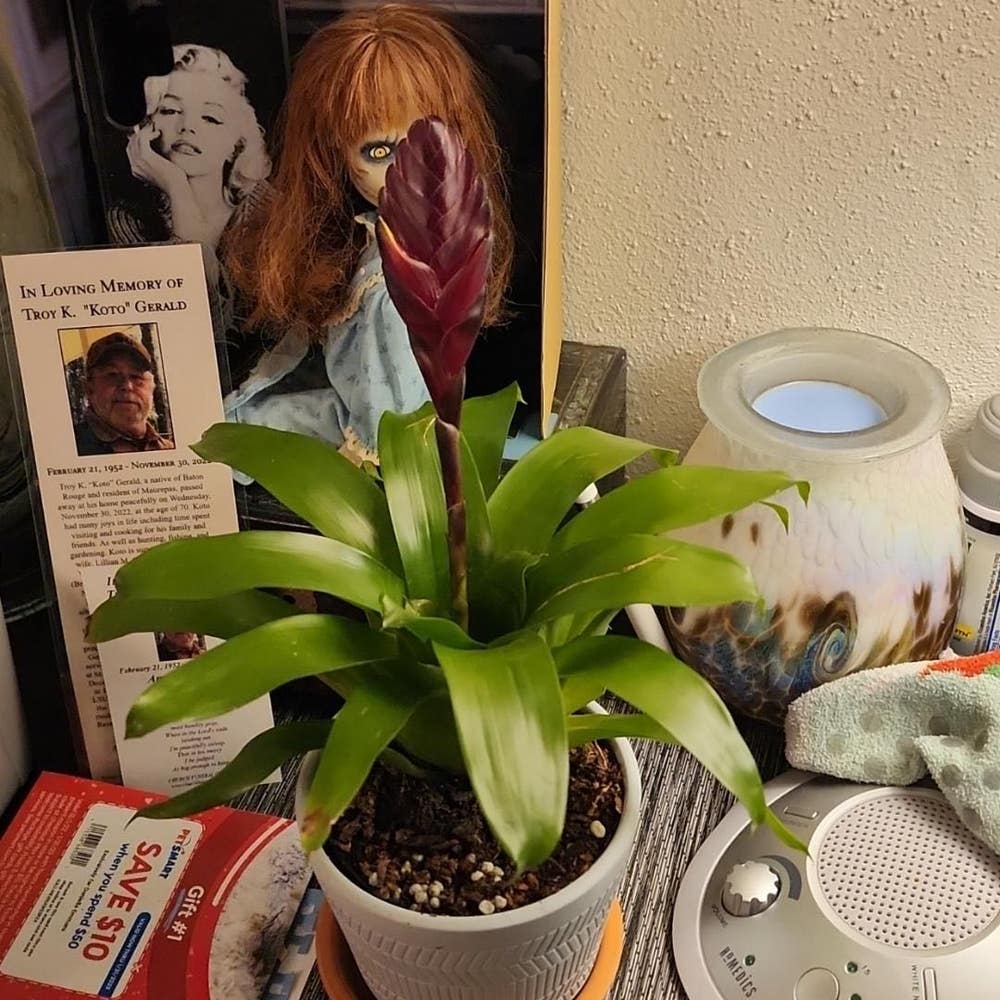
Why Is My Vriesea 'Godzilla x Kiwi Blonde' Dropping Leaves?
Vriesea 'Godzila'
By the Greg Editorial Team
Apr 17, 2024•5 min read
This article was created with the help of AI so we can cover more plants for you. May contain errors. See one? Report it here.
- Excessive leaf drop signals distress; watch for yellowing, wilting, and brown spots.
- Balance water and light to prevent root rot and leaves falling off.
- Prevent pests and diseases with regular inspections and stable climate conditions.
Spotting Trouble: Signs of Unhappy Leaves
🍂 Normal vs. Excessive Leaf Drop
Leaves dropping like they're hot – it's normal, to an extent. Excessive leaf fall, though, is your Vriesea 'Godzilla x Kiwi Blonde' waving a red flag. If leaves detach with a mere touch, it's not playing hard to get; it's a cry for help. A steady leaf loss is part of the plant's life cycle, but a sudden leaf exodus, especially among the younger foliage, is a distress signal.
🚨 Visual Clues and Symptoms
Yellowing leaves? Classic sign of trouble. They should be vibrant, not looking like they're auditioning for an autumn forest scene. Wilting and brown spots are the plant's version of an SOS. If your Vriesea starts resembling a wilted salad, it's time to act. Don't ignore subtle changes; a shift in leaf color or a slowdown in growth pace can signal a bigger issue. Regularly inspect your plant for these visual cues – they're the difference between a quick fix and a plant funeral.
The Usual Suspects: Common Causes of Leaf Drop
💧 Thirsty Roots or Drowning Sorrows?
Watering your Vriesea 'Godzilla x Kiwi Blonde' is like playing Goldilocks – too much or too little, and you'll have problems. Overwatering can lead to root rot, a surefire way to make leaves fall faster than a poorly built house of cards. On the flip side, underwatering turns your plant into a dried-up tumbleweed, with leaves dropping like flies. The soak-and-dry method is your golden ticket – water thoroughly, then let the soil dry out before the next watering.
🌡️ It's Not You, It's the Climate
Creating a cozy climate for your Vriesea is non-negotiable. Temperature swings and improper lighting are like a bad sitcom couple – they just don't work well together, causing leaf drop. Aim for stable temperatures and bright, indirect light to avoid giving your plant a case of the dropsies. Humidity is the unsung hero here; too little and your plant's leaves will shrivel up like week-old balloons. Consider a humidifier or pebble tray to keep the air around your plant as consistent as a metronome's beat.
🌞 When the Light Isn't Right
Lighting is a delicate dance – too much and your plant's leaves will cook like bacon in a pan; too little and they'll drop off in a sulk. Your Vriesea wants that sweet spot of bright, indirect light, like a sunbather under a parasol. Watch for signs of light distress: leaves reaching for the light like a kid for candy means more is needed, while leaves with the crispiness of overdone toast suggest too much sun. Adjust your plant's position as needed, and watch it thrive without the drama.
Uninvited Guests: Pests and Diseases
🐛 Bug Battles: Keeping Critters at Bay
Pests adore your Vriesea 'Godzilla x Kiwi Blonde' as much as you do, but their love is destructive. Mealybugs, spider mites, and scales are the clingy exes of the plant world, sucking the life out of your bromeliad's leaves. To spot these freeloaders, look for sticky residue or a fine webbing beneath the leaves.
To evict these pests, isolate your plant to prevent a full-blown infestation party. Wipe down leaves with soapy water or apply neem oil for an organic solution. In severe cases, you might need to bring out the big guns: insecticidal soap or systemic pesticides. But remember, always read the label – your plant's life depends on it.
🍄 Fungal Foes and Bacterial Baddies
Fungal and bacterial diseases are like stealthy ninjas attacking your plant's health. Leaf spots may indicate a fungal issue, while a foul smell and a mushy base scream bacterial soft rot. These are not just cosmetic issues; they're signs your plant is in distress.
For fungal issues, improve air circulation and keep the foliage dry. If you spot a disease, don't hesitate to use a fungicide, but use it wisely. Bacterial problems are trickier; often, the best you can do is remove the affected areas and hope for the best. Prevention is key, so maintain a clean environment and avoid overhead watering to keep these baddies at bay.
Turning Over a New Leaf: Recovery and Prevention
💧 Water Wisdom: Quenching Thirst the Right Way
Check the soil before watering; it's a simple touch test. If the top inch feels dry, it's time to water. Overwatering is a common misstep, leading to a sad, soggy plant. Conversely, underwatering leaves your Vriesea 'Godzilla x Kiwi Blonde' gasping for moisture. Aim for a happy medium, watering deeply but infrequently to encourage strong roots. Remember, your plant's thirst varies with the seasons.
🏡 Creating the Ideal Plant Pad
Your Vriesea thrives in stable conditions. Avoid temperature swings as if they were bad plot twists in a B-movie. Keep humidity consistent; think of it as setting the mood. Lighting should be just right—bright but indirect, like the best kind of party lighting. These tweaks to temperature, humidity, and lighting can make all the difference in preventing leaf drop.
🐜 Proactive Pest Patrol and Disease Defense
Regular plant check-ups are as crucial as those yearly doctor visits. Keep an eye out for pests; they're the uninvited guests at your plant's party. Fungal diseases love wet leaves, so water at the soil level to keep foliage dry. Clean up fallen leaves and debris to prevent disease spread. If you spot trouble, isolate like you would a spoiler of your favorite show.
⚠️ Safety First
This content is for general information and may contain errors, omissions, or outdated details. It is not medical, veterinary advice, or an endorsement of therapeutic claims.
Always consult a qualified healthcare professional before using any plant as food, medicine, or supplement.
Never eat any plant (or feed one to pets) without confirming its identity with at least two trusted sources.
If you suspect poisoning, call Poison Control (800) 222-1222, the Pet Poison Helpline (800) 213-6680, or your local emergency service immediately.
Spotted an error? Please report it here.
Prevent leaf drop in your Vriesea 'Godzilla x Kiwi Blonde' with Greg's tailored reminders 🌿, ensuring just-right watering and care for your exotic friend.