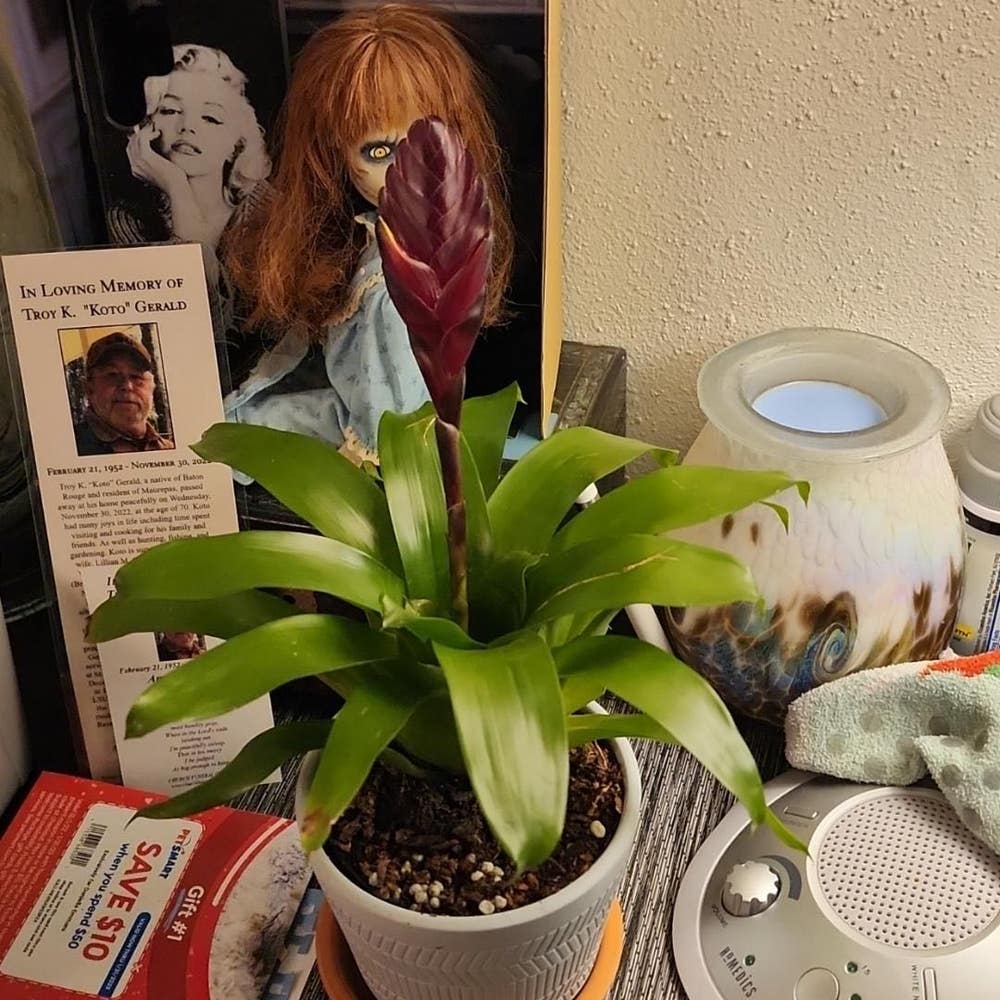
Direct Sunlight for Vriesea 'Godzilla x Kiwi Blonde'
Vriesea 'Godzila'
By the Greg Editorial Team
Apr 17, 2024•4 min read
This article was created with the help of AI so we can cover more plants for you. May contain errors. See one? Report it here.
- Bright indirect light is ideal for Vriesea 'Godzilla x Kiwi Blonde'.
- 🌞 Direct sunlight may cause leaf burn; use sheer curtains for protection.
- Monitor and adjust placement with seasons for plant health.
Sunlight Decoded: What Does Vriesea 'Godzilla x Kiwi Blonde' Prefer?
🌞 Defining Sunlight for the Vriesea Plant
Direct sunlight is the unfiltered solar spotlight, while indirect sunlight is its gentler cousin, diffused and softened. For Vriesea 'Godzilla x Kiwi Blonde', understanding this difference is crucial.
🌅 Vriesea 'Godzilla x Kiwi Blonde' and Its Sunlight Sweet Spot
The ideal light conditions for your Vriesea 'Godzilla x Kiwi Blonde' are bright indirect light. Direct sunlight can be too intense, leading to leaf burn and a stressed-out plant.
Signs your plant is getting too much sun include curling leaves and a faded or yellow appearance. If your Vriesea starts to look more like a sun-dried tomato than a vibrant houseplant, it's time to reconsider its spot in your home.
When the Sun Strikes: Effects of Direct Sunlight on Vriesea 'Godzilla x Kiwi Blonde'
🌞 The Good, The Bad, and The Sunburnt
Direct sunlight can be a double-edged sword for Vriesea 'Godzilla x Kiwi Blonde'. While it craves light for photosynthesis, too much can lead to a botanical sunburn.
🕶️ Protecting Your Vriesea from Harsh Rays
Sheer curtains are the MVPs when it comes to protecting your Vriesea from harsh sunlight. They diffuse the light, providing a cozy glow without the burn.
- Relocation may be necessary if you notice crispy tips or a dramatic change in leaf color.
- Monitor your plant's response to sunlight closely and be ready to act if it starts throwing shade by looking, well, too shaded.
Remember, your Vriesea 'Godzilla x Kiwi Blonde' doesn’t need to prove its toughness by withstanding a solar beatdown.
Through the Window: Understanding Light and Placement
🌞 The Best Window for Your Vriesea Plant
East or West, that's the best. Your Vriesea 'Godzilla x Kiwi Blonde' is like a sunbather that doesn't want to turn into a lobster. These windows offer bright, indirect light that's just right. South-facing windows? They're the sun's powerhouse, and your plant might not be a fan of that intense solar embrace. If that's all you've got, think sheer curtains or a cozy spot a few feet away from the window to avoid the harsh rays.
🌍 Hemisphere Hints: Seasonal Sunlight and Your Vriesea
As the Earth tilts, your plant's needs shift. That spot that's just peachy in summer could be a gloomy cave in winter. Be vigilant. When the light changes, scoot your Vriesea around. It's not being needy; it's just craving that perfect glow. Remember, it's about keeping your green buddy basking happily, no matter the season.
Keeping Your Vriesea 'Godzilla x Kiwi Blonde' Happy in the Sun
🌞 Balancing Sunlight and Shade
Bright, indirect light is the sweet spot for your Vriesea 'Godzilla x Kiwi Blonde'. It's a bit like a sunscreen for plants; it protects while letting the good vibes in. Avoid direct sunlight—it's the plant equivalent of a nasty sunburn.
🏡 Creating the Perfect Environment Indoors
To create an indoor haven, position your plant near a window draped with sheer curtains. This setup diffuses the light, offering a buffer against the harshness of direct rays. Rotate your plant regularly to ensure even light exposure, preventing the botanical equivalent of a lopsided tan.
👀 Monitoring and Adapting to Your Plant's Needs
Keep an eye out for leaf discoloration or crisp tips—these are SOS signals from your plant. If you spot them, it's time to shuffle your green buddy to a shadier spot. Conversely, if growth seems sluggish, inch it closer to the light source. It's a dance, and you're leading.
🚦 Recognizing the Signs and Making Adjustments
Your plant won't send you a text when it's unhappy, but it will give you visual cues. Droopy leaves? It might be pleading for more light. If the leaves start to look like they've been in a tanning bed too long, pull back. It's all about vigilance and tweaking the conditions as needed.
⚠️ Safety First
This content is for general information and may contain errors, omissions, or outdated details. It is not medical, veterinary advice, or an endorsement of therapeutic claims.
Always consult a qualified healthcare professional before using any plant as food, medicine, or supplement.
Never eat any plant (or feed one to pets) without confirming its identity with at least two trusted sources.
If you suspect poisoning, call Poison Control (800) 222-1222, the Pet Poison Helpline (800) 213-6680, or your local emergency service immediately.
Spotted an error? Please report it here.
Keep your Vriesea 'Godzilla x Kiwi Blonde' perfectly pampered with Greg's PlantVision, ensuring it gets just the right amount of indirect sunlight 🌿.