
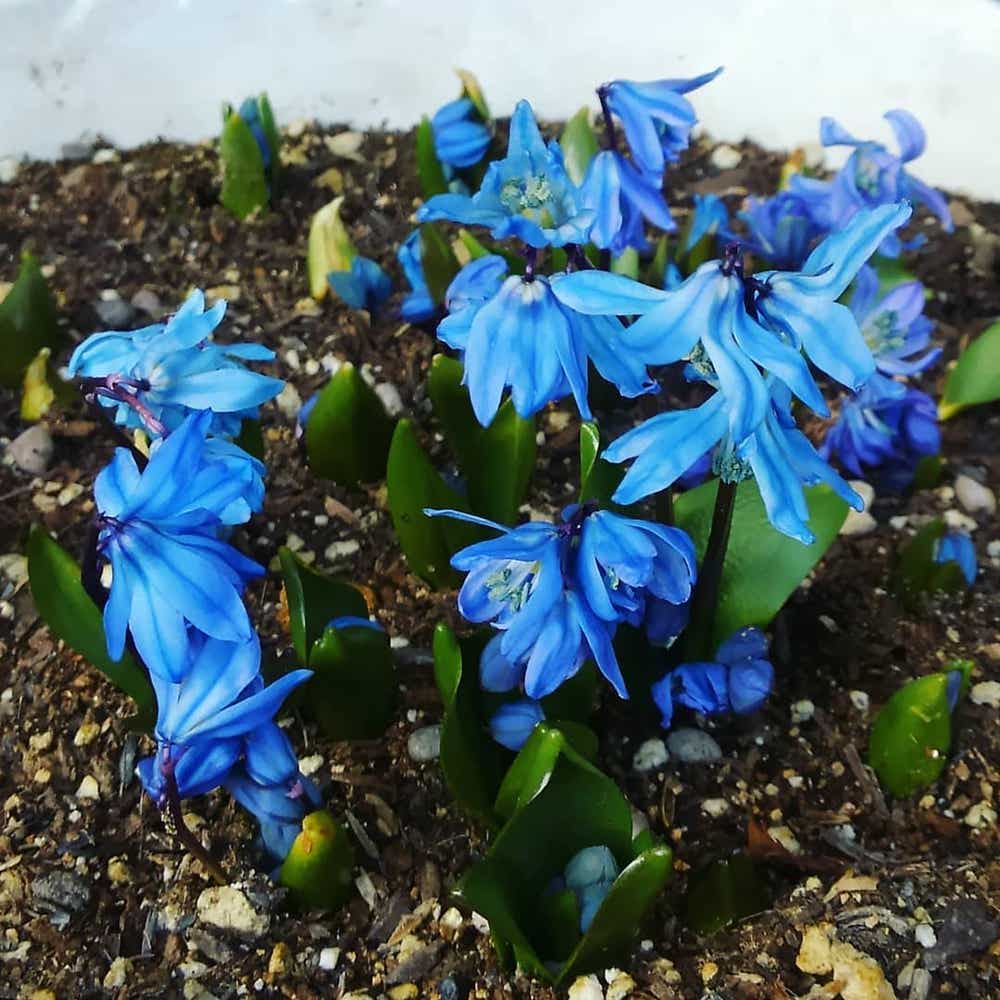


Siberian Squill
About Siberian Squill
Siberian Squill is a relatively rare houseplant 🌿 that is easy to grow and needs regular watering to thrive. They do best in long-lasting, direct light ☀️ and should be less than 1 foot from a window.
Siberian Squill likes soil that is well draining. You may want to supplement with a gentle, organic fertilizer throughout the peak growing season.
Siberian Squill belongs to the Scilla genus, and is native to the Crimean Peninsula to Northwest Iran.
⚠️ Siberian Squill is extremely dangerous if consumed. If you, a family member, or a pet has ingested any amount of plant material contact Poison Control, US (800) 222-1222, or your veterinarian immediately. These plants are not recommended for homes with children, cats, or dogs.
Taxonomy

Scilla siberica
Scilla
Asparagaceae
Asparagales
Also known as
Spring Beauty, Wood Squill and Scilla

How to care for Siberian Squill
How often to water your Siberian Squill

every 9
Siberian Squill needs 0.5 cups of water every 9 when it doesn’t get direct sunlight and is potted in a 5" pot.
Use our water calculator to personalize watering recommendations to your environment or download Greg for more advanced recommendations for all of your plants.

Water 0.5 cups every
9
Finding light for Siberian Squill in your home

a window
Siberian Squill love being close to bright, sunny windows 😎.
Place it less than 1ft from a south-facing window to maximize the potential for growth.
Siberian Squill does not tolerate low-light 🚫.
Select your region to see how the current weather in your area affects the placement of Siberian Squill in your home 🏡.
How to fertilize Siberian Squill

Most potting soils come with ample nutrients which plants use to produce new growth.
By the time your plant has depleted the nutrients in its soil it’s likely grown enough to need a larger pot anyway.
To replenish this plant's nutrients, repot your Siberian Squill after it doubles in size or once a year—whichever comes first.
Care Summary for Siberian Squill

Siberian Squill
 Greg recommends:
 Water
Water
0.5 cups every 9 days
 Placement
< 1ft from a window
 Nutrients
Repot after 2x growth
Based on the 4” pot your plant is in, and that it doesn’t get direct sunlight.
 Trending in your area

Cathedral Windows
Fiddle Leaf Fig

Golden Barrel Cactus

String of Pearls
Triostar Stromanthe
Gold Dust Croton

String of Bananas
Waxplant

Polka Dot Begonia
Jade Pothos

Rex Begonia

White Bird of Paradise

Purple Shamrocks

Blushing Bride Air Pl…

Cylindrical Snake Pla…
Baby Rubber Plant

Arabian Coffee Plant

Zebra Plant
 Similar to Siberian Squill
✨ Discover rare plants

Hoya 'Millie'

Cleistocactus icosago…

Echeveria Esther

Vatricania guentheri

Crassula 'Purple Drag…

Anastasia Weeping Fig
Carolina Reaper

Parrot Pitcher Plant

Burro's Tail
Graptopetalum 'Marqui…

Pseudorphipsalis 'Blu…

Hoya pottsii 'Khao Ya…
Philodendron 'Silver …

Electric Fern

Ceropegia simoneae

Haworthia emelyae com…

Sarcochilus fitzgeral…
