


Purple Swedish Ivy
Also known as
Vick's Plant and Vicks plant
Taxonomy

Plectranthus purpuratus
Plectranthus
Lamiaceae
Lamiales

How to care for Purple Swedish Ivy
How often to water your Purple Swedish Ivy

every 9
Purple Swedish Ivy needs 0.5 cups of water every 9 when it doesn’t get direct sunlight and is potted in a 5" pot.
Use our water calculator to personalize watering recommendations to your environment or download Greg for more advanced recommendations for all of your plants.

Water 0.5 cups every
9
Finding light for Purple Swedish Ivy in your home

a window
Purple Swedish Ivy love being close to bright, sunny windows 😎.
Place it less than 1ft from a south-facing window to maximize the potential for growth.
Purple Swedish Ivy does not tolerate low-light 🚫.
Select your region to see how the current weather in your area affects the placement of Purple Swedish Ivy in your home 🏡.
How to fertilize Purple Swedish Ivy

Most potting soils come with ample nutrients which plants use to produce new growth.
By the time your plant has depleted the nutrients in its soil it’s likely grown enough to need a larger pot anyway.
To replenish this plant's nutrients, repot your Purple Swedish Ivy after it doubles in size or once a year—whichever comes first.
-
Can I trim the leaves, it grow wild and is overflowing my window area? #SwedishIvy
-
Leaves are suddenly turning yellow and falling off! #SwedishIvy
-
When should I repot? This Sedish Ivy is the easiest plant 🪴 is have. Im newnto plants and have re-potted him once. When do I re-pot again? #greggers #happyplants #greggang #newplantmom
-
How do I get her to grow up? #SwedishIvy My plant is doing great and really growing. Should I put him somewhere that she will hang down, or can I put a trellis for her to grow upward. Any suggestions?
-
My Swedish ivy has done so well with her transplant into soil from water propagation! Her she has gone from purple to green 💜💚 #HappyPlants #PlantsMakePeopleHappy #NewGrowth #PlantAddict
-
What should I do? So… he nearly died of dehydration and now is reviving. I also have given him plant food. So any tips? Also the plant analyzer isn’t right in what type of plant it is and I have no idea.
-
I have transplanted this beauty into my “courtyard” garden. I think he will love it here. #OutdoorGrowing #HappyPlants #PlantAddict #NewGrowth
-
My Swedish Ivy’s limp and the leaves are thinning out. What do I do? I got my swedish ivy a week ago. I only watered it once and kept it by the window with plenty of sunlight, but now it’s flopped over, the leaves are drooping and they feel thin. I don’t think I’m overwatering it, but I have no idea what’s wrong. Does anyone know what’s happening? How can I get my plant back in good health? #SwedishIvy #PlantsMakePeopleHappy #help
-
Okay can I put my ivory on top of my water tank of my toilet #SwedishIvy
-
Can I save my young SWEDISH IVY? I was given some Swedish Ivy in hopes of saving it. The stem is brown and broken along with white stuff!?! Can I still propagate the top?? What would be the best way, water or soil? I am worried because it is so young that it will not sprout roots. :(. PLEASE HELP ME SAVE MY PLANT BABY!! #NewGrowth #PropagationStation #NewPlantMom #HappyPlants #PlantAddict


Care Summary for Purple Swedish Ivy

Purple Swedish Ivy
 Greg recommends:
 Water
Water
0.5 cups every 9 days
 Placement
< 1ft from a window
 Nutrients
Repot after 2x growth
Based on the 4” pot your plant is in, and that it doesn’t get direct sunlight.
 Trending in your area

Golden Barrel Cactus

Burro's Tail

Chinese Money Plant

Pincushion Peperomia
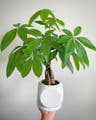
Money Tree

Pearl Echeveria

Blue-Stem Yucca

Polka Dot Begonia

Tradescantia Zebrina

Lucky Bamboo

Emerald Ripple Pepero…
Triostar Stromanthe

Florist Kalanchoe
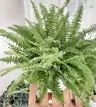
Boston Fern

Hens and Chicks

Venus Fly Trap

String of Bananas
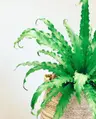
Bird's Nest Fern
 Similar to Purple Swedish Ivy


✨ Discover rare plants

Electric Blue Gecko
Linnaei Kunth

Picasso's Paintbrush

Crassula 'Purple Drag…

Rainbow Echeveria

Stomatium acutifolium
Astroloba congesta

Parrot Pitcher Plant

Hoya 'Millie'
Philodendron 'Gabby'
Skeleton Key Pothos

Aglaonema Spitfire

Vatricania guentheri

Maroon Pitcher Plant
Ace of Spades

Scindapsus pictus 'Si…

Tillandsia caerulea A…
