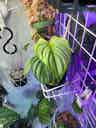
Viola ossea
Taxonomy

Viola ossea
Viola
Violaceae
Malpighiales

How to care for Viola ossea
How often to water your Viola ossea

every 9
Viola ossea needs 0.5 cups of water every 9 when it doesn’t get direct sunlight and is potted in a 5" pot.
Use our water calculator to personalize watering recommendations to your environment or download Greg for more advanced recommendations for all of your plants.
Water 0.5 cups every
9
Finding light for Viola ossea in your home

a window
Viola ossea love being close to bright, sunny windows 😎.
Place it less than 1ft from a south-facing window to maximize the potential for growth.
Viola ossea does not tolerate low-light 🚫.
Select your region to see how the current weather in your area affects the placement of Viola ossea in your home 🏡.
How to fertilize Viola ossea

Most potting soils come with ample nutrients which plants use to produce new growth.
By the time your plant has depleted the nutrients in its soil it’s likely grown enough to need a larger pot anyway.
To replenish this plant's nutrients, repot your Viola ossea after it doubles in size or once a year—whichever comes first.
-
Are my pansies dying? #WildPansy
-
Rescuing Pansies Question Help! We had to split up these pansies that were massively overcrowded when we bought them at the store last week. There’s rot from the leaves being wet. I’m cutting out the rot. I’d like to give them SuperThrive to help the transplant, but I don’t know if I should avoid watering to prevent more rot #
-
Are these edible? #WildPansy
-
Sun burn how to fix #WildPansy
-
Can anyone help me with this plant? It looks super overgrown and there are dead flowers underneath the top ones. Got it a few weeks ago. #WildPansy
-
Flowers are wilting but leaves are ok A few days indoors, after buying it in a store, the flowers started wilting. I am watering every other day to keep the soil moist, but I don't know if it's helping. I read somewhere here that they like direct sun and cool weather, so now they are in my balcony. What else can I do to save them? #WildPansy
-
What should I name this pansy??✨🪴✨ #HelpMeNameMyPlant
-
Some pretty pansies to brighten your day! I can’t believe how much they’ve grown! 😍🩷 #pansy #WildPansy #HappyPlants #PlantsMakePeopleHappy #PlantAddict #NewGrowth #PlantTherapy #PlantLove #OutdoorGrowing #PlantsAreAmazing #PlantsMakePeopleHappy #PlantCorner #PLANTMAFIA #GregGang
-
dying hello guys i recently adopted two plants and i actually feel they are dying if please can someone tell me what to do🙏
-
helping checking the flowers #backyardliving #dogsandplants


Care Summary for Viola ossea
Viola ossea
 Greg recommends:
 Water
Water
0.5 cups every 9 days
 Placement
< 1ft from a window
 Nutrients
Repot after 2x growth
Based on the 4” pot your plant is in, and that it doesn’t get direct sunlight.
 Trending in your area










 Similar to Viola ossea
✨ Discover rare plants

Milky Widow's Thrill
Linnaei Kunth
Hoya crassipetiolata
Astroloba congesta

Hoya 'Millie'

Aglaonema 'Green Bowl'

Rhipsalis clavata

Hoya kalimantan

Munstead Lavender

Dinteranthus microspe…
Anthurium papillilami…

Thelocactus macdowell…

Rainbow Echeveria

Cereus peruvianus 'Pa…

Lithops

Echeveria Esther

Echeveria Arrow