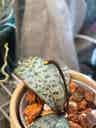
Hobblebush
Also known as
moosewood, witch-hobble, Hobble-bush, American wayfaring tree, alder-leaved viburnum and witch hobble
Taxonomy

Viburnum lantanoides
Viburnum
Adoxaceae
Dipsacales

How to care for Hobblebush
How often to water your Hobblebush

every 9
Hobblebush needs 0.5 cups of water every 9 when it doesn’t get direct sunlight and is potted in a 5" pot.
Use our water calculator to personalize watering recommendations to your environment or download Greg for more advanced recommendations for all of your plants.
Water 0.5 cups every
9
Finding light for Hobblebush in your home

a window
Hobblebush love being close to bright, sunny windows 😎.
Place it less than 1ft from a south-facing window to maximize the potential for growth.
Hobblebush does not tolerate low-light 🚫.
Select your region to see how the current weather in your area affects the placement of Hobblebush in your home 🏡.
How to fertilize Hobblebush

Most potting soils come with ample nutrients which plants use to produce new growth.
By the time your plant has depleted the nutrients in its soil it’s likely grown enough to need a larger pot anyway.
To replenish this plant's nutrients, repot your Hobblebush after it doubles in size or once a year—whichever comes first.
-
Lanscaping The landscaping company put this identified plant in my landscaping as bushes and it grew very slowly and it was planted last year. The description mentioned a very rare potted plant. Any thoughts on that and could the description be wrong? #helpneeded #newplantmomproblems
-
Any idea what this white stuff is on my outdoor Laurustinus? And how to treat it? Thanks.
-
7 plants hello im jennifer im new at indoor plants. Here is my first question. Any chance i can get some info about this little one. Its struggling.
-
I just received this as a holiday gift. Can I keep it outdoors on a balcony? It’s a little cold now in Athens, but sunny, and it gets a good 6 hrs of sun each day. #Laurustinus
-
Has anyone propagated an arrowwood? I have this beautiful outdoor arrowwood that's getting a little too big. Could I propagate it somehow? Thanks!
-
I am not sure this is Laurustinus, I thought it was a type of honeysuckle. What do you think? #Laurustinus

Care Summary for Hobblebush
Hobblebush
 Greg recommends:
 Water
Water
0.5 cups every 9 days
 Placement
< 1ft from a window
 Nutrients
Repot after 2x growth
Based on the 4” pot your plant is in, and that it doesn’t get direct sunlight.
 Trending in your area








 Similar to Hobblebush
✨ Discover rare plants

Betel

Hoya fitchii

Scotch Moss

Parrot Pitcher Plant

Aglaonema 'Green Bowl'

Caladium
Skeleton Key Pothos

Stomatium acutifolium

Milky Widow's Thrill

Peperomia 'Harmony's …

Rhipsalis clavata

Radiator Plant

Pine Cone Plant

Eden Climbing Rose

Red Mistletoe Cactus

Anastasia Weeping Fig

Fernleaf Lavendar