
Tillandsia rubia
Taxonomy

Tillandsia rubia
Tillandsia
Bromeliaceae
Poales

How to care for Tillandsia rubia
How often to water your Tillandsia rubia

every 12
Tillandsia rubia needs 0.5 cups of water every 12 when it doesn’t get direct sunlight and is potted in a 5" pot.
Use our water calculator to personalize watering recommendations to your environment or download Greg for more advanced recommendations for all of your plants.
Water 0.5 cups every
12
Finding light for Tillandsia rubia in your home

a window
Tillandsia rubia love being close to bright, sunny windows 😎.
Place it less than 1ft from a south-facing window to maximize the potential for growth.
Tillandsia rubia does not tolerate low-light 🚫.
Select your region to see how the current weather in your area affects the placement of Tillandsia rubia in your home 🏡.
How to fertilize Tillandsia rubia

Most potting soils come with ample nutrients which plants use to produce new growth.
By the time your plant has depleted the nutrients in its soil it’s likely grown enough to need a larger pot anyway.
To replenish this plant's nutrients, repot your Tillandsia rubia after it doubles in size or once a year—whichever comes first.
-
I’m not sure what I’m doing wrong with this air plant but it’s not looking good. I got it about two months ago and I put it on a damp rag thinking it could use a little moisture and now it’s looking crispy and shriveled. Anything I can do to bring it back ?
-
Is it dying? My air plant has been healthy for the longest time. I usually put it in water for 30 minutes every two weeks. That’s what I’ve been told by the seller. How can I help it thrive? What am I doing wrong?
-
How to plant?
-
I have read to not use tap water or city water for sure. So I was using distilled water. Now I saw an article that said to not use distilled water either. So what water is actually good for these plants? #SnowballAirPlant
-
Cute flower 💕 This photo is a bit older, but it's still just as beautiful as when it was taken. My plant doesn't have any flowers at the moment 😿. Does anyone know if it will flower again at some point 🌺? (Das Foto ist schon etwas älter, aber immer noch genauso schön, wie beim Fotografieren. Momentan hat meine Pflanze keine Blüte mehr 😿. Weiß jemand, ob irgendwann wieder eine Blüte kommt 🌺?) #happyplants #plantsmakepeoplehappy #succulentlove #newplantmom
-
After soaking my air plant yesterday, after posting, a lot of the leaves came loose…. But some didn’t! That’s a good sign right? 😂 before during and after lol #HappyPlants #PlantsMakePeopleHappy #AirPlant #GregGang
-
How can I tell if my air plant is alive? So I got this as a gift like 2 years ago, I keep forgetting it’s a plant lol. I’m like 80% it’s already dead, but… it looks the same as when I got it haha. I really don’t know how to tell. I dip him in water every once in a while, otherwise he just hangs out above my sink… his leaves are crispy at the tips, but he doesn’t crumble when touched or anything so…. Has he been dead this whole time or are they just really weird, low-key plants? He’s freshly dipped I the photos, when he dries he looks more green #HappyPlants #PlantsMakePeopleHappy #whatintheworld #GregGang #AirPlant
-
My first blooming air plant! I THOUGHT she was dying and was so excited to find blooms on her! What do I need to know about what happens next? Anything I need to do differently for her care? #airplants
-
Possible root rot? I can’t tell if somehing is wrong with my air plant base. I’ve had it for over a year and it’s been fine, but I just picked it up from its normal holder to soak it in water and part of the root was mushy and fell off. The other parts feel very strong still. I haven’t watered it yet, but thought it was important to add that I always dry them upside down after soaking them. I would appreciate any insight as this is the first time it has happened!
-
Hello! I'm a new Air plant mom! Do I need to put them in a pot with soil? Ever? #SpreadingAirplant


Care Summary for Tillandsia rubia
Tillandsia rubia
 Greg recommends:
 Water
Water
0.5 cups every 12 days
 Placement
< 1ft from a window
 Nutrients
Repot after 2x growth
Based on the 4” pot your plant is in, and that it doesn’t get direct sunlight.
 Trending in your area





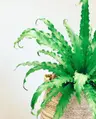


 Similar to Tillandsia rubia
✨ Discover rare plants

Graptoveria 'Douglas …

Echeveria 'Joan Danie…
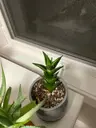
Astroloba congesta

Betel

Euphorbia

Electric Fern

Orange Lipstick Plant

Begonia hydrocotylifo…

Aeonium 'Blushing Bea…

Kilimanjaro Plant

Echeveria Esther

Aglaonema Spitfire

Starfish Snake Plant

Radiator Plant

Rainbow Echeveria

Philodendron eximium

Stomatium acutifolium
