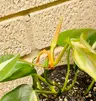
Rhododendron 'Helen Curtis'
Taxonomy

Rhododendron 'Helen Curtis'
Rhododendron
Ericaceae
Ericales

How to care for Rhododendron 'Helen Curtis'
How often to water your Rhododendron 'Helen Curtis'

every 9
Rhododendron 'Helen Curtis' needs 0.5 cups of water every 9 when it doesn’t get direct sunlight and is potted in a 5" pot.
Use our water calculator to personalize watering recommendations to your environment or download Greg for more advanced recommendations for all of your plants.
Water 0.5 cups every
9
Finding light for Rhododendron 'Helen Curtis' in your home

a window
Rhododendron 'Helen Curtis' love being close to bright, sunny windows 😎.
Place it less than 1ft from a south-facing window to maximize the potential for growth.
Rhododendron 'Helen Curtis' does not tolerate low-light 🚫.
Select your region to see how the current weather in your area affects the placement of Rhododendron 'Helen Curtis' in your home 🏡.
How to fertilize Rhododendron 'Helen Curtis'

Most potting soils come with ample nutrients which plants use to produce new growth.
By the time your plant has depleted the nutrients in its soil it’s likely grown enough to need a larger pot anyway.
To replenish this plant's nutrients, repot your Rhododendron 'Helen Curtis' after it doubles in size or once a year—whichever comes first.
-
Help me name my plant
-
Yellowing and drying up I got this new azalea 4 days ago. I have been keeping up with the standard watering schedule. The flowers and drying up and yellowing . Is this apart of the flowering cycle?
-
Accidentally let it get pretty bad Hey guys, I had a whole thing where I got scared about not knowing what to do about Perry and Robert and now they’re pretty bad :( What should my first point of action be to save them? They’re a Rhododendron and a Poisonetta if that changes things #Dyingplant
-
Robert’s getting super droopy!! I’m really worried!! I’ve been sticking to the water schedule, but I have a feeling he was in too much direct sun? I’ve moved him but I’m worried about him :( What else could be the problem??
-
What’s wrong with my plant? I planted this deciduous mandarin azalea bush in May and now it’s not looking too good. I’ve fertilized it twice and water it heavily once a week. It’s in a pretty sunny spot for Seattle. Does this look normal? What should I do to improve it’s health?
-
What has happened to this ? Droopy leaves but still good color?
-
I just got this plant and it is dropping leaves like crazy. Not sure what caused this. Isn’t advise on this? I did increase the amount and frequency of water #FloristAzalea
-
Welcome to the family!
-
Anybody know what's happening with my Rhotos? These have been doing well, but this spring they are all yellow with spots
-
My Rododendron is sick and I don’t know what to do #GreatLaurel


Care Summary for Rhododendron 'Helen Curtis'
Rhododendron 'Helen Curtis'
 Greg recommends:
 Water
Water
0.5 cups every 9 days
 Placement
< 1ft from a window
 Nutrients
Repot after 2x growth
Based on the 4” pot your plant is in, and that it doesn’t get direct sunlight.
 Trending in your area











 Similar to Rhododendron 'Helen Curtis'


✨ Discover rare plants

Starfish Snake Plant
Crassula 'Calico Kitt…

Treasure Flower
Hoya crassipetiolata

Red Mistletoe Cactus

Maroon Pitcher Plant

Hoya 'Millie'

Scotch Moss

Hoya sipitangensis

Electric Blue Gecko

Cleistocactus icosago…

Orange Lipstick Plant

Echeveria 'Joan Danie…

Large Leaf Elephant B…

Parrot Pitcher Plant

Stomatium acutifolium

Burro's Tail