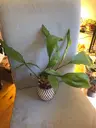
Lepismium cereoides
Taxonomy

Rhipsalis cereoides
Rhipsalis
Cactaceae
Caryophyllales

How to care for Lepismium cereoides
How often to water your Lepismium cereoides

every 12
Lepismium cereoides needs 0.5 cups of water every 12 when it doesn’t get direct sunlight and is potted in a 5" pot.
Use our water calculator to personalize watering recommendations to your environment or download Greg for more advanced recommendations for all of your plants.

Water 0.5 cups every
12
Finding light for Lepismium cereoides in your home

a window
Lepismium cereoides can tolerate being far from a window and light source.
Place it less than 6 feet from a south-facing window to ensure it receives enough light to survive 💪.
Select your region to see how the current weather in your area affects the placement of Lepismium cereoides in your home 🏡.
How to fertilize Lepismium cereoides

Most potting soils come with ample nutrients which plants use to produce new growth.
By the time your plant has depleted the nutrients in its soil it’s likely grown enough to need a larger pot anyway.
To replenish this plant's nutrients, repot your Lepismium cereoides after it doubles in size or once a year—whichever comes first.
-
A student gave me this plant and I have no idea what care it needs. It has some growth at the tips, but overall looks pretty bad. I do keep it watered and it’s near a window. What would people suggest? #Rhipsalis
-
Is this a Problem? Hey plant buddies!!👋🌱🪴I just got this cute Hairy Stemmed Rhipsalis last night and I’ve never in the past quarantined my plants because I frankly don’t know where or how to do that.😅 But this cactus has one of those wood sticks in its pot that I pulled out and when I looked closely and long enough I could see at least 3 different kinds of tiny bugs on it. Is that normal or should I pull her away from my plants and quarantine? In the past my room did get infested with those tiny red bugs because a friend had given me a plant straight from outside. And I another time a think a new plant had spider mites in it because I also was infested with those at one point. But I’ve just never quarantined my plants🤷🏻♂️ thank you for the help!!🫶🫰🏻🪴
-
Is it ok to mist this plant once in a while? #Rhipsalis
-
My rhipsalis baccifera is in a very bad state. Is it possible to bring her back to life?!
-
What the heck are these?? Can I replant them? #HappyPlants #NewGrowth #PlantsMakePeopleHappy #PlantAddict #PlantTherapy
-
Can anyone tell me the name of this plant is? I don’t think it’s a mistletoe cactus. The leaves on mine are more flat. Please note, this plant is a rescue. I’m trying to bring it back to full health. 😉🙃 #Rhipsalis #SucculentSquad #SucculentLove #Succulents
-
Meanwhile, young Coral has almost doubled in size since arrival a few weeks ago. Very pleased, though dreading the inevitable repotting. #whatthesuccwednesday
-
How often do i fertilize this plant? #Rhipsalis
-
How often should this plant be fertilized? #Rhipsalis
-
I moved theRhipsalis Baccifera plant to a different pot, now leaves are falling. What to do?


Care Summary for Lepismium cereoides

Lepismium cereoides
 Greg recommends:
 Water
Water
0.5 cups every 12 days
 Placement
< 6ft from a window
 Nutrients
Repot after 2x growth
Based on the 4” pot your plant is in, and that it doesn’t get direct sunlight.
 Trending in your area











 Similar to Lepismium cereoides

✨ Discover rare plants
Chinese Evergreen 'Ga…

Picasso's Paintbrush

Anthurium Fingers

Electric Blue Gecko

Milky Widow's Thrill

Cereus peruvianus 'Pa…

Large Leaf Elephant B…

Kudu Lily

Stomatium acutifolium

Tuber Fleeceflower

Pink Ruby Sedevaria

Cleistocactus icosago…
White Apple Moth Orch…
Rosularia platyphylla

Sedum 'White Diamond'

Peperomia 'Harmony's …

Munstead Lavender