


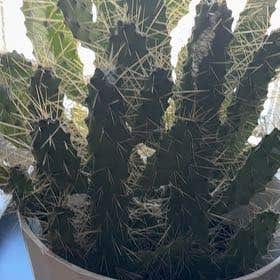
Opuntia sulphurea
Also known as
Cactus sericeus, Cactus sulphureus, Opuntia albisetosa, Opuntia brachyacantha, Opuntia brunnescens, Opuntia coerulea, Opuntia hildemanii, Opuntia hildmannii, Opuntia maculacantha, Opuntia maelenii, Opuntia pampeana, Opuntia sericea, Opuntia sericea longispina, Opuntia sericea maelenii, Opuntia sulphurea brachyacantha, Opuntia sulphurea hildemanii, Opuntia sulphurea laevior, Opuntia sulphurea major, Opuntia sulphurea pallidior, Opuntia sulphurea spinibarbis, Opuntia sulphurea sulphurea, Opuntia sulphurea vulpina, Opuntia tweediei, Opuntia vulpina, Platyopuntia brachyacantha, Platyopuntia spinibarbis and Platyopuntia spinibarbis grandiflora
Taxonomy

Opuntia sulphurea
Opuntia
Cactaceae
Caryophyllales

How to care for Opuntia sulphurea
How often to water your Opuntia sulphurea

every 12
Opuntia sulphurea needs 0.5 cups of water every 12 when it doesn’t get direct sunlight and is potted in a 5" pot.
Use our water calculator to personalize watering recommendations to your environment or download Greg for more advanced recommendations for all of your plants.

Water 0.5 cups every
12
Finding light for Opuntia sulphurea in your home

a window
Opuntia sulphurea love being close to bright, sunny windows 😎.
Place it less than 1ft from a south-facing window to maximize the potential for growth.
Opuntia sulphurea does not tolerate low-light 🚫.
Select your region to see how the current weather in your area affects the placement of Opuntia sulphurea in your home 🏡.
How to fertilize Opuntia sulphurea

Most potting soils come with ample nutrients which plants use to produce new growth.
By the time your plant has depleted the nutrients in its soil it’s likely grown enough to need a larger pot anyway.
To replenish this plant's nutrients, repot your Opuntia sulphurea after it doubles in size or once a year—whichever comes first.
-
White patches on prickly pear? I just got this prickly pear yesterday and am very excited about it! I noticed that there are some whiter patches on it - is this normal or anything to be concerned about? I also noticed 3 tiny black spiders in the bag when I brought it home and am concerned this is a pest, but don’t see any signs of spider mites. #PricklyPear
-
#BarbaryFig #PricklyPear
-
My Spineless Prickly Pear has a new leaf starting! Woo Hoo 🎉 Even more awesome, it's prospering in the most brutal (full afternoon sun, 100+ degrees weather), area of my yard! #FreshLeafFriday #FreshFeaturedFriday #CactusClique #PricklyPear #PlantsMakePeopleHappy #PlantTherapy
-
Bunny Ears Cactus help! #PricklyPear I have had this cactus for about 7 or 8 years. All of a sudden she started turning yellow and shriveling up:( she has been like this for a few months. She used to thrive and grow so much, I am wo during if the regular potting soil i have been using it finally starting to affect her? Should I invest in some cactus soil? Or any other advice to what you guys think I should do? I hope she isn't dead but I am still new to plants so I am not sure😅
-
Why is my pricklypear brown? #PricklyPear
-
He doesn't look good how can I get him healthy #PricklyPear
-
Hi,my bunnyear kaktus, have some tiny sticky white dots on it,what can it be? What should i do? #PricklyPear
-
do i need to take my cactus out of the black container it comes in and just put him in the pot? or do i just leave it? i’m so confused! HELP! #PropagationStation #PricklyPear
-
What is the best kind of pot schools I use and is it a bad idea to break up the pups
-
Fresh Leaf Friday! 🌱 So many baby leaves to share with the plant fam today! 1. #CopperSpoons: Tiniest little leaves on these Copper Spoons! 😍 2. #SwissCheeseVine: Propagated this guy and the root development took a looong time. Finally growing roots and putting out a new leaf! 3. #AfricanMilkTree: I got this plant living happily in a plastic cup with an absolute mane full of leaves. Repotted, watered, made it angry, and all the leaves fell off. But two TINY new ones are coming in! 4. #Cactus: No ID cactus (Greg says #pricklypear) is growing a cute new segment! Love its new hat. 🤠 5. #Aglaonema ‘Red Army’ update: This leaf has been unfurling for what feels like an eternity. I think this is week 4 or 5 of #FreshLeafFriday updates. Is it stuck or am I just impatient?! Tempted to unfurl it myself. Someone hold me back!! 😆 Another little leaf coming in too! #FreshLeafFriday #tinyleaves #HappyPlants #PlantsMakePeopleHappy #PlantAddict #NewGrowth #PropagationStation #SucculentLove #PlantID #GregGang #GreggersSupportingGreggers #Monstera #Aglaonema


Care Summary for Opuntia sulphurea

Opuntia sulphurea
 Greg recommends:
 Water
Water
0.5 cups every 12 days
 Placement
< 1ft from a window
 Nutrients
Repot after 2x growth
Based on the 4” pot your plant is in, and that it doesn’t get direct sunlight.
 Trending in your area

Song of India

Cylindrical Snake Pla…

Florist Kalanchoe

White Bird of Paradise
Triostar Stromanthe
Philodendron Birkin

Painter's Palette

Purple Heart

Small-Leaf Spiderwort
Green Prayer Plant

Elephant Bush
Fiddle Leaf Fig

Lipstick Echeveria

Money Tree

Golden Pothos

Venus Fly Trap
Boston Fern

Lucky Bamboo
 Similar to Opuntia sulphurea


✨ Discover rare plants

Aglaonema 'Green Bowl'

Caladium

Anthurium 'Fantasy Lo…

Croton Nervia

Pine Cone Plant

Peperomia 'Harmony's …

Aeonium 'Blushing Bea…

Aloe 'Lavender Star'

Large Leaf Elephant B…

Echeveria Arrow

Orange Lipstick Plant
Phalaenopsis schiller…

Betel
Rosularia platyphylla

Electric Blue Gecko

Starfish Snake Plant
