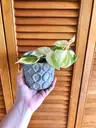
Homalomena santubongensis
Taxonomy

Homalomena santubongensis
Homalomena
Araceae
Alismatales

How to care for Homalomena santubongensis
How often to water your Homalomena santubongensis

every 9
Homalomena santubongensis needs 0.5 cups of water every 9 when it doesn’t get direct sunlight and is potted in a 5" pot.
Use our water calculator to personalize watering recommendations to your environment or download Greg for more advanced recommendations for all of your plants.
Water 0.5 cups every
9
Finding light for Homalomena santubongensis in your home

a window
Homalomena santubongensis may have difficulty thriving, and will drop leaves 🍃, without ample sunlight.
Place it less than 3 feet from a south-facing window to maximize the potential for growth.
Select your region to see how the current weather in your area affects the placement of Homalomena santubongensis in your home 🏡.
How to fertilize Homalomena santubongensis

Most potting soils come with ample nutrients which plants use to produce new growth.
By the time your plant has depleted the nutrients in its soil it’s likely grown enough to need a larger pot anyway.
To replenish this plant's nutrients, repot your Homalomena santubongensis after it doubles in size or once a year—whichever comes first.
-
What kind of pot would this plant like? I have it in a plastic pot now, but I think it may need a repot. #HappyPlants #Homalomena #PlantAddict #NEPAGregGang #PlantLove
-
Any secrets to keeping this plant alive? She seems to be a very fussy plant that droops every other day. I'm in the middle of rearranging my plant space so she is under a Sensi grow lamp at the moment.
-
what’s wrong with my homalomena? i just got her, repotted, and within a day her leaves seem all wilty and are dying! what am i doing wrong? #help #PlantGraveyard
-
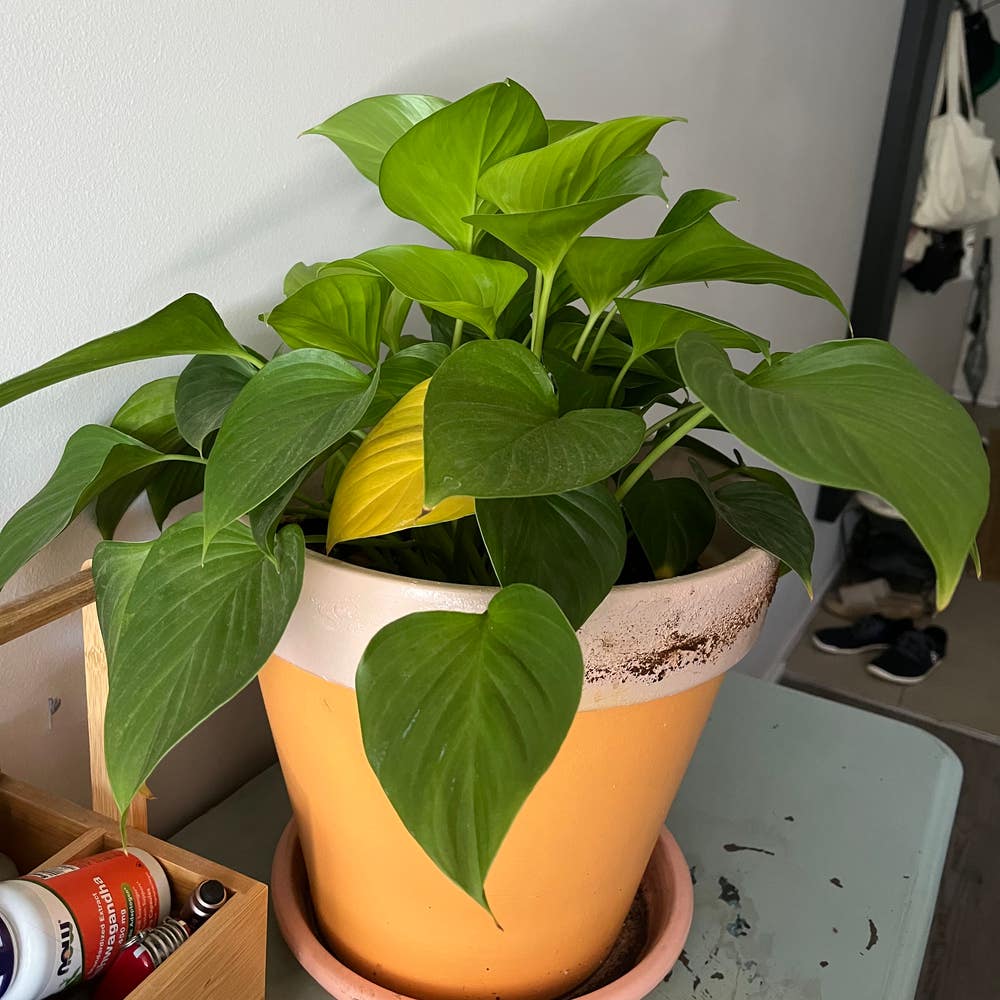
Hi! For every new leaf my gem grows, one seems to go yellow. Other than leaves at the bottom going yellow (quickly) it seems perfectly healthy. Has anyone else experienced this?
-
I received this yesterday, can anyone tell me what’s wrong?
-
New leaves are dying before uncurling #HomalomenaMaggy
-
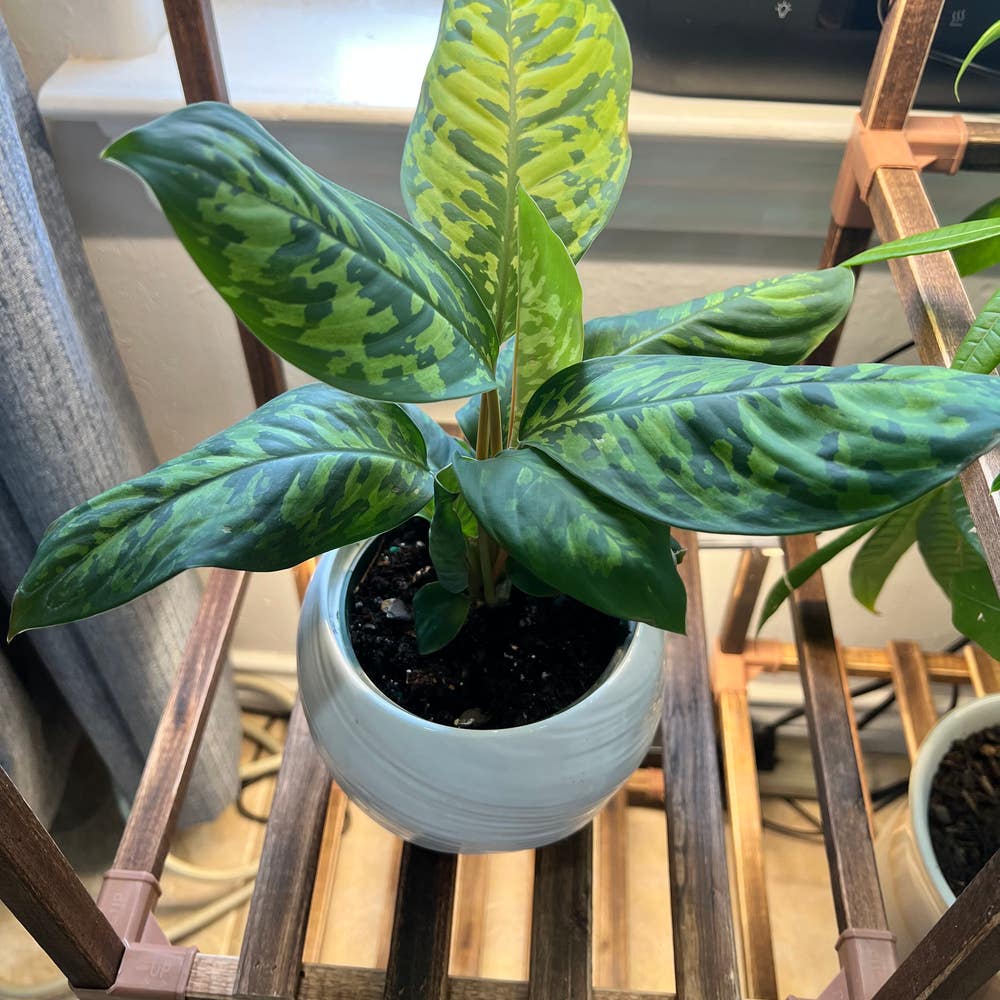
Sooo after some tinkering and rearranging I had an empty spot on my plant shelf. Well I couldn’t have that so welcome Grunt! The Homalomena Camouflage to the family. #HappyPlants #PlantsMakePeopleHappy #PlantAddict #NewGrowth #Homalomena
-
I purchased this plant last week at a local nursery. They had it labeled as a philodendron. I am hoping that it is actually a Homalomena Camouflage plant. Can you tell me if I am correct? Thanks
-
hey does anyone know if the homalomena maggy is safe for pets? #HomalomenaMaggy
-
No matter what I do, it gets more and more yellow leaves! I bought this plant on clearance thinking I could save it. I trimmed the yellow/brown leaves when bringing it home and gave it a good watering. The next day it was even more yellow! I moved it to my bathroom thinking that the indirect sunlight and humidity from the showers would make it happy. Please help! #
Care Summary for Homalomena santubongensis
Homalomena santubongensis
 Greg recommends:
 Water
Water
0.5 cups every 9 days
 Placement
< 3ft from a window
 Nutrients
Repot after 2x growth
Based on the 4” pot your plant is in, and that it doesn’t get direct sunlight.
 Trending in your area
Fiddle Leaf Fig
Heart of Jesus

Tradescantia Nanouk

Ficus Ginseng
Mini Monstera

Emerald Ripple Pepero…
Bunny Ears Cactus

Arabian Coffee Plant
Lucky Bamboo
Heartleaf Philodendron

Hens and Chicks
Jelly Bean Plant
Jade Pothos

Moon Cactus

Golden Barrel Cactus
Gold Dust Croton
Boston Fern
Bird of Paradise
 Similar to Homalomena santubongensis


✨ Discover rare plants

Fagraea ceilanica
Skeleton Key Pothos

Scindapsus pictus 'Si…

Electric Fern

Vatricania guentheri

Crassula 'Purple Drag…

Parrot Pitcher Plant

Milky Widow's Thrill

Stomatium acutifolium

Euphorbia baioensis

Tillandsia caerulea A…

Blue Moon Wisteria

Pine Cone Plant

Philodendron eximium

Pseudorphipsalis 'Blu…

Echeveria Arrow

Hoya sipitangensis