
Creeping Cereus
Taxonomy

Haageocereus repens
Haageocereus
Cactaceae
Caryophyllales

How to care for Creeping Cereus
How often to water your Creeping Cereus

every 12
Creeping Cereus needs 0.5 cups of water every 12 when it doesn’t get direct sunlight and is potted in a 5" pot.
Use our water calculator to personalize watering recommendations to your environment or download Greg for more advanced recommendations for all of your plants.
Water 0.5 cups every
12
Finding light for Creeping Cereus in your home

a window
Creeping Cereus love being close to bright, sunny windows 😎.
Place it less than 1ft from a south-facing window to maximize the potential for growth.
Creeping Cereus does not tolerate low-light 🚫.
Select your region to see how the current weather in your area affects the placement of Creeping Cereus in your home 🏡.
How to fertilize Creeping Cereus

Most potting soils come with ample nutrients which plants use to produce new growth.
By the time your plant has depleted the nutrients in its soil it’s likely grown enough to need a larger pot anyway.
To replenish this plant's nutrients, repot your Creeping Cereus after it doubles in size or once a year—whichever comes first.
-
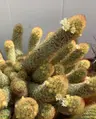
Not sure what type of cactus this is! Hey, I recently got this plant from the dollar tree however I have no clue what this guy’s species is? Help please!
-
What is this? Greg couldn't tell me, help! #cactusclique #newplants #plantsmakepeoplehappy #happyplants #plantaddict #greggang
-
He’s growing a nipple? I have this cactus Eduardo and recently he’s started to grow a nipple? Sorry that’s just what it looks like to me!I’m not sure if this is just new growth but it’s rather pronounced as you can all see, anyone have any answers? I have this picture of him from today and then the other picture is from a month or two ago

Care Summary for Creeping Cereus
Creeping Cereus
 Greg recommends:
 Water
Water
0.5 cups every 12 days
 Placement
< 1ft from a window
 Nutrients
Repot after 2x growth
Based on the 4” pot your plant is in, and that it doesn’t get direct sunlight.
 Trending in your area








 Similar to Creeping Cereus
✨ Discover rare plants

Peperomia 'Harmony's …
Carolina Reaper

Ruby Ball

Sedeveria 'Blue Elf'

Eden Climbing Rose
Philodendron 'Gabby'

Scotch Moss

Raphionacme flanaganii
White Apple Moth Orch…

Orange Lipstick Plant

Lavandula Pedunculata

Chandelier Plant

Crassula 'Calico Kitt…

Electric Fern
Astroloba congesta

Tuber Fleeceflower

Pink Ruby Sedevaria
